

Maddy summaryThis bill requires applicants seeking permits for solid waste management facilities in New Hampshire to undergo criminal background checks. Under the new rules, the Department of Environmental Services can request that the Attorney General investigate the criminal records and performance history of the applicant, its officers, directors, and any individuals with managerial or decision-making authority. The cost of these investigations will be paid by the facility applicants rather than the state. This change aims to ensure that those responsible for managing solid waste operations have no disqualifying criminal history before a permit is granted.
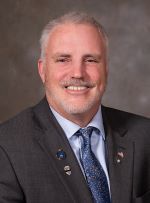
Sen. Howard Pearl
Sponsored bills
Maddy summaryThis bill updates the definition of New Hampshire's state fire code and officially ratifies amendments approved by the state board of fire control as of September 20, 2023. It changes the required edition of the National Fire Protection Association codes from 2018 to 2021 for both the Life Safety Code and the Uniform Fire Code. The law ensures that any other national standards referenced within these codes are also included unless specifically amended by the state board. These changes apply to all individuals and entities subject to the state fire code, including building owners, managers, and safety inspectors. The new requirements will become effective 60 days after the bill is passed.
Maddy summaryThis bill requires dogs, cats, and ferrets entering the state to be held for at least 48 hours at a licensed facility or a veterinarian's separate area before they can be transferred. The law allows the state veterinarian to create rules permitting littermates of certain ages to share enclosures during this holding period. Additionally, it sets limits on the daily boarding and care costs for animals that are confiscated by animal control officers. These measures aim to standardize how animals are quarantined and cared for after crossing state lines.
Maddy summaryThis bill allows hotel guests to carry one alcoholic drink from the hotel bar or restaurant to their room, provided they do not take it into a vehicle. The law clarifies that hotels are not required to offer this service but cannot forbid it if they choose to allow it, while also permitting hotels to designate specific areas where carrying alcohol is prohibited. It updates existing regulations to explicitly permit this practice and does not change the monthly deposit requirements for the liquor commission. The changes take effect 60 days after the bill is passed.
Maddy summaryThis bill directs the New Hampshire Department of Energy to report annually by November on how the renewable energy fund is used, including details on net metering capacity and group host registrations. It expands the department's authority to create new incentive and rebate programs for renewable energy projects located in political subdivisions, such as towns and cities, without being subject to the same funding limits as other projects. Additionally, the legislation updates how funds are distributed between residential and nonresidential sectors, requiring a specific portion of money to support low- and moderate-income households and public housing residents. The bill also repeals previous rules regarding small residential renewable generation incentives to align with these new funding priorities.
Maddy summarySB 354 requires health insurance companies to apply money from independent charity patient assistance programs toward an enrollee's cost-sharing obligations, such as copayments and deductibles. This rule applies to group accident and health insurance plans that cover prescription drugs, but it excludes drugs that have generic or other covered alternatives available. The law also mandates that insurers receive specific details about assistance payments made on behalf of patients, while exempting high-deductible and catastrophic health plans from these requirements until the enrollee's annual deductible is met. Taking effect on January 1, 2026, the bill aims to streamline how charitable funds interact with insurance billing processes.
Maddy summaryThis bill allows the Cost of Care Fund to pay third parties directly for expenses related to caring for animals involved in cruelty cases. It authorizes arresting officers to apply for grants to cover costs incurred while animals are in pretrial care, between seizure and the final resolution of the case. The Department of Agriculture, Markets, and Food will review these applications within 15 days and limit payments to $500,000 per application. The changes take effect on July 30, 2024.
Maddy summaryThis bill grants local governments in New Hampshire the authority to create their own building and fire safety rules, provided these local standards are not less strict than the state's current codes. Municipalities can adopt additional regulations or choose to use nationally recognized codes that are not already part of the state code, as long as they receive approval from the state Building Code Review Board or the State Fire Marshal. To ensure consistency and safety, any new local rules must be submitted for review within 60 days of taking effect, and they cannot be enforced until the state agency confirms they do not conflict with or weaken state requirements. The law also clarifies that all buildings must comply with both state and local codes, while allowing cities to file copies of their adopted codes for public inspection.
Maddy summaryThis bill establishes a Corrections Education and Vocational Planning Group to design and oversee career and educational programs within New Hampshire state prisons. The group will include representatives from corrections, higher education, community colleges, and formerly incarcerated individuals to assess labor market needs, plan curriculum, and address barriers to reentry. Key tasks include creating credit transfer agreements with colleges, evaluating facility resources, and exploring funding options to support inmates pursuing degrees. The group is required to submit annual reports to state officials starting in December 2024 to track its progress and recommendations.
Maddy summaryThis bill has two main parts: it allocates $40 million in state funds to design and construct a replacement for the New Hampshire State Prison for Men, and it establishes a system to share mental health court records with federal firearms background check databases. The prison funding is intended for architectural planning, engineering, and construction documents to build a new correctional facility. The second part, known as "Bradley's Law," allows courts and the Department of Safety to report specific mental health adjudications to the National Instant Criminal Background Check System, which can lead to a person being prohibited from buying or possessing firearms. Additionally, the bill creates a process for individuals to petition the court for relief from these firearm disabilities if their mental health status has improved.