

Maddy summarySB 434 requires New Hampshire school districts to adopt and publicly post policies for handling parent or guardian complaints about school materials deemed harmful to minors, age-inappropriate, or offensive. It mandates a specific 25-day timeline for school principals to investigate written complaints, make decisions about material access (keeping, removing, or restricting it), and provide written explanations. Parents can appeal decisions to the school board within 30 days, with all decisions and communications becoming public records. The bill directly affects school districts, educators, and parents filing complaints, setting clear procedural requirements for addressing concerns about classroom materials.
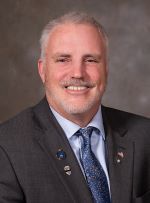
Sen. Howard Pearl
Sponsored bills
Maddy summarySB 469 allows the New Hampshire Division of Motor Vehicles (DMV) director to create rules permitting electronic signatures on vehicle-related documents. It specifically removes the requirement for notarized signatures when transferring vehicle ownership to an insurer after a claim payment, permitting electronic signatures and printed hard copies instead. This applies to supporting documents like title forms, odometer statements, and power of attorney. The bill directly affects vehicle owners, insurers, and DMV staff handling title transfers, streamlining processes for claims-related vehicle ownership changes.
Maddy summarySB 402 eliminates geographic non-compete restrictions in contracts for physician associates in New Hampshire. It makes any agreement preventing a physician associate from practicing in specific areas after employment ends void and unenforceable for new contracts or renewals signed on or after the law's effective date. This directly affects physician associates (healthcare providers working under physician supervision) and their employers by removing barriers to where they can practice following job changes. The law does not impact other contract terms, only the geographic restriction provision, and applies only to agreements entered after the bill takes effect.
Maddy summarySB 426 repeals the permissible fireworks advisory committee, which was established under RSA 160-C:13. This bill removes the committee's existence from state law by deleting references to it in RSA 160-C:16, I(a). The repeal has no effect on current fireworks regulations or sales rules, as the committee's role was procedural. This is a straightforward procedural change with no new policy impacts.
Maddy summarySB 443 gives New Hampshire's Department of Environmental Services new authority to create rules for reviewing and approving wastewater infrastructure plans, including sewer connection permits. It directly affects municipalities and sewer utility districts that must submit plans for new or upgraded sewage systems. Key provisions require the department to review industrial discharge permits (if not under EPA-approved programs) and set standards for sewer connection permits. The bill updates existing law to formalize these review processes and ensure proper design and operation of wastewater facilities. It does not change funding or impose new costs but establishes a structured permitting framework for wastewater projects.
Maddy summaryHB 1030 updates New Hampshire law to clarify the scope of practice for licensed practical nurses (LPNs). It removes the word "focused" from the description of assessments LPNs can conduct and revises the language about their role in care planning from "development" to "evolution and modification" of the registered nurse-initiated comprehensive plan. The bill does not change LPNs' actual duties or responsibilities but modernizes the legal wording. The changes take effect 60 days after the bill's passage.
Maddy summarySB 428 increases the maximum number of terms a member can serve on New Hampshire's Electricians' Board from two to three terms. This change also extends the total service limit from 12 years to 16 years, allowing members to serve up to three 5-year terms (including time served during term overlaps or unexpired terms). The bill directly affects the 5 appointed board members (2 master electricians, 1 journeyman electrician, and 2 public members) and the ex officio fire marshal who serves without voting. The amendment modifies RSA 319-C:4, sections I and I-a, effective 60 days after enactment.
Maddy summarySB 526 creates a New Hampshire-Greece trade council to strengthen economic ties between the state and Greece. The council, composed of state officials, business representatives, and academic leaders, will promote trade, investment, and cultural exchanges. It can raise funds through donations and grants, with a dedicated non-lapsing fund in the state treasury to cover administrative costs. The council aims to build on New Hampshire's historic Greek-American connections and its status as a top U.S. trade partner for Greece.
Maddy summarySB 527 requires state agencies to provide written notice to town or city clerks about pending applications that could affect land use, business operations, or municipal finances. It changes the current requirement from "first class mail" to simply "written notice," meaning agencies can use any written method (like email or electronic portals) instead of only physical mail. This directly affects state agencies issuing permits or licenses and municipalities that may need to respond to these applications. The change aims to modernize communication while maintaining the requirement for agencies to notify affected towns or cities.
Maddy summaryHB 1772 creates a New Hampshire grant program within the Department of Health and Human Services to fund state participation in a multistate clinical trial consortium studying ibogaine as a potential treatment for substance use disorder and other neurological or mental health conditions. The bill appropriates $1 (likely a typo for $1 million) to support this effort, requiring grant recipients to be New Hampshire-based entities with proven expertise in neurological/mental health research, matching funds from non-state sources, and FDA-approved trial protocols (including an IND application and breakthrough therapy designation request). Entities must submit quarterly progress and financial reports, and the state must verify matching funds before disbursing grant money. This bill directly affects eligible research institutions participating in the consortium, not the general public.