

Maddy summaryThis bill updates New Hampshire's safe haven laws to allow parents to anonymously surrender infants up to 61 days old, matching the age limits of other New England states. It expands the definition of safe haven devices to include containers installed in hospitals, police stations, and fire departments, provided they are staffed around the clock and have alarms. The legislation also clarifies that parents who surrender a baby cannot be prosecuted solely based on evidence found during that surrender, while still permitting investigations into other crimes not directly linked to the act of surrendering the child.
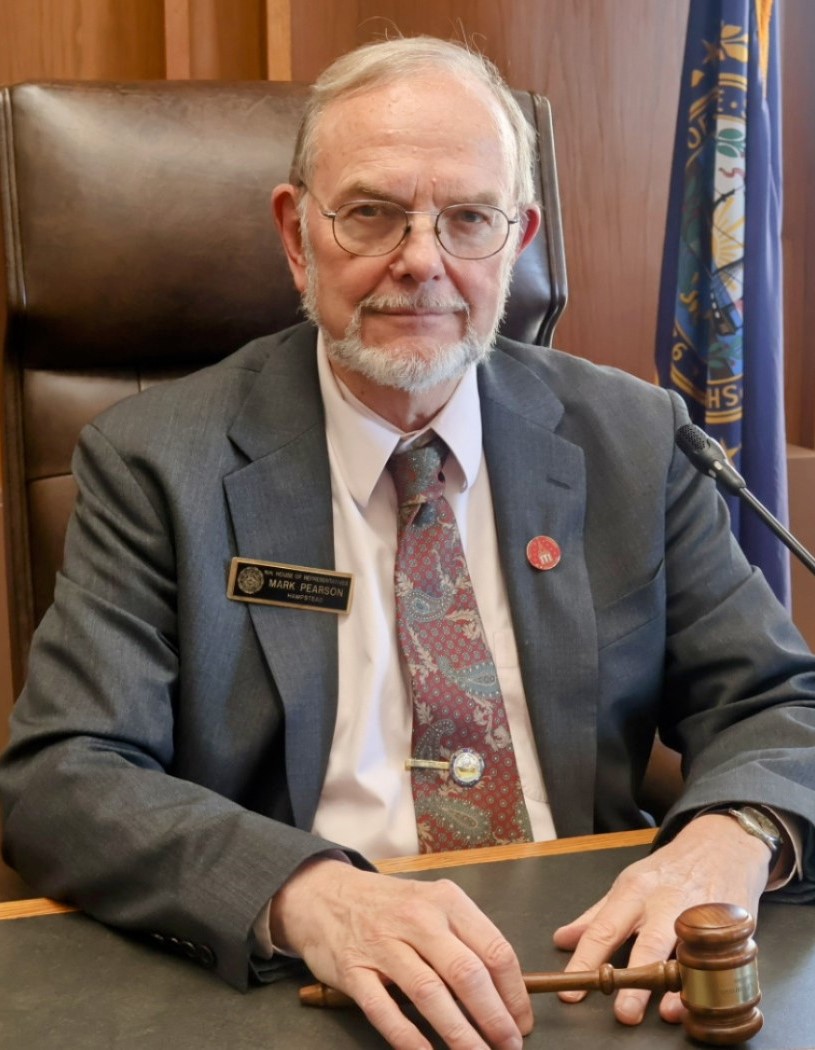
Rep. Mark Pearson
Sponsored bills
Maddy summaryThis bill establishes a Commission on the Interdisciplinary Primary Care Workforce to study and report on strategies for improving healthcare access in New Hampshire. The commission will examine the state's loan repayment program and health professions survey, submitting an interim report in 2026 and a final report with recommendations in 2029. It also expands the commission's membership to include a representative from Direct Primary Care Frontier and requires the Office of Professional Licensure and Certification to share data with the State Office of Rural Health to support primary care initiatives. These changes aim to gather information and propose future legislation to address workforce needs in the state's healthcare system.
Maddy summaryThis bill expands legal representation for children involved in New Hampshire child protection cases by requiring courts to appoint attorneys for specific vulnerable groups. The law mandates that a lawyer be assigned to represent the expressed interests of any child placed in a group home, child care institution, or state-operated residential treatment program, while also allowing counsel for children whose legal needs conflict with the recommendations of their existing advocates. To manage the transition, the legislation includes a phased implementation schedule that rolls out these appointments based on the child's age and the location of their placement, with full coverage targeted for July 2026. Additionally, appointed attorneys are granted specific rights to access the child's medical, educational, and psychological records to effectively advocate on their behalf.
Maddy summaryThis bill establishes a legislative committee to study how law enforcement, medical providers, and child protection services can better share confidential records to protect children from abuse. The committee will examine current privacy laws, identify barriers to information exchange, and review best practices used in other states to improve communication among these groups. Its members will gather testimony from various agencies and experts, and the group is required to submit a report with findings and recommendations by November 1, 2024.
Maddy summaryThis bill provides financial assistance to the town of Hampstead to help cover property tax losses caused by the state's purchase of the Hampstead Hospital. The state will distribute approximately $191,000 to the town, with the money coming from a mix of federal funds and general state funds if federal sources are unavailable. The law takes effect on July 1, 2024, and authorizes the governor to issue the necessary payment from the state treasury.
Maddy summaryThis bill creates a specific legal process called a "family access motion" to help parents enforce court-ordered parenting time when the other parent denies or interferes with it. It requires courts to provide a simple form for parents to file these motions without a lawyer and mandates that the case be resolved within 60 days. If a parent is found to have violated the parenting plan without good cause, the court can order remedies such as making up the lost time, requiring counseling, imposing fines, or ordering the violator to pay the other parent's legal fees. The law takes effect on January 1, 2025.
Maddy summaryThis bill creates a new committee to study the New Hampshire Board of Medicine and allocates funds to the Department of Health and Human Services. The committee will consist of four state representatives, with two appointed by the Speaker from specific health and executive committees, ensuring representation from both major political parties. The funding provided to nursing facilities comes with conditions requiring that at least one original owner maintain a significant ownership stake for five years, that the facility follows all licensing rules, and that it continues to accept Medicaid payments. If a facility fails to meet these requirements, the state has the right to recover a portion of the funds it distributed to that facility.
Maddy summaryThis bill establishes a study commission to examine and improve New Hampshire's legal processes for individuals found incompetent to stand trial or deemed insane. The commission will include representatives from the judiciary, health and human services, corrections, law enforcement, defense attorneys, and mental health advocacy groups to review current laws and treatment standards. Its primary tasks involve updating the state's outdated definition of insanity, aligning care with the new forensic hospital, and developing a comprehensive plan to increase the number of people who successfully regain competency and return to court. The group is required to hold multiple meetings and submit interim and final reports with recommendations for new legislation by November 2024 and November 2025.
Maddy summaryHB 1624 allows individuals over the age of 21 to distill liquor at home for personal or family use, provided the product is not sold. The law sets specific production limits, permitting households with two or more producers to make up to 200 gallons of beer or wine annually, while single-person households are limited to 100 gallons. Any liquor distilled from these amounts must remain for personal consumption and cannot be offered for sale. This change takes effect on January 1, 2025.
Maddy summaryHB 1190 adopts the Interstate Social Work Licensure Compact, allowing licensed social workers to practice across multiple states with a single license issued by their home state. This change aims to reduce the burden of obtaining separate licenses for each state while improving public access to social work services, including through telehealth. The bill establishes a commission to oversee the agreement and ensures that social workers remain accountable to the laws of the state where their clients are located. It also includes specific provisions to support military families and facilitate the sharing of disciplinary information among member states.