

Maddy summarySB 494 updates New Hampshire's state fire code to reference the 2024 editions of NFPA standards for life safety and fire prevention. It requires fire departments to report all incidents to the state fire marshal within 10 days, with fatal fires or carbon monoxide releases needing immediate reporting and a 48-hour investigation. The bill adds new duties for the state fire marshal, including authority to charge fees for electrical and mechanical safety inspections (per Saf-C 8100) and to assist with local inspections when requested. This affects fire departments, property owners, contractors, and local authorities by clarifying reporting timelines, investigation protocols, and inspection fee structures.
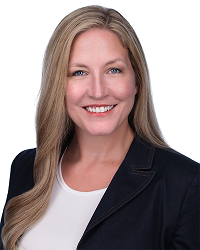
Rep. Erica Layon
Sponsored bills
Maddy summarySB 641 modifies New Hampshire's chiropractor licensure exam requirements. It requires applicants licensed after January 1, 1990, to pass parts 1, 2, and 3 of the national chiropractic exam, while those licensed or applying after January 1, 1996, must pass parts 1, 2, 3, and 4 plus the clinical competency exam. All applicants must still pass New Hampshire's separate ethics and jurisprudence exam. These changes directly affect chiropractor license applicants based on their licensure date, updating the national exam requirements previously in law. The bill takes effect 60 days after passage with minimal fiscal impact.
Maddy summaryHB 1793 prohibits New Hampshire public colleges and universities from restricting the possession or carrying of firearms and non-lethal weapons (like pepper spray or stun guns) on campus. It directly affects public institutions of higher education and any student, faculty, staff, or visitor who lawfully carries such items under state law. The bill requires schools to allow constitutional carry without requiring permits or licenses and permits individuals harmed by school policies to sue for at least $10,000 in damages. This law takes effect January 1, 2027, aligning with New Hampshire’s existing constitutional carry framework.
Maddy summaryHB 1249 allows pharmacists to prescribe and dispense specific medical devices necessary for administering prescribed medications, directly affecting pharmacists and patients who use these devices. Key provisions include authorizing pharmacists to provide inhalation spacers, CPAP supplies, diabetes testing kits, insulin pump supplies, and related items like pen needles. Pharmacists must notify the prescribing provider after dispensing but are not required to do so before. The bill amends pharmacy practice definitions and requires the Board of Pharmacy to adopt implementing rules with medical and nursing boards.
Maddy summaryHB 1828 requires New Hampshire's Department of Education to create an auditing process for teacher preparation programs at colleges and universities. The audit ensures these programs teach research-backed literacy instruction (including phonics, fluency, and vocabulary) aligned with the science of reading. The department must develop metrics to evaluate how effectively programs teach these methods and publish the results online. This directly affects all post-secondary institutions offering teacher training in New Hampshire.
Maddy summaryHB 1809 would establish a regulated program under New Hampshire's Department of Health and Human Services allowing licensed medical providers to use psilocybin for specific qualifying conditions. It directly affects patients diagnosed with treatment-resistant depression, PTSD, or substance use disorders (and potentially other conditions approved later), and medical providers who must be separately approved as both practitioners and producers of psilocybin. Key provisions include creating a state program to approve providers/producers, requiring public listing of approved providers, mandating data collection for program evaluation, and defining psilocybin as naturally occurring (excluding synthetic versions). The bill sets up a supervised therapeutic framework with strict requirements for provider applications, facility locations, and patient eligibility.
Maddy summaryHB 1458 requires businesses offering massage, reflexology, structural integration, or Asian bodywork therapy in commercial locations to obtain a facility license from the Office of Professional Licensure and Certification. Owners must affirm they have no convictions for prostitution or human trafficking-related offenses and cannot allow residents to live in the facility. The license must be posted visibly, and applications must be processed within 14 days unless denied for cause. This bill does not apply to services provided in non-commercial settings, such as a practitioner’s home or a client’s residence.
Maddy summaryHB 1355 eliminates the automatic "default budget" option for New Hampshire towns that use official ballot referenda to vote on budgets. If a town's operating budget vote fails, the bill requires the governing body to hold a special meeting to create a new budget instead of automatically adopting the previous year's budget (adjusted for certain changes). This directly affects towns using the official ballot voting method for budget decisions. The key change removes the default budget from ballot language and procedures, mandating a new budget process through a special meeting when the initial vote fails. The bill focuses on procedural changes to budget approval, not on budget content or funding levels.
Maddy summaryHB 1211 changes how courts review state agency rules and interpretations. It requires courts to interpret laws and agency guidance "from scratch" instead of accepting agency explanations at face value. When uncertain, courts must resolve doubts by limiting agency power and prioritizing individual liberty. This directly affects state courts, agencies, and anyone challenging or being challenged by agency actions under state law.
Maddy summarySB 580 establishes a state-administered school cooperative purchasing program for New Hampshire school districts, school administrative units (SAUs), and chartered public schools. The program enables these entities to join state-negotiated contracts for major school expenses like textbooks, transportation, food services, and heating fuel, replacing individual bidding processes with bulk-purchased rates. Participation is voluntary - school boards or trustees decide whether to join specific contracts, and local schools remain responsible for their own purchases and compliance. The bill streamlines procurement by allowing schools to use state-awarded contracts without needing separate competitive bids, while the state board of education oversees the program.