

Military Spouse Hiring Act This bill expands the Work Opportunity Tax Credit (WOTC) to include the hiring of a qualified military spouse. (The WOTC permits employers who hire individuals who are members of a targeted group such as qualified veterans, ex-felons, or long-term unemployment recipients to claim a tax credit equal to a portion of the wages paid to those individuals.) A qualified military spouse is any individual who is certified by the designated local agency as being (as of the hiring date) a spouse of a member of the Armed Forces.
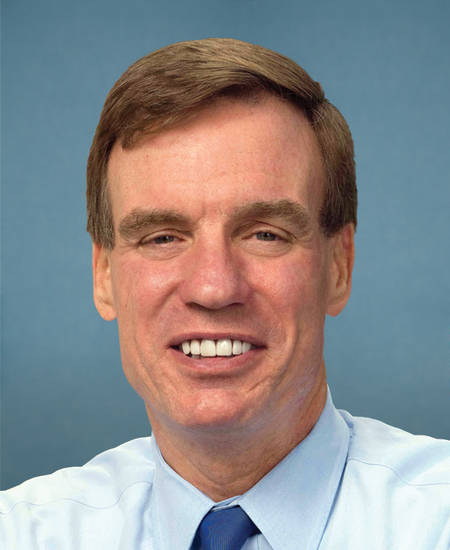
Sen. Mark R. Warner
Sponsored bills
Investing in American Workers Act This bill allows a business-related tax credit for employers who increase worker training expenditures. The credit is equal to 20% of the excess of (1) the qualified training expenditures for the year, over (2) the average of the adjusted qualified training expenditures for the three previous years. If the employer had no qualified training expenditures in any one of the three previous years, the credit is equal to 10% of the adjusted qualified training expenditures for the year. The credit applies to expenditures for the training of non-highly compensated employees (annual compensation does not exceed $82,000). The training must result in the attainment of a recognized postsecondary credential and be provided through an apprenticeship program; a program of training services that is included on a list of eligible training providers that states are required to maintain under the Workforce Innovation and Opportunity Act; a program that is conducted by an area career and technical education school, a community college, or a labor organization; or a program that is sponsored and administered by an employer, industry trade association, industry or sector partnership, or labor organization. Certain small businesses and tax-exempt organizations may apply the credit against payroll taxes, subject to specified limits and requirements. Eligible small businesses may also apply the credit against the alternative minimum tax.
Special Measures to Fight Modern Threats Act This bill expands the special measures available to the Financial Crimes Enforcement Network (FinCEN) to combat money laundering regarding a jurisdiction outside of the United States; a financial institution operating outside of the United States; a class of transaction within, or involving, a jurisdiction outside of the United States; or one or more types of accounts. Specifically, FinCEN may prohibit or impose conditions upon the opening or maintaining in the United States of a correspondent account or payable-through account by any domestic financial institution or domestic financial agency without requiring, as under current law, that such account be for or on behalf of a foreign banking institution. Further, FinCEN may prohibit or impose conditions upon certain transmittals of funds to or from any domestic financial institution or domestic financial agency if such transmittal of funds involves any such jurisdiction, institution, class of transaction, or type of account.
"Six Triple Eight" Congressional Gold Medal Act of 2021 This bill provides for the award of a Congressional Gold Medal to the women of the 6888th Central Postal Directory Battalion (commonly known as the Six Triple Eight) in recognition of their pioneering military service, devotion to duty, and contributions to increase the morale of personnel stationed in the European theater of operations during World War II.
Adjustable Interest Rate (LIBOR) Act This bill provides for the transition of certain financial contracts away from the London Interbank Offered Rate (LIBOR), a reference interest rate based upon the lending terms certain banks offer to each other for various lengths of time. LIBOR is set to be retired in 2023. Various financial contracts reference LIBOR as a benchmark for prevailing interest rates and use LIBOR in calculating certain payments or obligations. In the event a contract referencing LIBOR does not have a fallback or replacement rate provision in effect when LIBOR is retired, or a replacement rate is not selected by a determining person as defined by the bill, the bill provides for a transition to a replacement rate selected by the Board of Governors of the Federal Reserve System. The bill also provides for conforming changes to these contracts, the continuity and enforceability of these contracts, and protections against liability as a result of such a transition.
This resolution designates March 2022 as National Women's History Month. The resolution also recognizes the celebration of such month as a time to reflect on the contributions that women have made to the United States.
Ban Russian Energy Imports Act This bill declares that a national emergency exists with respect to the aggression of Russia against Ukraine. During this emergency, the President must prohibit the importation of crude oil, petroleum, petroleum products, liquefied natural gas, and coal in which Russia or a Russian national has any interest. The bill exempts products that are already loaded or in transit at the time of this bill's enactment.
This resolution condemns violence and threats of violence against historically Black colleges and universities (HBCUs) and reaffirms the federal government's commitment to combating violence against HBCU students, faculty, and staff.
Strengthening American Cybersecurity Act of 2022 This bill addresses cybersecurity threats against critical infrastructure and the federal government. The Cybersecurity and Infrastructure Security Agency (CISA) must perform ongoing and continuous assessments of federal risk posture. An agency, within a specified time frame, must (1) determine whether notice to any individual potentially affected by a breach is appropriate based on a risk assessment; and (2) as appropriate, provide written notice to each individual potentially affected. Each agency must (1) provide information relating to a major incident to specified parties, and (2) develop specified training for individuals with access to federal information or information systems. The bill requires reporting and other actions to address cybersecurity incidents. Entities that own or operate critical infrastructure must report cyber incidents and ransom payments within specified time frames. The bill limits the use and disclosure of reported information. The bill establishes (1) an interagency council to standardize federal reporting of cybersecurity threats, (2) a task force on ransomware attacks, and (3) a pilot program to identify information systems vulnerable to such attacks. The bill provides statutory authority for the Federal Risk and Authorization Management Program (FedRAMP) within the General Services Administration (GSA). FedRAMP is a government-wide program that provides a standardized approach to security assessment, authorization, and continuous monitoring for cloud computing products and services. The bill establishes a FedRAMP Board to examine the operations of FedRAMP and the Federal Secure Cloud Advisory Committee.
American Innovation and Choice Online Act This bill prohibits certain large online platforms from engaging in specified acts, including giving preference to their own products on the platform, unfairly limiting the availability on the platform of competing products from another business, or discriminating in the application or enforcement of the platform's terms of service among similarly situated users. Further, a platform may not materially restrict or impede the capacity of a competing business user to access or interoperate with the same platform, operating system, or hardware or software features. The bill also restricts the platform's use of nonpublic data obtained from or generated on the platform and prohibits the platform from restricting access to platform data generated by the activity of a competing business user. The bill also provides additional restrictions related to installing or uninstalling software, search or ranking functionality, and retaliation for contact with law enforcement regarding actual or potential violations of law. The bill establishes affirmative defenses for the prohibited conduct. The Federal Trade Commission and the Department of Justice must designate whether an entity is a platform covered by the bill, and both must carry out enforcement activities. The bill also provides for civil penalties, injunctions, and the forfeit of profits for repeat offenders.