

Maddy summarySRES 482 is a ceremonial Senate resolution recognizing November 3-7, 2025, as "National Veterans Small Business Week." It does not create new laws or policies but formally acknowledges veteran-owned small businesses, which employ nearly 3.3 million people and generate over $952 billion in annual sales. The resolution expresses support for these businesses and appreciation for veterans' entrepreneurship, while highlighting the Senate Committee on Small Business and Entrepreneurship’s annual observance of this week. It has no direct impact on regulations, funding, or veteran business operations.
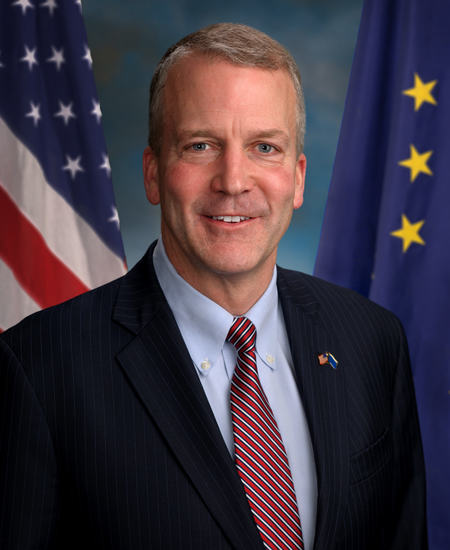
Sen. Dan Sullivan
Sponsored bills
Maddy summaryThe SAFE KIDS Act voids surrogacy contracts between U.S. surrogates and foreign nationals from designated "entities of concern" (like sanctioned countries), with limited exceptions for married U.S. couples. It criminalizes surrogacy brokers who facilitate such contracts, imposing fines or up to one year in prison. If a contract is voided, custody decisions for the child are determined by state courts based on the child's best interests, not the invalid agreement. The law directly affects U.S. surrogates, foreign nationals seeking surrogacy, and surrogacy brokers, targeting exploitation and potential trafficking risks.
Maddy summarySenate Resolution 226 condemns the Chinese government's actions targeting Chinese diaspora communities in the U.S., including dissidents, human rights defenders, and minority groups like Uyghurs and Tibetans. It specifically addresses China's use of surveillance, threats, and harassment against individuals abroad, as well as pressure tactics against family members in China (such as property seizures, asset freezes, and passport cancellations). The resolution declares these actions violate U.S. sovereignty and democratic values, affirming that people in the U.S. should live free from foreign intimidation. As a non-binding resolution, it expresses congressional support for U.S. government efforts to investigate and address such activities.
Maddy summaryThis bill ensures military personnel and their support staff continue receiving pay during government funding gaps in fiscal year 2026. It authorizes funds from the Treasury to cover pay and allowances for active-duty service members, reserves, military support civilians (including Coast Guard staff), and qualifying contractors if regular budget appropriations aren't approved. The funding remains available until the earliest of: a new budget passing, a continuing resolution without this funding, or January 1, 2027. It directly affects all active-duty military, reserve components, and civilian/contractor support staff within the Department of Defense and Coast Guard.
Maddy summaryThis bill streamlines defense technology transfers between the U.S., Australia, and the U.K. by removing specific regulatory barriers under the Arms Export Control Act. It allows direct reexports or transfers of defense articles between these governments without requiring presidential consent, and eliminates certification requirements for commercial technical assistance or manufacturing agreements involving Australia or the U.K. The policy change directly affects U.S. defense contractors, government agencies, and the AUKUS partnership by simplifying cross-border defense cooperation. These provisions aim to accelerate joint military technology sharing while maintaining compliance with existing export control frameworks.
Maddy summaryS 1000 creates a new position for a U.S. Ambassador-at-Large for Arctic Affairs within the State Department. This official, appointed by the President with Senate approval, will coordinate U.S. foreign policy across Arctic-related issues including national security, environmental protection, indigenous engagement, resource management, and scientific research. The role will oversee efforts involving multiple federal agencies and work with Arctic Council nations (U.S., Canada, Denmark, Iceland, Norway, Sweden, Finland, and Russia). The bill defines the "Arctic region" to include northern U.S. territories, Arctic waters, and the Aleutian Chain, establishing this position to centralize U.S. policy coordination in the region.
Maddy summaryThis bill ensures the U.S. Capitol Police continue receiving pay during fiscal year 2026 funding gaps by authorizing temporary funds for salaries, benefits (including hazard pay and retirement), and contractor support. It directly affects Capitol Police officers (classified as "excepted employees" during emergencies), their civilian support staff, and contractors providing essential services. The funding mechanism provides immediate payments for the period starting October 1, 2025, and lasts until Congress passes regular appropriations for the Capitol Police or September 30, 2026, whichever comes first.
Maddy summaryThis bill extends the deadline for a program under the Energy Policy Act of 2005 from 2024 to 2029. It amends Section 797(a) of that act to reauthorize the existing diesel emissions reduction funding mechanism. The change directly affects the administration of this federal program, which supports projects reducing emissions from diesel engines. No new requirements or policy changes are introduced - only a deadline extension for an existing program.
Maddy summaryThis bill directs the U.S. government to consider Chinese officials responsible for religious freedom abuses as subject to sanctions under existing U.S. law. It requires the State Department to support programs promoting religious freedom in China and monitor Chinese government actions targeting religious minorities. The bill also urges Congress to designate China as a "country of particular concern" for religious freedom, call for the release of detained religious prisoners, and strengthen diplomatic efforts with international partners on this issue. It specifically addresses abuses against groups including Christians, Muslims, Buddhists, and others facing restrictions in China.
Maddy summaryThe TREATS Act amends the Controlled Substances Act to allow telehealth evaluations as an alternative to in-person medical evaluations for prescribing certain controlled substances. Specifically, it permits one telehealth evaluation (conducted via real-time audio/video systems meeting Social Security Act standards) instead of an in-person visit when prescribing FDA-approved medications for substance use disorder treatment (schedules III-V). This directly affects healthcare providers who prescribe these medications, expanding their ability to use telehealth for initial patient assessments. The change maintains the requirement for at least one evaluation (either in-person or telehealth) while updating the process to include telehealth options for this specific treatment context.