

Maddy summaryThis bill transfers $160 million from the Travel Promotion Fund to Brand USA (the Corporation for Travel Promotion) to support international tourism marketing. The funds come from unobligated balances of fees collected under the Immigration and Nationality Act before October 1, 2025. The transfer is exempt from standard spending limits under the Travel Promotion Act of 2009 and requires Brand USA to follow existing matching fund rules. The bill directly affects Brand USA's funding for promoting U.S. travel internationally.
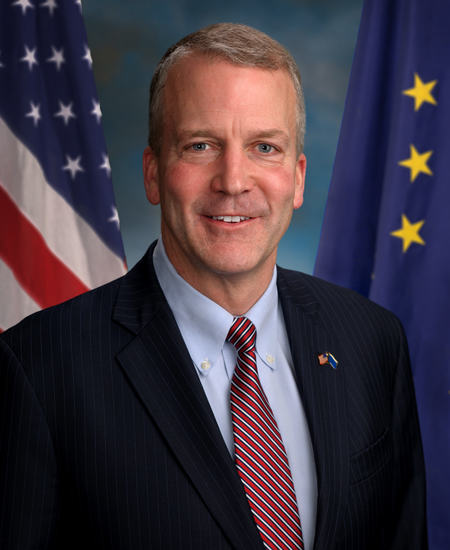
Sen. Dan Sullivan
Sponsored bills
Maddy summaryThis bill increases federal funding for fishing industry safety programs from $3 million to $6 million annually (2025-2029) and requires new training focused on behavioral and physical health risks - including substance use disorder and worker fatigue - for commercial fishing vessel operators and crewmembers. It mandates that safety training programs address these specific health risks and expands research grants to include wellness initiatives. Grants will be awarded competitively with criteria developed in consultation with the Coast Guard. The law directly affects commercial fishing crews and operators by requiring health-risk training and increasing funding for wellness-focused safety programs.
Maddy summaryThis bill (S 3203) requires the U.S. Army Secretary to submit a report by January 15, 2026, to Congress identifying potential locations for expanding Arctic training exercises. The report must specify sites for conducting cold-weather military courses and analyze challenges of operating in extreme cold conditions. It does not create new programs or funding but mandates a study to improve military readiness in Arctic environments. The bill directly affects Army training planning and congressional oversight, with no direct impact on the public or new policy changes.
Maddy summarySRES 501 is a ceremonial Senate resolution recognizing November 2025 as National Native American Heritage Month. It encourages the American public to observe the month through programs and activities that celebrate Native American cultural contributions, heritage, and history. The resolution does not create new legal obligations or funding, serving solely as a symbolic acknowledgment of Native American communities' enduring impact on U.S. society.
Maddy summaryS 3178 requires the Housing and Urban Development (HUD) and Agriculture Secretaries to withdraw a specific energy efficiency rule for HUD- and USDA-financed housing. It prevents these agencies (and also the Veterans Affairs and Federal Housing Finance Agency) from implementing or enforcing that rule or similar standards, mandating a return to pre-existing energy efficiency requirements for covered housing programs. The bill also updates a provision to allow states with energy efficiency codes meeting or exceeding the withdrawn standard (at least 26 states) to continue using them. This directly affects federal housing agencies and the housing projects they fund.
Maddy summaryThe Shutdown Fairness Act guarantees standard pay for covered government workers and contractors during federal funding gaps. It directly affects federal employees, military personnel on active duty, and contractor staff who must work during a shutdown, ensuring they receive their regular compensation without regard to prior furloughs. The bill requires agencies to use emergency funds to pay covered employees within 7 days of enactment for the 2025-2026 shutdown period, and on regular pay schedules for future shutdowns. This applies retroactively from September 30, 2025, and limits funds strictly to pay, prohibiting reprogramming for other purposes.
Maddy summaryThis resolution commemorates the 250th anniversary of the U.S. Marine Corps, marking November 10, 2025, as the anniversary date. It honors Marine Corps history, values, and service through ceremonial recognition, including tribute to fallen Marines and the motto *Semper Fidelis*. As a symbolic resolution with no policy or funding changes, it directly affects the Marine Corps community and encourages public participation in anniversary events, but does not alter laws or obligations.
Maddy summarySRES 491 is a Senate resolution commemorating the 80th anniversary of Stars and Stripes' continuous Pacific operations, beginning in 1945. It recognizes the newspaper's historical role as the "hometown newspaper" for U.S. military personnel, civilian employees, and families stationed globally since World War II. The resolution honors Stars and Stripes' service across conflicts including Korea, Vietnam, Iraq, and Afghanistan, and acknowledges its modern digital reach of 1.4 million daily readers through online and social media platforms. This procedural resolution has no legislative effect and solely serves to honor the publication's longstanding support for the military community.
Maddy summaryThis Senate resolution (SRES 463) expresses symbolic condemnation of China's persecution of religious minorities, specifically highlighting the detention of Pastor Ezra Jin Mingri and Zion Church leaders following a reported October 10, 2025, abduction. It directly addresses the Chinese Communist Party (CCP) government, calling on it to release detained religious leaders and end violence against Christians, Muslims, and Buddhists. The resolution reaffirms U.S. policy commitments under the International Religious Freedom Act of 1998 and the Frank R. Wolf Act, emphasizing the U.S. global role in promoting religious freedom. It does not create new laws or funding but serves as a diplomatic statement urging China to respect internationally recognized religious freedom rights.
Shutdown Fairness Act This bill provides appropriations to pay federal employees who work during a government shutdown. Specifically, the bill provides appropriations for federal agencies to provide standard rates of pay, allowances, pay differentials, benefits, and other payments to excepted employees for work performed during any period in which interim continuing appropriations or full-year appropriations are not in effect for a fiscal year (i.e., a government shutdown). An excepted employee is an employee who is required to work during a government shutdown. Under current law, excepted employees are not paid until the government shutdown is over. This bill provides appropriations to pay excepted employees during a government shutdown. The bill also specifies that the term excepted employee includes certain contractors who support federal employees during a government shutdown and members of the Armed Forces who are on active duty. A federal agency may not use the funds provided by this bill during any period in which continuing appropriations are in effect for the purpose of paying excepted employees of the agency. The bill must take effect as if it had been enacted on September 30, 2025.