

Maddy summaryThis bill, known as the State Veterans Homes Inspection Simplification Act, would allow certain State Veterans Homes that are already certified by the Department of Veterans Affairs to be automatically considered compliant with Medicare and Medicaid nursing home standards. Under this proposal, facilities meeting specific VA inspection and certification requirements would not need to undergo separate reviews by the Centers for Medicare & Medicaid Services, reducing duplication of effort. The legislation maintains oversight by requiring the VA to submit its inspection standards for review every two years, allowing CMS to conduct targeted surveys or complaints investigations, and mandating public reporting of inspection data on the Nursing Home Care Compare website. A Government Accountability Office report would be required three years after enactment to evaluate the bill's impact on survey efficiency, enforcement outcomes, and resident care quality.
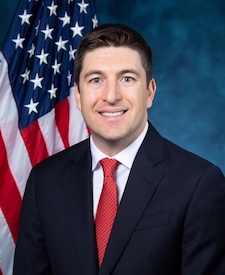
Rep. Bryan Steil
Sponsored bills
Maddy summaryThis bill, known as the No Free Rides Act of 2026, would prohibit federal public transportation funding recipients from offering universal free fare policies that allow all riders to use transit services without paying. The law would still permit targeted fare policies that provide free or reduced-cost rides for specific groups such as seniors, low-income riders, students, or employees with employer-paid agreements. Additionally, the Secretary of Transportation could grant waivers if a transit agency can demonstrate a dedicated non-federal revenue source to support universal free fare programs. The measure directly affects public transportation agencies that receive federal assistance under Title 49 of the United States Code.
Maddy summaryThis resolution (HRES 1063) is a symbolic measure designating February 2026 as "Career and Technical Education Month" to recognize the importance of career and technical education (CTE) programs. It does not create new policies or funding but formally supports CTE's role in preparing students for high-demand jobs by encouraging educators and parents to promote CTE as a valid educational pathway. The resolution references CTE's alignment with workforce needs and cites bipartisan support from past legislation like the 2018 Strengthening Career and Technical Education Act. It affects no specific individuals or programs, serving only as a non-binding statement of support.
Maddy summaryThe SCAM Act requires online platforms that display paid advertisements (like social media sites) to verify advertiser identities, implement scam detection systems, and remove fraudulent ads within 24 hours of confirmation. It directly affects platforms that accept payment for ads, targeting scams such as fake giveaways, romance scams, and AI impersonations that cost consumers $195 billion in 2024 (per FTC data). Key mechanisms include mandatory identity checks for advertisers, active monitoring systems, and a 72-hour investigation window for reported scams. The law aims to reduce fraud by shifting responsibility to platforms, with enforcement by the FTC and state attorneys general.
Maddy summaryThis bill renames "Apostle Islands National Lakeshore" as "Apostle Islands National Park and Preserve," creating two distinct areas within the same unit. The Park (with stricter rules) prohibits hunting/trapping except under tribal agreements, while the Preserve maintains existing hunting, fishing, and trapping rules from before the bill. Boundaries are defined by a specific map, and the National Park Service must add interpretive signage about regional history and tribal connections at visitor centers. Tribal treaty rights to hunt, fish, and gather remain fully protected under this law.
Maddy summaryThis bill prevents state or local governments from banning or restricting energy connections (like installation, modification, or access) based on the type or source of energy, such as electricity, natural gas, or renewable fuels. It directly affects consumers choosing energy providers and energy companies seeking to offer services. The key provision prohibits local laws, regulations, or policies that limit energy services sold in interstate commerce, covering all energy types listed in the bill’s definitions. It does not create new programs but limits regulatory authority at the state or local level. The law aims to ensure open access to diverse energy sources without source-based restrictions.
Maddy summaryThe Make Elections Great Again Act (HR 7300) would require voters to present photo identification to cast ballots in person or by mail for federal elections, with limited exceptions for religious objections or military voters. It would establish new requirements for proving U.S. citizenship during voter registration, including documentary proof of citizenship and proof of state residency. The bill would change mail-in ballot procedures by requiring voters to request mail-in ballots (rather than universal mail-in voting), implementing barcode tracking for mail-in ballots, and setting strict deadlines for ballot receipt. These provisions would apply to all states for federal elections held in 2027 or later, affecting how voters register, vote in person, and submit mail-in ballots for federal office elections.
Maddy summaryHR 7137, the Shutdown Fairness Act, requires federal agencies to pay covered employees (including most federal workers and military personnel) and covered contractors their regular pay during government shutdowns. It appropriates funds from the Treasury to cover standard employee compensation and contractor payments for work performed during a lapse in regular appropriations, ensuring pay continues without delay (within 7 days if a shutdown is ongoing at enactment) and aligns with regular pay schedules. The bill applies only to individuals employed or with accepted offers before the shutdown began and mandates that these payments be charged to future appropriations. It does not change agency obligations under existing contracts or authorize new spending beyond the specified shutdown period.
Maddy summaryHR 7100 establishes a Department of Justice Task Force on Anti-Sikh Hate and Discrimination to address systemic bias against Sikhs. The Task Force must draft a formal definition of anti-Sikh hate for DOJ use, develop educational programs for law enforcement and schools, and produce annual reports on hate crimes and trends. It requires quarterly collaboration with Sikh organizations and translation of materials into Punjabi. The bill directly affects Sikhs in the U.S. (who face disproportionate targeting as noted in FBI data) and mandates federal agencies to improve hate crime data collection and response. This is a policy-focused measure to standardize definitions, enhance reporting, and support community safety through DOJ action.
Maddy summaryThis symbolic House resolution expresses U.S. congressional support for Iranian protesters demanding democracy and human rights. It condemns the Iranian regime's violent suppression of protests, including killings, mass arrests, and internet restrictions, while urging the regime to release political prisoners and restore communication access. The resolution reaffirms the Iranian people's right to self-determination through free elections and echoes a 2023 resolution (HCR 7) that similarly praised protesters. As a non-binding expression of support, it does not impose new policies or alter U.S. government actions.