Maddy summaryHR 648, the Strengthening our Servicemembers with Milk Act, requires the Secretary of Defense to provide a variety of milk options - including unflavored, organic, lactose-free, and different fat levels - to all members of the Armed Forces at military dining facilities. The bill mandates that installations offer these choices to support servicemember nutrition and dietary needs. It also prohibits purchasing milk from entities owned or controlled by foreign adversaries, as defined by Commerce Department regulations. This policy directly affects military personnel dining at on-base facilities nationwide.
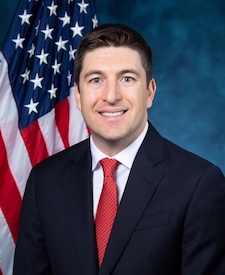
Rep. Bryan Steil
Sponsored bills
Maddy summaryHR 427 amends an existing tax law definition to clarify what constitutes "solicitation of orders" for sales tax purposes. It adds that any business activity facilitating order solicitation counts as such - even if the activity also serves other business purposes. This affects out-of-state businesses selling goods or services across state lines, as it defines when they must collect sales tax. The change simplifies compliance by making the definition clearer for businesses operating in multiple states. It is a technical amendment to existing law, not a new policy.
Maddy summaryThis bill reauthorizes the Great Lakes Restoration Initiative (GLRI) through fiscal year 2031, providing $500 million annually for Great Lakes cleanup and restoration projects. It directly affects federal agencies (like the EPA), state governments, tribes, and environmental groups working on Great Lakes water quality, habitat restoration, and pollution prevention. The key provision extends existing funding levels for five additional years (2027-2031), ensuring continued support for projects addressing invasive species, toxic pollutants, and coastal wetlands restoration across the Great Lakes region. This is a funding authorization bill, not a policy change to the program's scope.
Maddy summaryHR 9487, the House Office of Legislative Counsel Modernization Act, allows the House Legislative Counsel to appoint multiple attorneys as Deputy Legislative Counsel instead of just one. This change streamlines internal staffing for the Office of Legislative Counsel, which drafts bills and provides legal advice to the House. The bill requires the Legislative Counsel to formally notify the Speaker and Minority Leader if multiple deputies are appointed, specifying who will perform the Legislative Counsel's duties. It directly affects the House's internal operations but does not change legislative policy or impact constituents.
Maddy summary# Summary of Proposed Legislation This comprehensive legislative proposal contains multiple sections addressing election integrity, campaign finance reform, cybersecurity, census operations, and related government functions. Key provisions include: 1. **Campaign Finance Reforms**: - Increased thresholds for political committee reporting requirements - Repeal of requirements for political committees to report donor identification - Exemption of uncompensated internet communications from contribution/expenditure treatment - Protection of donor privacy for tax-exempt organizations through the "Speech Privacy Act of 2023" 2. **Election Security**: - Establishment of a process for testing and monitoring cybersecurity vulnerabilities in election equipment - Requirements for the Secretary of Homeland Security to notify state officials about election cybersecurity incidents - Exclusive authority for the Election Assistance Commission regarding guidelines for voting system certification 3. **Census and Redistricting**: - Establishment of a permanent Census Monitoring Board with bipartisan composition to review census operations - Clarification of state authority over congressional redistricting maps - Provisions regarding the Speaker of the House's authority to join civil actions related to apportionment 4. **Other Key Provisions**: - Termination of the Disinformation Governance Board and prohibition on funding similar entities - Amendments to the Federal Election Campaign Act to increase reporting thresholds and exempt certain communications - Various technical corrections to existing campaign finance law The legislation appears to focus on enhancing election security, reducing regulatory burdens on political organizations, protecting donor privacy, and strengthening oversight of census operations while maintaining constitutional boundaries between federal and state authority.

Maddy summaryThis bill updates federal law to ensure tribal child support enforcement agencies have the same access to tax information as state agencies. It amends the Social Security Act and Internal Revenue Code to explicitly include tribal organizations receiving federal grants under Section 455(f) in provisions allowing the use of tax refund data to collect overdue child support payments. Tribal agencies will now be treated equally with state agencies for accessing tax information and receiving reimbursement for enforcement reports. This change directly affects Native American tribes operating child support programs and the parents and children they serve, enabling more effective collection of overdue support.
Maddy summaryThis bill requires federal financial regulators to coordinate with state insurance regulators before collecting data from insurance companies, ensuring they first check if the data is already available through state agencies or public sources. It strengthens confidentiality protections by preventing the sharing of nonpublic data with federal regulators from waiving existing privacy rights under federal or state law. Insurance companies and state regulators are directly affected, as the law governs how data is shared between federal financial regulators and state agencies. The bill modifies existing rules to streamline data collection while maintaining privacy safeguards.
Maddy summaryThis bill changes how the Architect of the Capitol - the official responsible for managing the U.S. Capitol complex - is appointed. It requires a congressional commission (including chamber leaders and key committee chairs) to appoint the Architect based solely on qualifications, not politics, for a 10-year term with possible reappointments. The bill also sets a 120-day deadline for appointing a Deputy Architect and gives the commission authority to fill vacancies in that role if needed. These changes replace previous rules that allowed the President to appoint the Architect directly.
Maddy summaryHR 2367, the Truck Parking Safety Improvement Act, creates a federal grant program to address commercial truck parking shortages on highways. It provides competitive grants (totaling $175M-$320M over three years) for projects like building new rest areas, expanding parking at ports or truck stops, or improving safety at existing facilities. The program requires all funded parking to be free, publicly accessible to all truck drivers, and maintained without user fees. This directly affects commercial truck drivers, motor carriers, and highway safety by aiming to improve parking access, reduce traffic congestion, and enhance safety on federal-aid highways.
Maddy summaryThis bill terminates the Advisory Committee on the Records of Congress by removing it from U.S. Code, effective 60 days after enactment. It requires the Director of the Center for Legislative Archives to submit annual reports on congressional records management to the Archivist, Secretary of the Senate, and Clerk of the House. The Archivist, Secretary, and Clerk must also meet annually to review these records. These provisions replace the committee's oversight role with a direct reporting process managed by federal agencies.