

Maddy summaryHR 7455, the Sunset Act of 2024, requires federal agencies to automatically expire significant rules after 10 years unless Congress passes a new law extending them. Agencies must submit reports 180 days before expiration, and Congress can extend rules via joint resolution within 3 legislative days of receiving the report. The bill also mandates annual reviews of 10% of active agency rules for 9 years, with rules not extended by Congress after the 10-year period expiring. It applies to all major agency rules (e.g., environmental or safety regulations) and includes limited presidential exemptions for emergencies, but does not affect existing rules already in effect.
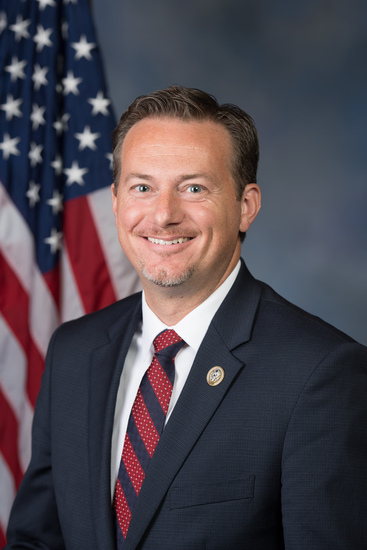
Rep. Michael Cloud
Sponsored bills
Maddy summaryHR 7450, the Protecting Privacy in Purchases Act, prohibits payment card networks and covered entities (like payment processors) from requiring or assigning merchant category codes that specifically identify firearms retailers as different from general stores or sporting goods retailers. This directly affects firearms retailers and payment networks by preventing them from using business classification codes that could flag firearm sales. The bill establishes an enforcement process where the Attorney General investigates complaints, issues remediation notices, and can seek court injunctions for non-compliance, while preempting state or local laws on this issue. It does not create private lawsuits for individuals.
Maddy summaryHR 7049 repeals a Veterans Affairs directive requiring COVID-19 vaccinations for Veterans Health Administration (VHA) health care personnel. This bill directly affects VA medical staff by removing a specific policy implemented in 2022. The key provision mandates the Secretary of Veterans Affairs to formally cancel the directive (VHA Directive 1193.01) and prohibits issuing any substantially similar future rule. The bill focuses solely on reversing an existing administrative requirement, with no new benefits or obligations added.
Maddy summaryHR 7374 designates the United States Postal Service facility at 500 Sergeant Gonzales Drive in Fort Davis, Texas, as the "Sergeant Manuel Sillas Gonzales Post Office." This bill directly affects the specific postal facility by changing its official name to honor Sergeant Manuel Sillas Gonzales. The key mechanism requires all federal references in laws, documents, or records to use the new name moving forward. As a naming bill, it makes no substantive policy changes beyond the official designation.
Maddy summaryThis bill restricts how credit reporting companies share homebuyers' credit reports during mortgage applications. It prevents companies from sending these reports to third parties (like marketers) just because a lender requested them for a mortgage. Only specific entities can receive the reports: the mortgage lender who originated the loan, the company servicing the loan, or the bank holding the homebuyer's account. This directly protects homebuyers' privacy by limiting unauthorized sharing of their financial data.
This resolution expresses the sense of the House of Representatives that former President Trump did not engage in insurrection or rebellion against, nor give aid or comfort to the enemies of, the United States.
Maddy summaryHJRES 107 is a congressional resolution seeking to block a Federal Communications Commission (FCC) rule published on January 22, 2024 (89 Fed. Reg. 4128). The resolution aims to disapprove the FCC's rule implementing digital discrimination protections under the Infrastructure Investment and Jobs Act, which would have required internet providers to prevent discriminatory practices. If passed, this resolution would nullify the FCC rule, preventing it from taking effect under the Congressional Review Act (Chapter 8 of Title 5, U.S. Code). The bill directly affects the FCC's regulatory authority over digital discrimination enforcement in broadband services.
Maddy summaryThis resolution seeks congressional disapproval of a Treasury Department rule (88 Fed. Reg. 80584, November 2023) that established spending guidelines for $350 billion in federal Coronavirus State and Local Fiscal Recovery Funds. If passed, it would nullify the rule, preventing the Treasury from enforcing its specific restrictions on how states and localities could use these pandemic recovery funds. The bill does not alter the underlying funding program but targets the implementation rules through a procedural disapproval process under Title 5 of the U.S. Code. It directly affects the Treasury Department's authority to administer the fund distribution rules.
Maddy summaryHR 7083, the RAZOR Act, prohibits federal agencies from removing or altering barriers (like fences or fences) built by states along the U.S. border to prevent unlawful crossings. It directly affects federal departments and agencies, such as the Department of Homeland Security, by restricting their ability to modify state-constructed border infrastructure. The key provision is a clear ban on any federal action that would change or remove these state-built barriers. This bill makes a specific policy change regarding federal-state border infrastructure authority without altering broader immigration law.
Maddy summaryThe Death Tax Repeal Act would eliminate the federal estate tax and generation-skipping transfer tax for estates of people who die on or after the bill's enactment date, and for generation-skipping transfers made after that date. It would also establish a new $10 million lifetime gift tax exemption (adjusted annually for inflation) and replace the existing gift tax rate schedule with a revised structure. These changes would primarily affect high-net-worth individuals and their heirs, as the estate tax and gift tax typically apply to large estates or gifts exceeding the new exemption threshold. The bill's provisions would take effect on the date of enactment, with transitional rules for the year the bill is signed into law.