Maddy summaryThis bill blocks federal funding for Planned Parenthood Federation of America and its clinics for one year unless they certify they won't perform abortions. Exceptions apply for pregnancies resulting from rape or incest, or when a woman's life is in danger due to a medical condition. The bill redirects the redirected funds to community health centers and other providers serving women's health needs, authorizing $235 million for this purpose. It explicitly states this will not reduce overall federal funding for women's health services. The policy change directly affects Planned Parenthood clinics receiving federal funds, requiring them to certify abortion restrictions or lose funding.
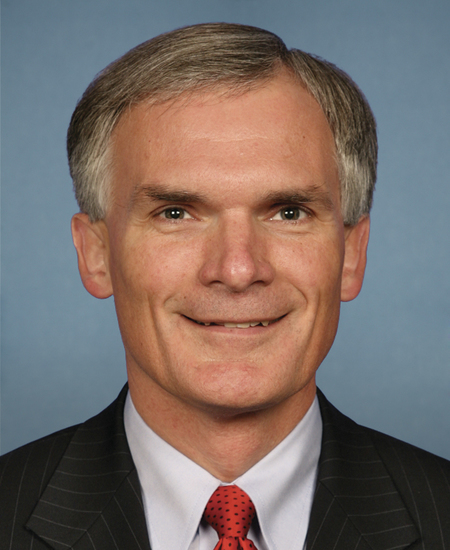
Rep. Robert E. Latta
Sponsored bills
Maddy summaryHR 330, the Organ Donation Referral Improvement Act, mandates a study by the Secretary of Health and Human Services on using electronic automated referral systems to improve organ donation processes. The study will examine how systems that automatically identify potential deceased donors through hospital electronic health records and refer them to organ procurement organizations could save staff time, improve eligibility determination speed, and increase donation volumes. It will also assess benefits of using standardized clinical criteria, secure data transmission, and best practices for implementation. The study, due within one year of enactment, will produce recommendations for nationwide adoption and be reported to relevant congressional committees. This bill directly affects hospitals and organ procurement organizations by studying a potential process change for organ donor referrals.
Maddy summaryThis bill (HR 9322) is a naming resolution that officially renames a U.S. Postal Service facility at 675 Wolf Ledges Parkway in Akron, Ohio, as the "Judge James R. Williams Post Office Building." It does not change any policies, services, or funding - it only updates the building's official name in all federal records, maps, and documents. The bill directly affects USPS administrative records and public references to the Akron facility. It was passed by Congress in December 2024 and signed into law on January 4, 2025.
Maddy summary# Summary of Proposed Legislation This comprehensive legislative proposal contains multiple sections addressing election integrity, campaign finance reform, cybersecurity, census operations, and related government functions. Key provisions include: 1. **Campaign Finance Reforms**: - Increased thresholds for political committee reporting requirements - Repeal of requirements for political committees to report donor identification - Exemption of uncompensated internet communications from contribution/expenditure treatment - Protection of donor privacy for tax-exempt organizations through the "Speech Privacy Act of 2023" 2. **Election Security**: - Establishment of a process for testing and monitoring cybersecurity vulnerabilities in election equipment - Requirements for the Secretary of Homeland Security to notify state officials about election cybersecurity incidents - Exclusive authority for the Election Assistance Commission regarding guidelines for voting system certification 3. **Census and Redistricting**: - Establishment of a permanent Census Monitoring Board with bipartisan composition to review census operations - Clarification of state authority over congressional redistricting maps - Provisions regarding the Speaker of the House's authority to join civil actions related to apportionment 4. **Other Key Provisions**: - Termination of the Disinformation Governance Board and prohibition on funding similar entities - Amendments to the Federal Election Campaign Act to increase reporting thresholds and exempt certain communications - Various technical corrections to existing campaign finance law The legislation appears to focus on enhancing election security, reducing regulatory burdens on political organizations, protecting donor privacy, and strengthening oversight of census operations while maintaining constitutional boundaries between federal and state authority.

This joint resolution proposes a constitutional amendment prohibiting total outlays for a fiscal year from exceeding total receipts for that fiscal year unless Congress authorizes the excess by a three-fifths roll call vote of each chamber. The prohibition excludes outlays for repayment of debt principal and receipts derived from borrowing. The amendment requires a three-fifths roll call vote of each chamber to increase the public debt limit. It prohibits a bill to increase revenue from becoming law unless it has been approved by a majority roll call vote of each chamber. The amendment also requires the President to submit an annual budget in which total outlays do not exceed total receipts. Congress may waive these requirements due to a declaration of war or a military conflict that causes an imminent and serious military threat to national security.
Maddy summaryHR 45 (FIND Act) requires federal government contractors to certify they do not discriminate against firearm businesses (including manufacturers, dealers, and trade associations) in their policies or practices. The bill mandates that contractors and subcontractors (for contracts over 10% of the prime contract value) certify they have no discriminatory policies and will not adopt them during the contract term. Violations could lead to contract termination and potential debarment. This applies to all federal procurement contracts awarded after the bill's enactment, excluding sole-source contracts. The law aims to ensure firearm businesses are treated equally in government contracting without restricting legitimate business criteria like creditworthiness or legal compliance.
Maddy summaryThis bill, HR 1097 (Everett Alvarez, Jr. Congressional Gold Medal Act of 2023), authorizes the award of a Congressional Gold Medal to Everett Alvarez, Jr., in recognition of his service as a U.S. Navy pilot and Vietnam War prisoner of war. It directly honors Alvarez, who was the first U.S. pilot shot down in the Vietnam War, spent over 8.5 years in captivity, and later served in the Peace Corps and Veterans Administration. The bill’s key mechanism is directing the U.S. Mint to strike a gold medal bearing his name and image, with bronze duplicates available for sale to cover costs. It does not create new policies or affect any group beyond the honoree.
Maddy summaryThis bill requires Medicare Advantage plans to implement electronic prior authorization systems by 2027 and publish detailed data on their approval and denial rates for medical services by 2026. It directly affects Medicare Advantage plans (private insurers offering Medicare coverage) and their enrollees (seniors 65+), mandating transparency about prior authorization decisions, processing times, and appeal outcomes. Key provisions include requiring plans to report annual statistics on request approvals/denials, average processing times, and use of technology, with this data published publicly by the Centers for Medicare & Medicaid Services. The bill also sets timelines for plan responses to prior authorization requests and mandates reports to Congress on implementation and impacts.
Maddy summaryThis bill directs the Architect of the Capitol to create a time capsule for the U.S. Semiquincentennial (250th anniversary of independence). Congressional leadership will determine its contents, including representative materials about the Semiquincentennial, copies of key legislative milestones, and a message to future Congress. The capsule will be sealed on the Capitol's West Lawn by July 4, 2026, and remain unopened until July 4, 2276, when it will be presented to the 244th Congress for their consideration. The bill is procedural and does not affect citizens or change existing laws.
Maddy summaryHR 5371, the Choices for Increased Mobility Act of 2023, updates Medicare payment rules for manual wheelchairs. It clarifies that Medicare Part B will not cover the extra cost of titanium or carbon fiber materials in a wheelchair's base, effective January 1, 2023. This specifically affects Medicare beneficiaries who use manual wheelchairs with these materials, as payments will now be calculated without including those component costs. The bill directly changes how Medicare reimburses providers for such wheelchairs by excluding these materials from the standard payment amount. This is a technical adjustment to Medicare's fee schedule, not a new benefit or eligibility change.