

Maddy summaryThis bill establishes a federal program to help low-income households pay for drinking water and wastewater services. It provides $500 million annually (2026-2030) in grants to states and tribes that already administer energy assistance programs, allowing them to cover past-due bills or other costs for households meeting specific income criteria (e.g., receiving certain federal benefits or earning ≤150% of the poverty level). The program prohibits using these funds to replace existing assistance and requires technical help to streamline eligibility. It directly affects low-income households in participating states and tribes, particularly those facing water affordability challenges.
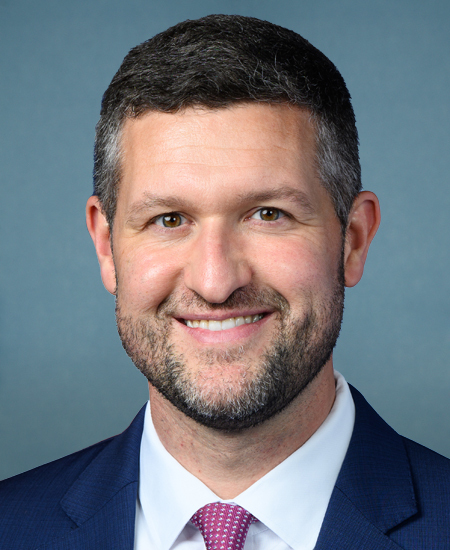
Rep. Patrick Ryan
Sponsored bills
Maddy summaryHR 6326 requires the Secretary of Defense to create a plan within 180 days to speed up private companies' access to classified facilities used for national security work. The bill directs the plan to include specific actions like allowing parallel processing of construction and security reviews, evaluating standardized templates for faster approvals, and creating a digital platform to manage facility requests using AI tools. It directly affects private-sector entities seeking to work with the Department of Defense on classified projects. Key provisions focus on streamlining bureaucratic steps - such as reducing construction security plan review times and designating shared facilities for all classified work - to accelerate innovation and manufacturing in national security. The bill proposes administrative changes to the process, not new funding or policy shifts.
Maddy summaryHR 6325 requires the Secretary of Defense to submit a detailed report to Congress within 180 days of enactment about how the Department of Defense uses a special contracting authority for follow-on production contracts. The report must cover all such contracts awarded between October 2020 and October 2025, including the number of prototype projects, follow-on contract status, contractor performance, and any challenges or recommendations for improvement. This bill directly affects the Department of Defense (as the reporting entity) and Congress (as the recipient of the report). It does not change existing laws or create new programs, but mandates a specific review of current contracting practices under Section 4022 of Title 10, U.S. Code.
Maddy summaryHR 6215, the Small Business RELIEF Act, exempts small businesses from import duties imposed under Executive Order 14257 (90 Fed. Reg. 15041) for goods they import or use. It requires the President to refund duties paid by small businesses within 90 days of the bill's enactment. The bill defines "small business concern" using the standard Small Business Act criteria (15 U.S.C. 632). This directly affects small businesses importing goods, providing immediate cost relief by removing a specific tariff and refunding past payments.
Maddy summaryHRES 581 is a procedural resolution that establishes rules for the House to consider H.R. 185, the Epstein Files Transparency Act. It waives all points of order against the bill, adopts a specific amendment (the full text of the Epstein Files Transparency Act), and limits debate to one hour equally divided between the Judiciary Committee's chair and ranking minority member. The resolution also requires the Attorney General to release unclassified DOJ records related to Jeffrey Epstein within 30 days, with limited exceptions for privacy or national security.
Maddy summaryThis bill would require Medicare to cover early detection screening tests for Alzheimer's disease and related dementias starting January 1, 2028. It defines eligible tests as FDA-cleared genomic blood tests, blood product analyses, or equivalent medical imaging methods (like protein expression or whole genome sequencing) that detect pre-symptomatic or early-stage conditions. Medicare beneficiaries would receive this coverage without cost-sharing for these specific screenings. The bill amends Medicare coverage rules to explicitly include these tests under Section 1861(nnn) of the Social Security Act.
Maddy summaryThis bill creates a new Medicare buy-in option for eligible retired or disabled first responders aged 50-64. It directly affects qualified law enforcement officers, certain emergency medical personnel, and federal firefighters who have separated from service due to retirement or disability. Key provisions include establishing a premium calculated based on Medicare's average costs, coordinating enrollment periods with the Affordable Care Act marketplace, and ensuring coverage counts as "minimum essential coverage" for tax purposes. The bill also prohibits Medicaid beneficiaries from using this option and requires outreach efforts (2027-2029) to help eligible individuals enroll.
Maddy summaryThe Global Respect Act (HR 6151) requires the U.S. President to publicly list foreign officials responsible for severe human rights violations against LGBTQI individuals, including torture, prolonged detention, or violence based on sexual orientation or gender identity. It mandates denying visas and entry to listed individuals and requires annual reports on the list's updates and impacts. The bill also directs the State Department to track global violence against LGBTQI people and update annual human rights reports to include discrimination based on sexual orientation or gender identity. These provisions directly affect foreign government officials and entities implicated in such abuses, aiming to increase accountability through U.S. visa restrictions.
Maddy summaryHR 6056, the International Human Rights Defense Act of 2025, establishes a permanent Special Envoy at the State Department to lead U.S. foreign policy efforts addressing discrimination and violence against LGBTQI+ people globally. The bill requires the U.S. government to develop and update a biannual global strategy to prevent criminalization and violence against LGBTQI+ individuals, mandate detailed reporting on such abuses in annual country reports, and ensure all U.S. foreign assistance programs include inclusive nondiscrimination policies. This legislation directly affects U.S. foreign policy implementation, federal agencies receiving funding, and LGBTQI+ communities facing persecution worldwide. The bill aims to coordinate U.S. government efforts across departments and with international partners to advance LGBTQI+ rights globally through concrete policy mechanisms.
Maddy summaryThis bill requires all new passenger vehicles manufactured for sale in the U.S. to include AM radio as standard equipment (not an optional add-on) by 2027-2028, depending on manufacturer size. It mandates that AM radio receivers must be easily accessible to drivers and allows compliance through digital AM broadcast technology. During a transition period, manufacturers must clearly label vehicles without AM radio but cannot charge extra for this feature. The bill also mandates a GAO study on AM radio's role in emergency alerts and includes a 10-year sunset provision for the rule. It preempts state laws regarding AM radio access in vehicles.