

Maddy summaryThe Global Respect Act (HR 6151) requires the U.S. President to publicly list foreign officials responsible for severe human rights violations against LGBTQI individuals, including torture, prolonged detention, or violence based on sexual orientation or gender identity. It mandates denying visas and entry to listed individuals and requires annual reports on the list's updates and impacts. The bill also directs the State Department to track global violence against LGBTQI people and update annual human rights reports to include discrimination based on sexual orientation or gender identity. These provisions directly affect foreign government officials and entities implicated in such abuses, aiming to increase accountability through U.S. visa restrictions.
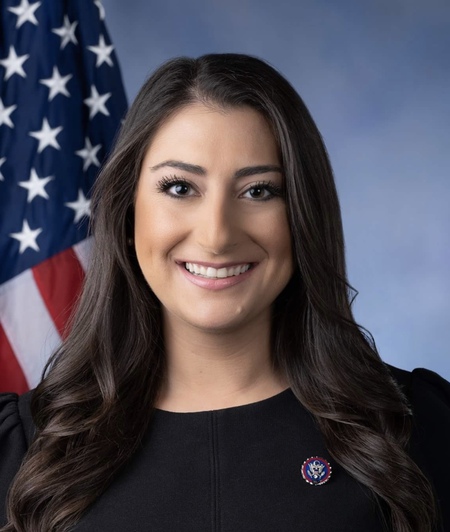
Rep. Sara Jacobs
Sponsored bills
Maddy summaryThis bill amends Section 1983 of federal law (42 U.S.C. 1983) to explicitly allow lawsuits against federal officials who violate constitutional rights while acting under federal authority. It directly affects individuals whose constitutional rights were allegedly infringed by federal employees, such as law enforcement or agency staff. The key provision inserts "of the United States" before "of any State" in the statute, expanding the existing legal remedy for state officials to cover federal officials as well. This creates a clear, standalone legal path for citizens to seek redress for federal constitutional violations without relying on precedent.
Maddy summaryHR 6056, the International Human Rights Defense Act of 2025, establishes a permanent Special Envoy at the State Department to lead U.S. foreign policy efforts addressing discrimination and violence against LGBTQI+ people globally. The bill requires the U.S. government to develop and update a biannual global strategy to prevent criminalization and violence against LGBTQI+ individuals, mandate detailed reporting on such abuses in annual country reports, and ensure all U.S. foreign assistance programs include inclusive nondiscrimination policies. This legislation directly affects U.S. foreign policy implementation, federal agencies receiving funding, and LGBTQI+ communities facing persecution worldwide. The bill aims to coordinate U.S. government efforts across departments and with international partners to advance LGBTQI+ rights globally through concrete policy mechanisms.
Maddy summaryThis bill requires all new passenger vehicles manufactured for sale in the U.S. to include AM radio as standard equipment (not an optional add-on) by 2027-2028, depending on manufacturer size. It mandates that AM radio receivers must be easily accessible to drivers and allows compliance through digital AM broadcast technology. During a transition period, manufacturers must clearly label vehicles without AM radio but cannot charge extra for this feature. The bill also mandates a GAO study on AM radio's role in emergency alerts and includes a 10-year sunset provision for the rule. It preempts state laws regarding AM radio access in vehicles.
Maddy summaryHRES 865, the "Opening the People’s House Resolution," would amend House rules to allow any member to end a "district work period" (a time when members work in their districts instead of in Washington) by submitting a letter to the Clerk. If a majority of House members submit such letters, the current district work period would end within two days, and the Speaker could not schedule a new one for three weeks after the House reconvenes. The Clerk would publicly list all signers in the Congressional Record and online daily. This resolution directly affects House members and the Speaker by changing how district work periods are terminated.
Maddy summaryHR 5940, the Seniors Deserve SMARTER Care Act of 2025, prohibits the implementation of the Medicare WISeR model (described in a July 2025 federal notice). The bill specifically blocks the Secretary of Health and Human Services from using the WISeR model, which would have required prior authorization for certain medical services under Medicare. This directly affects Medicare beneficiaries and healthcare providers who would have been subject to the model's requirements. The key provision is a clear ban on implementing WISeR or any substantially similar payment model, preventing changes to Medicare's service authorization process. The bill does not create new programs but stops a specific proposed Medicare policy change.
Maddy summaryHR 5953 prohibits financial institutions from charging certain fees to federal and military employees during government shutdowns. Specifically, it bans banks from imposing fees for insufficient funds on debit transactions or late fees on credit card payments if those payments were due while the employee was furloughed or working without pay due to a funding gap. The bill applies directly to covered persons - federal civil service, military, and uniformed service employees affected by a shutdown - and targets two common fees that can compound financial stress during pay delays. It creates a clear rule requiring banks to waive these specific charges during the period when government operations are halted due to lack of appropriations.
Maddy summaryThis bill ensures continuous funding for SNAP (food assistance) and WIC (nutrition program for mothers/children) during government funding gaps. It authorizes emergency Treasury funds to cover SNAP/WIC benefits and reimburse states for costs if Congress fails to pass regular appropriations for the Department of Agriculture by September 30, 2025. The funding covers missed payments retroactively from September 30, 2025, through the bill’s enactment date, and continues until either regular appropriations pass or September 30, 2026. It directly affects low-income households relying on these programs and state agencies administering them during funding lapses.
Maddy summaryThis bill, HR 5973, requires federal immigration enforcement personnel to follow strict limits on force use, including proportional application, mandatory de-escalation efforts, and prohibitions on equipment like flash bangs or rubber bullets except for specific public safety threats. It mandates body-worn and vehicle cameras for all operations, with footage retained for one year (three years for force incidents or complaints), and grants affected individuals the right to inspect recordings. The law also requires annual training on force policies, First Amendment compliance, and racial bias avoidance, while demanding detailed quarterly reports to Congress on force usage, assaults on agents, and equipment approvals. These provisions directly affect all federal immigration agents conducting enforcement actions, aiming to increase transparency and accountability during operations.
Maddy summaryHR 5925, the HHS Reproductive and Sexual Health Ombuds Act of 2025, establishes a new Ombuds position within the Department of Health and Human Services (HHS) to improve access to reproductive and sexual health services. The Ombuds will educate the public, analyze HHS data on service access, identify gaps in health insurance coverage for these services (including abortion care), and help connect people to providers and abortion funds. This role directly affects individuals seeking reproductive health care, particularly those from underserved groups like LGBTQ+ individuals, racial minorities, people with disabilities, and low-income populations. The Ombuds will operate independently, produce annual reports for Congress, and focus on providing evidence-based information while avoiding the collection of personal health data.