

Maddy summaryThis bill strengthens child labor protections by expanding the definition of hazardous work for minors, particularly in dangerous industries like mining and explosives, and requires the government to update these regulations every five years. It imposes strict rules on companies with federal contracts, prohibiting them from using child labor in their supply chains and holding them jointly liable if their subcontractors violate these rules. The legislation also increases penalties for violations, including higher fines for serious injuries or deaths, allows for stop-work orders, and enables victims to seek significant compensatory and punitive damages. Additionally, the bill mandates training programs to help identify and prevent child labor abuses and requires the Department of Labor to report annually on work-related injuries and deaths.
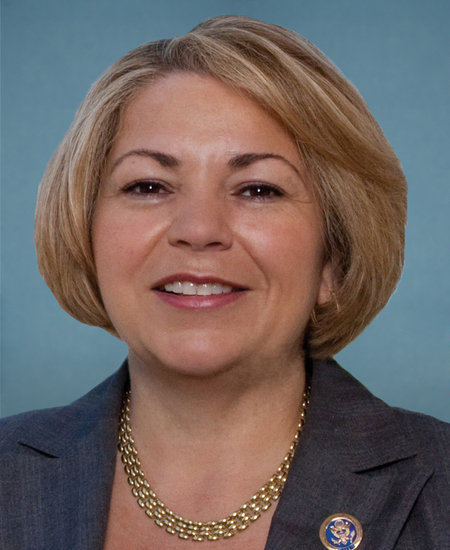
Rep. Linda T. Sánchez
Sponsored bills
Maddy summaryThis resolution commemorates the 30th anniversary of Taiwan's first direct presidential election in 1996 and expresses support for the preservation of its democratic institutions. It acknowledges Taiwan's history of free elections and peaceful transfers of power while reaffirming U.S. policy commitments under the Taiwan Relations Act and previous agreements. The text explicitly states that it does not authorize the use of military force, serving as a symbolic statement rather than a legislative action that changes laws or policy.
Maddy summaryThis bill proposes changes to the Social Security system that would affect workers, retirees, and survivors. Starting in 2028, it requires individuals to pay Social Security taxes on a decreasing percentage of their earnings above the annual cap, eventually eliminating the tax on excess income by 2032. The legislation also adjusts how benefits are calculated by increasing the portion of high earnings that count toward future payments and creating a new index to track inflation specifically for elderly consumers. Additionally, it modifies benefits for widows and widowers in two-income households and ensures that Supplemental Security Income recipients are not penalized by changes to their Social Security benefits.
Maddy summaryThe Keep Public Funds in Public Schools Act of 2026 eliminates a federal tax credit that allowed parents to deduct contributions to scholarship granting organizations from their income. By removing these specific tax breaks, the bill prevents the use of public tax dollars to support private school vouchers and scholarship programs. This change directly affects families who currently rely on these tax incentives to fund education outside the public school system. The provisions take effect for taxable years beginning after December 31, 2026.
Maddy summaryThe Rental Housing Investment Act provides tax incentives to encourage the development of new long-term residential rental properties in the United States. It allows developers to take an accelerated depreciation deduction of up to $150,000 per unit for buildings containing at least two dwelling units, with an increased limit of $250,000 per unit for projects designated as affordable housing. To ensure these properties remain available for rent, the bill includes rules that require the buildings to be used for rental purposes for at least 10 years, or 15 years for affordable housing, before the tax benefits are recaptured. These changes apply to properties placed in service after a 12-month delay following the law's enactment.
Maddy summaryThis bill creates a new funding program to hire more school counselors, psychologists, and social workers at schools with high numbers of low-income students. It provides federal grants to states, which then distribute money to local school districts to help them meet recommended staffing ratios of 250 students per counselor and 500 students per psychologist. To receive these funds, states must contribute matching money and submit detailed plans showing how they will improve student-to-provider ratios in their highest-need schools. The program is designed to address rising mental health issues among youth by increasing access to professional support directly within the school environment.
Maddy summaryThis bill authorizes the U.S. Mint to produce commemorative $5 gold and $1 silver coins marking the 25th anniversary of the September 11, 2001, terrorist attacks. The coins must feature designs honoring victims and first responders (including the inscription "Never Forget") and will be sold only during 2027-2028. All surcharges ($35 per gold coin, $10 per silver coin) collected from sales will fund the National September 11 Memorial and Museum at the World Trade Center, with no net cost to the federal government. The coins are legal tender but primarily intended for collectors, not circulation.
Maddy summaryThe Smithsonian American Women’s History Museum Act authorizes the creation of a new Smithsonian museum dedicated to women’s history, to be located within the National Mall Reserve in Washington, D.C. If the site is managed by another federal agency, the bill requires that agency to transfer the land after notifying Congress and relevant committees. The museum must ensure exhibits and programs accurately represent diverse women’s experiences by consulting a broad range of experts and community voices. The Smithsonian will submit biennial reports to Congress detailing how the museum meets these representation standards.
Maddy summaryThis concurrent resolution directs the President to withdraw U.S. military forces from active hostilities with Iran. The measure relies on the War Powers Resolution, requiring the President to end combat operations unless the forces are needed to defend the United States or its allies from an immediate attack. Any continued use of troops in such defensive scenarios must still follow specific reporting and notification rules, and full military engagement is only permitted if Congress explicitly authorizes it through a formal declaration of war or a specific authorization for force.
Maddy summaryThe No Taxpayer-Funded Settlement Slush Funds Act of 2026 prohibits the use of federal money to pay specific settlements involving high-ranking government officials and their close associates. It bars payments to the President, Vice President, their immediate families, cabinet members, senior executive staff, political appointees, and individuals connected to these roles, as well as any entity owned by the President or Vice President. Additionally, the bill restricts settlements related to claims about the January 6 Capitol attack, foreign election interference, or previously dismissed lawsuits, while requiring Treasury reports for large settlements and allowing the government to seek repayment if rules are broken.