

Maddy summaryHR 3028, the Duty Drawback Clarification Act, clarifies tariff classifications for whisky imports by updating the Harmonized Tariff Schedule. It replaces a general whisky tariff code with specific subheadings based on whisky type (Irish/Scotch, Bourbon, Rye, or "other") and container size (under or over 4 liters), adding 8 new statistical suffixes. This change directly affects whisky importers and U.S. Customs officials by standardizing how these products are classified for duty-free entry (as indicated by "Free" in the tariff). The new classifications take effect 15 days after the bill's enactment.
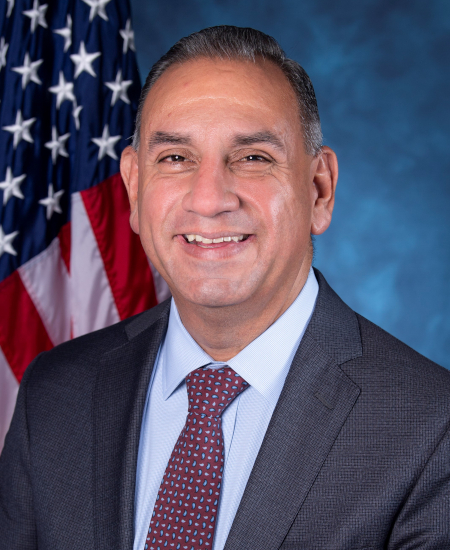
Rep. Gilbert Ray Cisneros, Jr.
Sponsored bills
Maddy summaryHR 2939, the Drone Espionage Act, updates existing espionage law to explicitly prohibit taking or transmitting video footage of defense information. It amends Title 18, U.S. Code, Section 793 by inserting "video" after "photographic negative" in the definition of prohibited materials. This change directly affects individuals who capture or share video of classified military or defense-related information, whether using drones or other devices. The bill makes no new criminal penalties but ensures video evidence is covered under current espionage statutes.
Maddy summaryThe DRIVE Act of 2025 requires the Department of Veterans Affairs (VA) to set mileage reimbursement rates for veterans at the federal government's current standard rate for employees using personal vehicles on official business, replacing the previous fixed rate of 41.5 cents per mile. It also mandates that the VA process and pay these reimbursements within 90 days of a veteran's valid request. This directly affects veterans who travel for VA medical appointments or services using their personal vehicles. The bill aligns veteran travel reimbursements with federal employee standards and ensures timely payments.
Maddy summaryHRES 326 is a non-binding resolution designating April 10 as "Dolores Huerta Day" to honor the late labor and civil rights leader Dolores Huerta. It recognizes her foundational work co-founding the United Farm Workers, leading grape boycotts that secured union contracts, advocating for farm workers' safety, and championing women's rights and Latino political representation. The resolution has no policy impact or direct effect on any group, as it solely serves to commemorate Huerta's legacy. It was introduced by multiple House members in recognition of her contributions to civil rights and equality.
Maddy summaryHR 2862 prohibits the federal government from leasing offshore areas in Southern California for oil and gas exploration or production. It directly affects oil and gas companies seeking permits in the Southern California Planning Area, as defined in the federal 2024-2029 Outer Continental Shelf leasing program. The bill amends the Outer Continental Shelf Lands Act to block all future leases in this region, preventing new drilling projects in the specified offshore waters. This is a concrete policy change that halts federal leasing decisions in the area without altering existing leases or operations.
Maddy summaryHR 2820, the California Clean Coast Act of 2025, prohibits new oil and gas leasing and related activities in federal waters off California's coast starting from its enactment date. This directly affects oil and gas companies seeking to develop new offshore resources in California’s outer Continental Shelf areas. The bill preserves existing leases issued before the law’s effective date but bans all future preleasing, leasing, and related activities in those waters. It represents a permanent federal policy change for California’s coastal offshore regions, with no impact on current leaseholders.
Maddy summaryHR 2849, the West Coast Ocean Protection Act of 2025, prohibits federal oil and gas exploration, development, and production on the outer Continental Shelf off the coasts of California, Oregon, and Washington. It directly affects oil and gas companies seeking leases in four specific planning areas: Washington/Oregon, Northern California, Central California, and Southern California. The bill amends existing law to block the Secretary from issuing any leases or authorizations for these activities in those designated zones. This creates a permanent ban on offshore drilling in these regions, replacing previous federal leasing plans.
Maddy summaryHRES 317 is a non-binding resolution urging the U.S. government to lead global efforts to halt and reverse the nuclear arms race. It calls on the President to pursue negotiations with nuclear-armed states to reduce arsenals, end the U.S. policy allowing first use of nuclear weapons, eliminate immediate launch readiness, stop developing new weapons, and support communities affected by nuclear programs. The resolution emphasizes diplomatic action over military modernization to reduce nuclear risks and prevent catastrophic conflict.
Maddy summaryThe GOSAFE Act prohibits the sale, manufacture, transfer, and possession of gas-operated semi-automatic firearms and large capacity ammunition feeding devices (those holding more than 10 rounds). It defines gas-operated firearms as those that use gas from fired cartridges to cycle the action, requiring the Attorney General to publish a list of prohibited firearms within 180 days. The bill establishes a process for manufacturers to seek approval for new firearm designs before selling to civilians and creates a "Firearm Safety Trust Fund" to cover related costs. Certain firearms are exempt, including single-shot, muzzle-loading, and firearms with permanently fixed magazines holding 10 or fewer rounds. Violations could result in fines up to $5,000 or up to 12 months in prison.
Maddy summaryThe American Family Act (HR 2763) establishes a new refundable child tax credit that provides monthly payments to eligible families with children. It would pay $300 per month for each child under age 6 and $360 per month (120% of $300) for each child age 6 or older, with income limits of $150,000 for joint filers and $112,500 for other filers. The bill creates a "period of presumptive eligibility" to determine eligibility for monthly payments, allowing families to receive advance payments based on information from previous tax returns. This would directly affect millions of families with children who meet the income requirements, providing more consistent financial support throughout the year rather than an annual tax credit.