

Maddy summaryThe Scratch Cooked Meals for Students Act establishes a pilot program to provide competitive grants to school food authorities for preparing meals using unprocessed or minimally processed ingredients. These grants, which cover costs such as equipment upgrades, staff training, and technology systems, are available for a two-year period and are prioritized for schools serving high numbers of students eligible for free or reduced-price lunches. To support implementation, the bill requires recipients to collaborate with a designated technical assistance center to create strategic plans and mandates a final report detailing changes in ingredient usage and menu preparation methods. The program is funded with up to $20 million annually from fiscal years 2027 through 2031, with a portion reserved for administrative and technical assistance expenses.
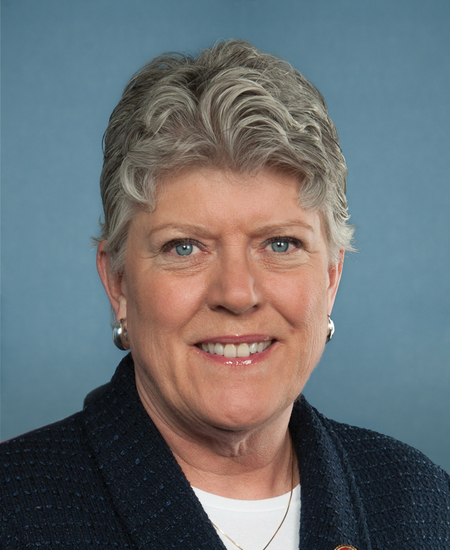
Rep. Julia Brownley
Sponsored bills
Maddy summaryThis bill amends the Food and Nutrition Act to exclude specific cost-of-living adjustments (COLAs) from SNAP income calculations. It removes from consideration increases in Social Security, Railroad Retirement, or VA benefits that take effect after January 1st of a fiscal year. As a result, households receiving SNAP benefits would no longer see their allotments reduced due to these government-provided income increases. The change applies to income assessed for the entire fiscal year and takes effect October 1, 2027.
Maddy summaryThis bill creates federal programs to advance alternative protein production through biomanufacturing and bioprocessing. It authorizes $15 million annually for research centers focused on protein diversification, $50 million for grants to companies building food biomanufacturing facilities, and $25 million for workforce development programs. The bill also requires a national strategy on protein security coordinated across multiple federal agencies. These provisions aim to strengthen food supply chains, create jobs in the growing protein sector, and reduce reliance on foreign commodities. The bill explicitly excludes insect-based food production from its scope.
Maddy summaryThis bill restores veterans' education benefits for periods spent at institutions later found to have fraud, closure, or approval issues. It prevents those periods from counting against a veteran's total benefit entitlement or lifetime limit. Educational institutions must repay the VA if they received benefits for veterans during these covered periods, including cases where courts found fraud or the school was closed for violations. The law applies to veterans using benefits under chapters 30, 31, 32, 33, 35, or 1606/1607 of title 38.
Dental Care for Veterans Act This bill expands eligibility for veterans for dental care provided by the Department of Veterans Affairs (VA). Specifically, the bill makes all veterans who are enrolled in the VA health care system eligible for VA-provided dental services. Currently, only veterans who have a service-connected dental issue or meet other narrow criteria are eligible for certain dental services. The bill phases in eligibility over four years based upon existing eligibility, degree of service-connected disability or other disability, prisoner of war status, award of a Purple Heart, financial need, or VA health care eligibility.
Maddy summaryThis bill establishes the Julius Rosenwald and Rosenwald Schools National Historical Park within the National Park System to honor the legacy of Julius Rosenwald and the thousands of schools he helped build for African American children in the segregated South. The park would include a headquarters in Chicago and three specific restored school sites in Maryland, South Carolina, and Virginia, while also creating a national network to connect and preserve other remaining Rosenwald Schools across the country. Key provisions allow the National Park Service to acquire land, enter into cooperative agreements with state and local governments for preservation efforts, and provide grants to support educational programs and research about Rosenwald's philanthropy and its impact on civil rights leaders.
Maddy summaryH.Res. 1291 is a non-binding resolution that formally recognizes May 3 through May 9, 2026, as Wildfire Preparedness Week. The bill aims to raise public awareness about wildfire risks and promote educational initiatives regarding fire safety and evacuation planning. It highlights the dangers of smoke exposure for both the general public and firefighters while noting that human activity causes the majority of wildland fires. This measure does not change laws or allocate funding, but rather expresses the House of Representatives' support for these preparedness goals.
Maddy summaryThis non-binding resolution expresses the House of Representatives' view that the FDA should regulate mifepristone, a medication used for abortion, based on scientific evidence rather than political pressure. It highlights over 25 years of data showing the drug is safe and effective when prescribed via telemedicine or dispensed by mail and pharmacy. The bill advocates for policies that ensure equitable access to this care, particularly for marginalized communities facing barriers due to state-level restrictions. By citing numerous studies and medical organizations, the resolution calls for transparent, science-based decisions to maintain current access methods.
Maddy summaryThe Protecting Our Democracy Act is a comprehensive legislative bill designed to prevent abuses of presidential power, restore checks and balances, and defend elections against foreign interference. Key provisions include prohibiting the President from granting self-pardons, requiring congressional oversight for pardons involving the President or their family, and banning the President from accepting payments from individuals who have received clemency. The bill also strengthens enforcement of the Hatch Act and ethics rules for political appointees, mandates greater transparency in presidential tax returns and campaign finances, and restricts the use of federal property for political conventions. Additionally, it expands reporting requirements for foreign contacts in federal campaigns and imposes stricter penalties for violations of election laws.
Improving SCRA Benefit Utilization Act This bill expands interest rate protections under the Servicemembers Civil Relief Act (SCRA) and requires expanded training for and outreach to servicemembers regarding financial literacy and SCRA protections. The SCRA caps the maximum interest charged on any debt incurred by a servicemember prior to entering active duty at 6% annually if the servicemember's ability to pay is materially affected by active-duty status; servicemembers must provide notice and other documentation to creditors to receive this cap. The bill requires creditors to apply this cap to all of a servicemember’s obligations or liabilities with that creditor, regardless of whether a certain obligation or liability was specifically mentioned in the required notice provided by the member to invoke SCRA rights. Further, the bill requires creditors to provide all necessary mechanisms to ensure a servicemember is able to submit any required documentation. The bill also requires that the financial literacy training program provided to servicemembers include information about consumer financial protections afforded to such members and their dependents, including protections regarding interest rate limits under the SCRA. Additionally, the bill requires the military department concerned to provide written notice of benefits under the SCRA to servicemembers at the time they first enter military service and, for members of the reserve components, at the time they first enter service in the reserves and at any time when they are mobilized or ordered to active duty for more than 30 days.