

Maddy summaryThe "Funding Early Childhood is the Right IDEA Act" proposes to increase authorized funding for specific programs under the Individuals with Disabilities Education Act (IDEA). This bill sets new appropriation levels for Part C of IDEA, which provides early intervention services for infants and toddlers with disabilities and their families. It also increases authorized funding for Section 619 of IDEA, which supports preschool special education for children aged three to five. These funding authorizations are scheduled for fiscal years 2027 through 2031, directly affecting children with disabilities and the state and local agencies that provide these services.
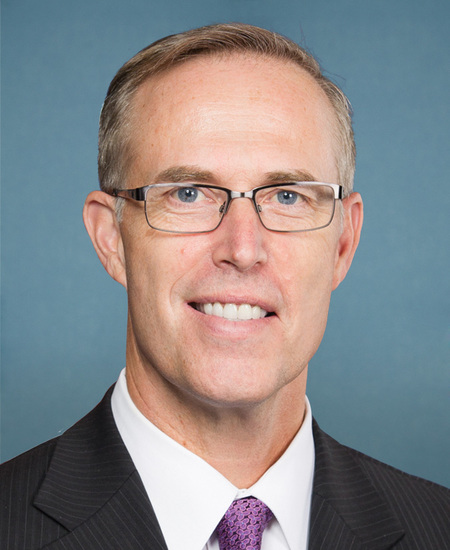
Rep. Jared Huffman
Sponsored bills
Maddy summaryThis concurrent resolution directs the President to remove United States Armed Forces from hostilities against Iran. It invokes a provision of the War Powers Resolution, asserting Congress's authority to require the termination of military engagement without a declaration of war or specific authorization. The resolution clarifies that it does not prevent the U.S. from defending itself or its allies from imminent attack, nor does it require the removal of forces not engaged in hostilities or disrupt intelligence operations. It also explicitly states that the resolution does not authorize any use of military force against Iran.
Maddy summaryHouse Resolution 1208 expresses the House of Representatives' support for honoring Earth Day and its historical role in promoting environmental protection and action. It encourages American citizens to engage in environmental stewardship and urges the President and the U.S. Government to take immediate action to address climate change, environmental injustices, and rejoin international climate agreements.
Maddy summaryThis bill, the Energy Consumer Protection Act of 2026, strengthens enforcement powers for the Federal Energy Regulatory Commission (FERC) to protect consumers in the electricity and natural gas markets. It allows FERC to ban companies or individuals who violate reporting rules or engage in deceptive practices from buying or selling energy and related services. The legislation also adds specific penalties for knowingly submitting false information about natural gas prices or availability to federal agencies. These changes apply to utilities, energy traders, and other market participants regulated by FERC.
Maddy summaryThe Momnibus Act is a comprehensive legislative bill designed to improve maternal health outcomes across the United States by addressing social determinants of health, expanding access to care, and reducing disparities among pregnant and postpartum individuals. The bill establishes a federal task force to coordinate efforts between agencies and stakeholders to eliminate preventable maternal mortality and severe morbidity, while providing sustained funding to community-based organizations to address nonclinical factors like housing, nutrition, and transportation. Key provisions include extending WIC eligibility to 24 months postpartum, creating grants to grow and diversify the perinatal workforce, implementing respectful maternity care training for all healthcare employees, and establishing compliance programs to track and address bias in maternity care settings. The legislation also includes specific measures for incarcerated mothers, veterans, and vulnerable populations affected by climate change, alongside funding for maternal mental health services and technology-enabled care models to expand access in underserved areas.
Maddy summaryThis concurrent resolution celebrates the 50th anniversary of the Magnuson-Stevens Fishery Conservation and Management Act on April 13, 2026. It recognizes the Act's significant impact on the sustainable and profitable management of the Nation's fishery resources, benefiting fishermen, coastal communities, and the seafood industry.
Maddy summaryThis resolution expresses the sense of the House of Representatives that former President Donald Trump, his Special Envoy Steven Witkoff, and all federal officials must comply with the Constitution's Foreign Emoluments Clause. It specifically calls for them to immediately turn over to the Department of the Treasury any payments received from the United Arab Emirates or other foreign states. Furthermore, the resolution urges them to divest from all business interests linked to foreign governments, including those tied to United Arab Emirates officials.
Maddy summaryThis resolution expresses the House of Representatives' opinion that the Department of Justice and other federal agencies should not administratively settle legal claims for money filed against the United States by a sitting President, specifically referencing President Donald Trump. The House believes that such settlements would violate the Domestic Emoluments Clause of the Constitution, which prevents a President from receiving payments from the government beyond their official salary. Therefore, the resolution advises the Department of Justice to refuse any administrative settlement of these claims, while clarifying that a President can still pursue lawsuits in independent courts. This position directly affects how the Department of Justice would handle such claims from a President.
Maddy summaryThe Transit Workforce Development Act expands how federal grants for buses and bus facilities can be used for workforce training. It increases the portion of these grants that transit agencies can dedicate to workforce development from 5% to 10% of the allocated funds. Additionally, the bill broadens the types of training eligible for these funds, allowing them to cover all buses, related equipment, and facility construction,
Maddy summaryThis concurrent resolution (HCONRES 40) directs the President to remove U.S. military forces from hostilities with Iran, as required by the War Powers Resolution. It applies directly to U.S. Armed Forces deployed in conflict with Iran, except for forces needed to defend the U.S. or allies from imminent attack. The bill mandates removal unless the President complies with War Powers Resolution reporting requirements for self-defense actions, without needing new congressional authorization. As a procedural resolution, it does not create new law but compels executive action under existing legal framework.