

Maddy summaryThis bill creates a National Resilience and Recovery Fund financed by specific taxes on crude oil and natural gas production. The fund will be supported by taxes from Gulf of Mexico offshore oil production, environmental taxes on crude oil, and a new windfall profits tax on large crude oil producers exceeding 300,000 barrels per day in 2023. The money will directly support four existing federal disaster resilience programs: Hazard Mitigation Grants, Building Resilient Infrastructure, Safeguarding Tomorrow Revolving Loans, and Flood Mitigation Assistance. The bill also clarifies that certain oil types (including oil from tar sands and oil shale) will be subject to these taxes, with the windfall tax applying to producers exceeding specified production thresholds.
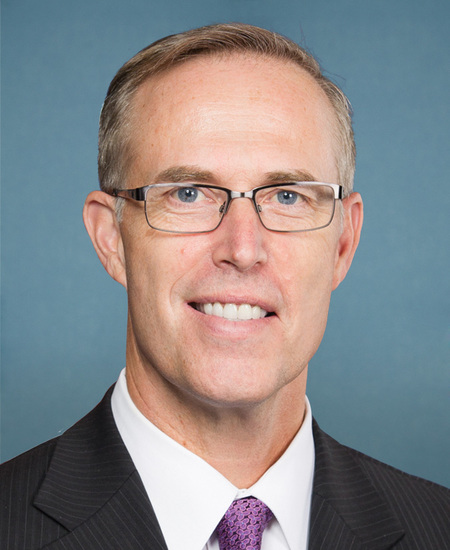
Rep. Jared Huffman
Sponsored bills
Maddy summaryThis bill requires U.S. representatives at 12 major international financial institutions (including the World Bank and regional development banks) to vote against new fossil fuel projects and support clean energy transitions. It mandates that the U.S. reduce its financial contributions to any institution funding new fossil fuel capacity (e.g., oil, gas, coal projects), depositing the withheld funds into an escrow account until the institution stops such funding. The bill defines fossil fuel broadly to include unconventional sources like oil sands and shale gas, and prohibits U.S. foreign assistance for fossil fuel activities or related infrastructure. These changes directly affect how the U.S. engages with international financial institutions and their funding decisions.
Maddy summaryHR 5964, the Integrated Resource Planning Modernization Act, requires the Secretary of Energy to develop and publish federal guidelines for how electric utilities plan for future electricity needs. These guidelines mandate modern approaches to resource planning, including modeling capacity expansion with diverse options (like storage and distributed energy), integrating transmission planning, using probabilistic analysis for weather and reliability risks, and creating scorecards to weigh costs and benefits. The bill directly affects states, utility commissions, and electric utilities (including cooperatives and municipal systems) by requiring them to align their planning with these federal guidelines. To support implementation, the bill creates a grant program for states to update regulations or coordinate planning efforts, along with technical assistance and a requirement for states to report progress.
Maddy summaryThis bill requires adding the names of 74 crew members of the USS Frank E. Evans (killed in a 1969 incident) to the Vietnam Veterans Memorial Wall within one year of enactment. It directly affects the memorial's inscription and honors the families of those lost. The Secretary of Defense must consult on placement due to space limits and is exempt from standard memorial rules under the Commemorative Works Act.
Maddy summaryThis bill, HR 5973, requires federal immigration enforcement personnel to follow strict limits on force use, including proportional application, mandatory de-escalation efforts, and prohibitions on equipment like flash bangs or rubber bullets except for specific public safety threats. It mandates body-worn and vehicle cameras for all operations, with footage retained for one year (three years for force incidents or complaints), and grants affected individuals the right to inspect recordings. The law also requires annual training on force policies, First Amendment compliance, and racial bias avoidance, while demanding detailed quarterly reports to Congress on force usage, assaults on agents, and equipment approvals. These provisions directly affect all federal immigration agents conducting enforcement actions, aiming to increase transparency and accountability during operations.
Maddy summaryThis joint resolution designates October 2025 as Head Start Awareness Month to symbolically recognize the program's 60-year impact. It highlights Head Start's service to over 40 million children and families nationwide, emphasizing its role in early childhood development, health screenings, and educational support. The resolution serves as a ceremonial acknowledgment of the program's legacy and achievements, not as a policy change or funding measure. It was introduced by multiple representatives to honor Head Start's contributions to child well-being and educational outcomes.
Maddy summaryHRES 846 is a symbolic resolution designating October 2025 as National Domestic Violence Awareness Month. It expresses the House's support for raising awareness about domestic violence and its impacts, and calls for continued congressional attention to ending domestic violence through existing programs. The resolution does not create new laws, allocate funding, or directly affect any specific groups - it is purely a statement of support. It references statistics on domestic violence prevalence but focuses on awareness rather than policy changes.
Maddy summaryThis bill extends the Digital Coast program through 2030, amending the existing Digital Coast Act. It requires NOAA to make coastal data "fully and freely available" (not just accessible) and explicitly includes underground infrastructure data in the types of information collected. The changes directly affect NOAA, which manages the program, and entities relying on its coastal data for planning and development. The bill focuses on updating program requirements rather than creating new policies.
Maddy summaryThe American Energy Independence and Affordability Act extends multiple clean energy tax credits that were set to expire between 2025 and 2026. It specifically extends residential clean energy credits through 2034, clean electricity investment credits for wind and solar through 2032, and clean vehicle credits for electric vehicles through 2032. The bill also reinstates special rates for sustainable aviation fuel and modifies requirements for energy-efficient home improvements. These provisions directly affect homeowners installing solar panels, businesses investing in clean energy infrastructure, and manufacturers producing clean energy equipment.
Maddy summaryThe GRAD Act (HR 5850) prevents colleges from changing or ending a student's enrollment status if federal financial aid under Title IV is delayed due to a government shutdown. It directly affects students receiving federal aid and the institutions that award it. The bill amends the Higher Education Act to require schools to maintain enrollment status during disruptions caused by lapses in government funding. This ensures students aren’t penalized for aid delays beyond their control during shutdowns.