

No Hearing, No Vote Act of 2021 This bill prohibits the Senate from considering a budget reconciliation bill unless at least one committee hearing has been held regarding the bill. (Reconciliation bills are considered by Congress using expedited legislative procedures that prevent a filibuster and restrict amendments in the Senate.) Specifically, the bill prohibits the Senate from considering a reconciliation bill unless (1) the bill was reported by a committee that received reconciliation instructions or by the Senate Budget Committee after receiving recommendations from committees that received instructions, and (2) each committee that reported the bill or ordered recommendations to be reported to the Senate Budget Committee held at least one hearing regarding any major provision of the bill that is within the jurisdiction of the committee.
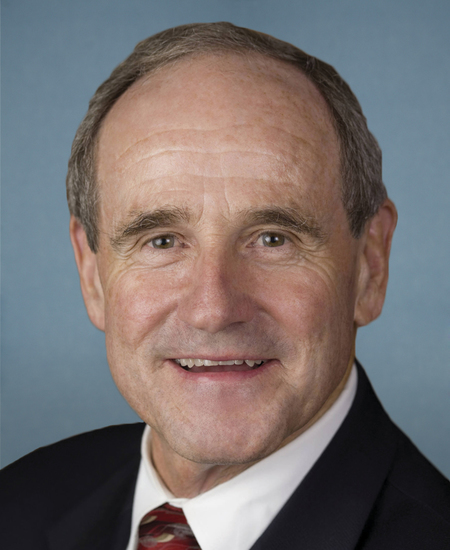
Sen. James E. Risch
Sponsored bills
This resolution designates September 2021 as National Prostate Cancer Awareness Month.
This resolution honors the contributions of small businesses in the United States and supports the designation of National Small Business Week.
Radiation Exposure Compensation Act Amendments of 2021 This bill expands two programs that compensate individuals who were exposed to radiation during certain nuclear testing or uranium mining and subsequently developed medical conditions, including cancers. First, the bill expands and extends a program that compensates individuals who were exposed to radiation from atmospheric nuclear testing or other sources and subsequently developed specified cancers. Under current law, this program compensates individuals who were present in a designated geographic area during a period of nuclear testing and certain individuals employed in uranium mining. The bill expands the designated areas to include Colorado, Idaho, Montana, New Mexico, and Guam and additional areas in Arizona, Nevada, and Utah; makes more individuals who worked in uranium mining eligible for the program; increases the amount of compensation awarded to and provides medical benefits for eligible claimants; and extends for 19 years following the bill's enactment the fund that supports this program and the statute of limitations for filing claims (currently, the program terminates on July 10, 2022). Second, the bill makes certain individuals employed in uranium mines or mills eligible for a program that compensates workers, including Department of Energy employees and contractors, for illnesses caused by occupational exposure to radiation and hazardous substances during development and testing of the nation's nuclear weapons stockpile. The bill also establishes a grant program in the National Institute of Environmental Health Sciences for institutions of higher education to study the epidemiological impacts of uranium mining and milling among individuals without occupational exposure.
Consumer Financial Protection Bureau Accountability Act of 2021 This bill changes the source of funding for the Consumer Financial Protection Bureau (CFPB) from Federal Reserve System transfers to annual appropriations. Under current law, the transfers from the Federal Reserve System permit the CFPB to be funded outside of the annual appropriations process.
End Government Shutdowns Act This bill provides continuing appropriations to prevent a government shutdown if any appropriations measure for a fiscal year has not been enacted before the fiscal year begins or a joint resolution making continuing appropriations is not in effect. For an initial 120-day period, the bill provides appropriations to continue programs, projects, and activities for which funds were provided in the preceding fiscal year. The bill reduces the continuing appropriations by 1% after the first 120-day period and by an additional 1% for each subsequent 90-day period until the applicable appropriations legislation is enacted.
This bill posthumously provides for the award of a Congressional Gold Medal in commemoration of the 13 service members who died on August 26, 2021, while stationed at Hamid Karzai International Airport in Afghanistan.
This bill requires the Internal Revenue Service (IRS) to report to Congress on projections of the estimated tax gap (i.e., the difference between tax liabilities owed to the IRS and those liabilities that the IRS actually collects). The IRS may use artificial intelligence and related data analysis tools to calculate a tax gap projection. The bill also requires the Joint Committee on Taxation to issue periodic reports to the congressional tax committees on the tax gap projection. The bill restricts IRS funding to FY2021 levels for audits and enforcement until it publishes an updated tax gap projection. Funding is also restricted for certain purposes, including (1) targeting U.S. citizens who exercise their First Amendment rights, (2) targeting a group for regulatory scrutiny based on its ideological beliefs, and (3) auditing individual taxpayers with an adjusted gross income of less than $400,000. The bill directs the IRS to establish a fellowship program to recruit private sector tax experts to join the IRS to create and participate in the audit task force. The purposes of the tax force include performing audit case selection, educating IRS employees on emerging issues, auditing selected taxpayers, addressing offshore tax evasion, and identifying, mentoring, and training IRS junior employees with respect to audits.
This resolution honors the bravery and dedication of the Ritchie Boys and the importance of their contributions to the success of the Allied Forces during World War II.
This resolution expresses the condolences of the Senate regarding the death of the Honorable Maurice Robert Gravel, former Senator from Alaska.