

Maddy summaryThe Action for Dental Health Act of 2023 extends the authorization period for federal grants addressing dental workforce shortages. It amends Section 340G(f) of the Public Health Service Act to change the grant funding period from 2019-2023 to 2024-2028. This extension directly affects dental health programs and organizations receiving these grants, ensuring continued funding for initiatives that train and deploy dental professionals in underserved communities. The key provision is a straightforward renewal of the grant timeline without altering funding amounts or eligibility criteria.
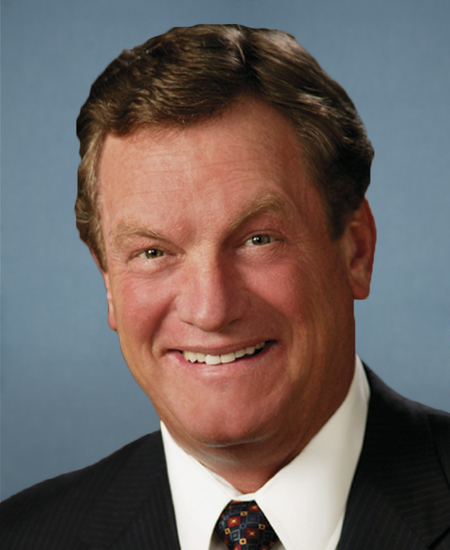
Rep. Michael K. Simpson
Sponsored bills
Maddy summaryThis bill appropriates over $15 billion in supplemental funding for U.S. security assistance to Israel following attacks in Israel. It includes specific allocations such as $5.2 billion for Israel's Iron Dome, David's Sling, and Iron Beam defense systems, as well as funds for military personnel, operations, and equipment across all branches of the military. The bill requires the Secretary of Defense and Secretary of State to submit regular reports to Congress detailing security assistance provided to Israel and designates all funding as "emergency requirements" under federal law. This funding directly supports U.S. security assistance programs with Israel to respond to regional security threats.
Maddy summaryHJRES 107 is a congressional resolution seeking to block a Federal Communications Commission (FCC) rule published on January 22, 2024 (89 Fed. Reg. 4128). The resolution aims to disapprove the FCC's rule implementing digital discrimination protections under the Infrastructure Investment and Jobs Act, which would have required internet providers to prevent discriminatory practices. If passed, this resolution would nullify the FCC rule, preventing it from taking effect under the Congressional Review Act (Chapter 8 of Title 5, U.S. Code). The bill directly affects the FCC's regulatory authority over digital discrimination enforcement in broadband services.
Maddy summaryHR 7205, the Rocky Mountain Judgeship Act, adds three new federal district court judgeships: two for the Colorado district and one for the Idaho district. The bill requires the President to appoint these judges with Senate confirmation, increasing judicial capacity in those courts. It also updates the staffing table in federal law to reflect the new numbers (Colorado: 9 judges, Idaho: 3 judges). This is a procedural bill focused solely on adjusting court staffing levels, not on changing legal policies or affecting specific individuals or cases.
Maddy summaryHR 7185 reauthorizes the High Intensity Drug Trafficking Areas (HIDTA) program through 2030, with specific focus on fentanyl. It allocates $302 million annually for HIDTA operations and adds $14.2 million yearly for grants to enhance fentanyl seizure efforts through competitive grants. The bill requires annual reports detailing fentanyl seizures and trafficking data, and directs the Attorney General to assign at least 16 assistant U.S. attorneys to prioritize fentanyl trafficking cases. This directly affects federal drug task forces, law enforcement agencies, and prosecutors working on fentanyl-related investigations.
Maddy summaryThe Death Tax Repeal Act would eliminate the federal estate tax and generation-skipping transfer tax for estates of people who die on or after the bill's enactment date, and for generation-skipping transfers made after that date. It would also establish a new $10 million lifetime gift tax exemption (adjusted annually for inflation) and replace the existing gift tax rate schedule with a revised structure. These changes would primarily affect high-net-worth individuals and their heirs, as the estate tax and gift tax typically apply to large estates or gifts exceeding the new exemption threshold. The bill's provisions would take effect on the date of enactment, with transitional rules for the year the bill is signed into law.
Maddy summaryThis bill, HR 6064 (the "Don’t DO IT Act"), requires federal officials to deny permits for solar or wind energy projects on federal land if a state legislature has passed disapproval legislation for that specific project. It directly affects renewable energy developers seeking federal land rights-of-way by giving states a veto power over such projects within their borders. The key mechanism is a new provision mandating denial of permit applications when the state governor notifies the federal Secretary of the project's disapproval by the state legislature. This creates a direct state-federal coordination point for renewable energy development on public lands.
Maddy summaryHR 1147, the Whole Milk for Healthy Kids Act of 2023, allows schools participating in the National School Lunch Program to offer whole milk as an option during lunch. It amends the school lunch law to explicitly permit schools to serve flavored and unflavored whole milk alongside reduced-fat, low-fat, and fat-free milk choices for students. The bill also requires the Secretary of Agriculture to adjust meal regulations to account for saturated fat from whole milk, ensuring it doesn't count against meal fat limits. This change directly affects participating schools and the students who receive school lunches, expanding their milk beverage options.
Maddy summaryThe MAILS Act requires the U.S. Postal Service to establish a formal process for local governments to request new post offices within 90 days of enactment. It also updates regulations to mandate community input before any temporary post office relocation lasting more than two days, and requires the Postal Service to notify local elected officials 30 days in advance, provide public notice 15 days prior, and hold public presentations. The bill further demands periodic updates to local officials during extended relocations and requires detailed reports to Congress for relocations exceeding 180 days. These changes directly affect communities seeking new mail services, local elected officials, and the Postal Service’s operational procedures for temporary relocations.
Maddy summaryThe Innovative FEED Act of 2023 defines and regulates "zootechnical animal food substances" - substances added to animal feed to affect digestion, reduce foodborne pathogens, or alter gut microbiome without providing nutrition. It requires these substances to be approved as food additives by the FDA under existing rules, with specific data on intended effects and mandatory labeling stating "Not for use in the diagnosis, cure, mitigation, treatment, or prevention of disease in animals." The bill excludes drugs, hormones, ionophores, and other substances from this category. This directly affects animal feed manufacturers, the FDA’s regulatory process, and the labeling requirements for these products.