

Maddy summaryLB 326 amends Nebraska's insurance laws to update definitions and procedures under the Unfair Insurance Trade Practices Act and related statutes. It redefines key terms like "insurer" and "customer," changes the Director of Insurance's authority, and updates rules for claims, settlements, and annual reporting. The bill specifically eliminates the Health Insurance Access Act and Health Care Purchasing Pool Act, removing those frameworks from state law. These changes primarily affect insurance companies, consumers purchasing insurance, and the Nebraska Department of Insurance.
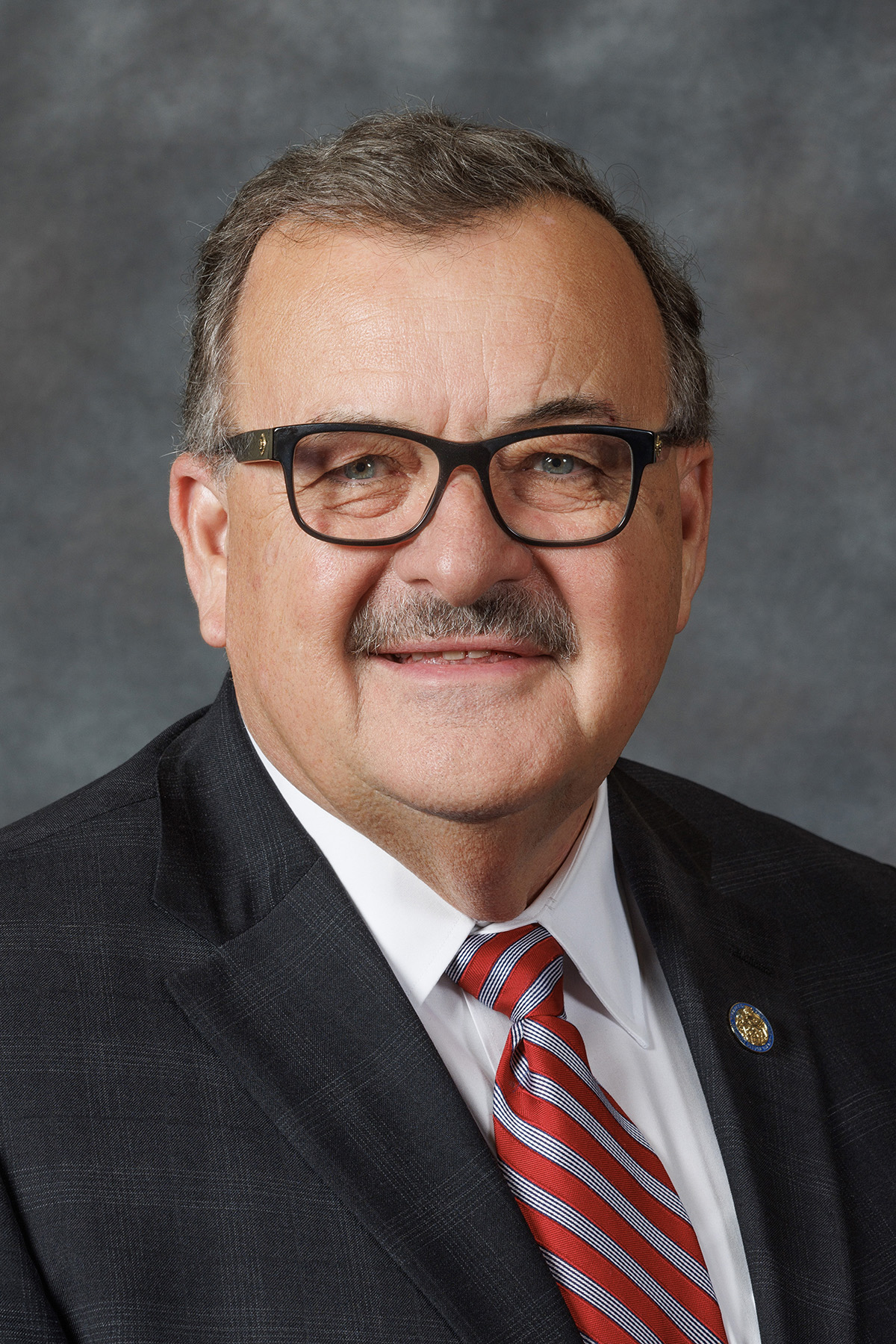
Rep. Mike Jacobson
Sponsored bills
Maddy summaryLB 325 modifies Nebraska law to allow certain large insurance corporations to exempt one board member from the requirement of being a Nebraska resident. This applies only to insurers meeting five specific criteria: having principal offices in Nebraska, being publicly traded or a wholly owned affiliate of a publicly traded company, being domiciled in Nebraska for 25+ years, employing over 500 Nebraska-based employees subject to state income tax, and having stable ownership for 10 years. If an insurer meets these criteria, it can file an affidavit to waive the residency rule for five years, with the option to renew. If it later fails to meet the criteria, it must notify the Department of Insurance and appoint a Nebraska-resident board member within six months. The bill directly affects large, long-established insurance corporations operating in Nebraska.
Maddy summaryLB 527A is an appropriation bill that allocates specific state and federal funds to two health programs (344 and 348) under Nebraska's Department of Health and Human Services to support implementation of Legislative Bill 527. It provides $18.05 million for Program 344 and $162.40 million for Program 348 in fiscal year 2025-26, with increased amounts for 2026-27, sourced from the Medicaid Access and Quality Fund and federal Medicaid funds. The bill restricts these funds to the purposes of Legislative Bill 527 and prohibits their use for state employee salaries. Approved by the governor on April 7, 2025, it takes immediate effect due to an emergency declaration.
Maddy summaryLB 527 creates a Medicaid Access and Quality Fund by imposing a 6% tax on certain health insurance premiums starting January 2026. The fund will increase payments to nonhospital Medicaid providers (like clinics and doctors) to improve access to care, especially for rural patients, pregnant women, and children. It also allocates $75 monthly per patient to primary care providers who serve as medical homes for Medicaid beneficiaries. This directly affects Nebraska Medicaid beneficiaries, healthcare providers, and insurance companies paying the tax.
Maddy summaryLB 529 redefines "state agency" under Nebraska's State Procurement Act to exclude specific entities, including the University of Nebraska, Nebraska state colleges, the Nebraska Investment Council, courts, the Legislature, and constitutionally established agencies. This change means these excluded entities will no longer be subject to the state procurement rules that apply to other state agencies when purchasing goods or services. The bill amends Section 73-803 of Nebraska's statutes, with the new definition applying to actions taken on or after July 19, 2024. This is a procedural clarification affecting procurement processes, not a new policy.
Maddy summaryThis is a ceremonial resolution (not a law), congratulating Sustainable Beef, LLC on opening their North Platte, Nebraska meat processing facility. It acknowledges the company's $400 million plant, which processes 1,500 cattle daily and creates 850 jobs, as a community and economic benefit. The resolution has no legal effect - its only action is sending a copy of the resolution to the company. It does not change any laws or policies or affect any specific group beyond the symbolic recognition.
Maddy summaryThis is a non-binding legislative resolution (LR 83) expressing the Nebraska Legislature's formal congratulations to Judy Ridenour for being named Nebraska's Natural Resources Districts Director of the Year. It recognizes her 34 years of service on the Upper Loup Natural Resources District (NRD) Board, including leadership roles, contributions to groundwater management rules, and conservation efforts on her ranch. The resolution has no policy impact - it solely serves as a ceremonial tribute to Ridenour’s work. It directly affects only Judy Ridenour, who will receive a copy of the resolution.
Maddy summaryThis bill changes how redevelopment authorities must notify county assessors about tax division arrangements under Nebraska's Community Development Law. Specifically, it requires authorities to send standardized notices to county assessors on forms prescribed by the Property Tax Administrator by July 1 each year, instead of using previous notice methods. These notices are required for projects where ad valorem taxes are divided between public bodies and redevelopment funds. The change directly affects redevelopment authorities, county assessors, and property owners involved in tax division under redevelopment projects. The bill does not alter tax division rules but standardizes the notification process to ensure timely and consistent communication.
Maddy summaryNebraska's LB 251 updates state banking laws to align with recent federal changes. It modifies rules about financial institutions, including banning the use of "bank" or derivatives in business names (with specific exemptions), adjusting loan limits, and clarifying branch banking regulations. The bill also revises provisions related to credit unions, surety bonds, interest rates for irrigation district damages, and failing financial institutions. These changes primarily affect banks, credit unions, and other financial service providers operating in Nebraska. The legislation harmonizes existing state statutes with federal requirements without creating new programs or funding.
Maddy summaryLB 250 amends Nebraska law to update qualifications for bank board directors. It requires banks to make reasonable efforts to have a majority of directors live in the state, within 25 miles of the main office, or from the county of the main office or branches. The bill also sets new standards: directors must have good moral character, integrity, business experience, and responsibility, and banks must obtain Department of Banking and Finance approval for each director. The department can revoke a director's approval if they act unsafely or endanger the bank's interests. This directly affects Nebraska banks and their board members.