

Maddy summaryLB 1261 prohibits Nebraska consumer-owned utilities (like public power districts and cooperatives) from using eminent domain to acquire privately owned electric generation facilities serving large industrial customers. It specifically applies to facilities over 1,000 megawatts that are co-located with the industrial site, have grid interconnection approval, and operate under long-term contracts with the utility. These contracts must include a waiver of eminent domain rights, prohibit resale of electricity, and require the industrial customer to cover all related utility costs. The bill repeals a previous law that allowed such acquisitions, focusing on protecting private industrial energy projects under defined conditions.
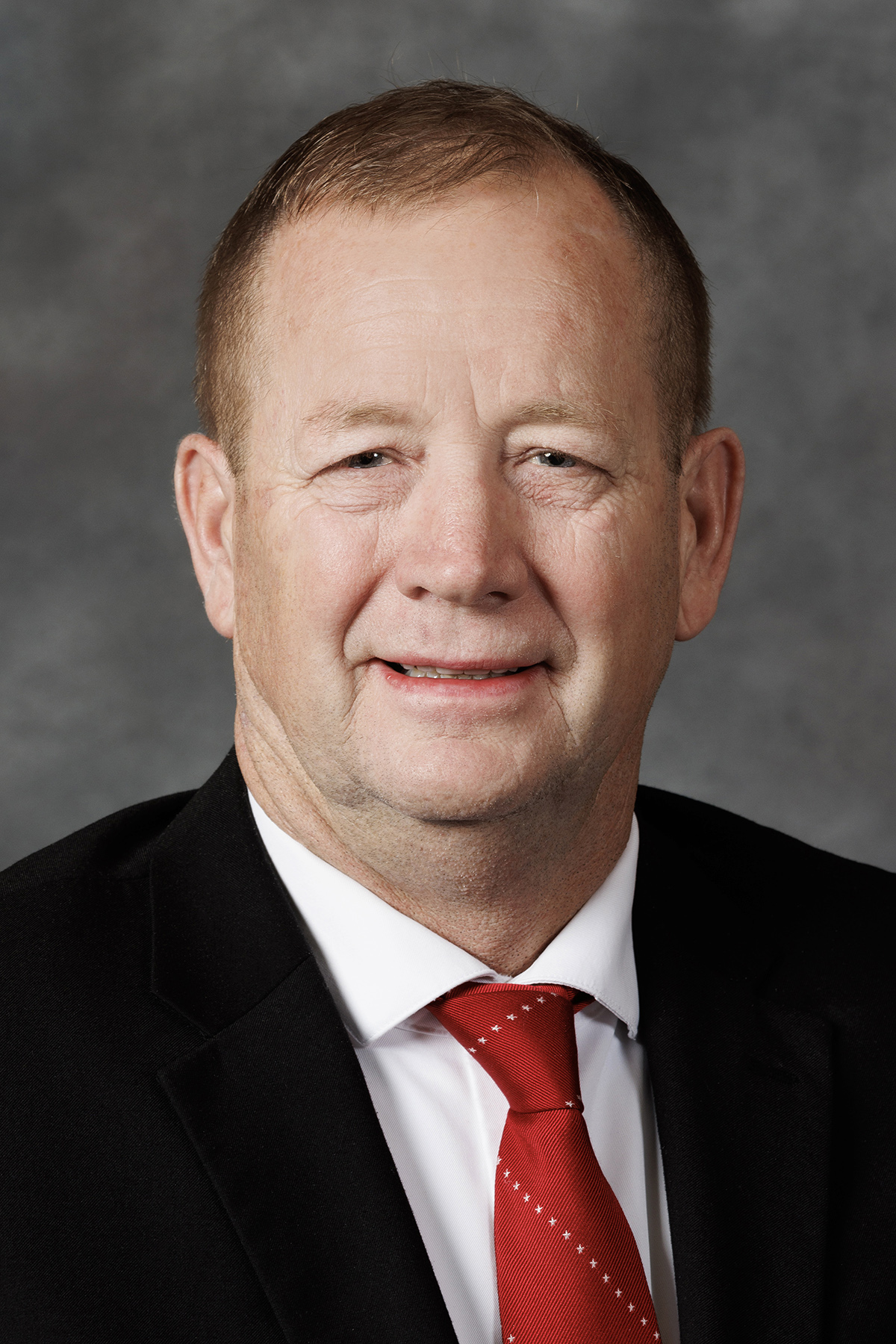
Rep. Barry DeKay
Sponsored bills
Maddy summaryNebraska Legislative Bill 794 reorganizes the Nebraska Department of Agriculture's responsibilities by amending key statutes. It eliminates the Healthy Soils Task Force and outdated funding mechanisms related to the Fertilizers and Soil Conditioners Administrative Fund, while clarifying the Department's existing duties. The bill specifically repeals outdated sections (2-401 through 2-404) and streamlines provisions in Sections 2-406 and 81-201 of Nebraska law. These changes directly affect the Department of Agriculture, removing specific advisory structures and administrative requirements without creating new programs or funding. The bill focuses on administrative efficiency rather than new policy initiatives.
Maddy summaryThis bill amends Nebraska's Uniform Controlled Substances Act to add bromazolam to Schedule I (the most restrictive category) as a controlled substance. It also corrects the spelling of certain substances listed in the law. The primary effect is that bromazolam possession, distribution, or use without authorization becomes illegal under Nebraska law. This change directly affects individuals and businesses handling bromazolam within the state, aligning Nebraska's drug schedule with current regulatory needs.
Maddy summaryLB 115 increases the income tax credit for volunteer emergency responders in Nebraska from its previous amount to $1,250 per year. It directly affects volunteer firefighters, emergency responders, and rescue squad members who are certified as active for the prior year. The bill changes qualification rules by requiring departments to submit certified lists of eligible volunteers to the state by February 15 each year, and volunteers claim the credit on their state tax returns using certification documents. The amendment replaces the previous credit amount and procedures under the Volunteer Emergency Responders Incentive Act.
Maddy summaryLB 413 amends Nebraska law governing how public power, irrigation, and combined power/irrigation districts set rates for electricity and water services. It requires districts to establish fair, reasonable rates that distribute operational benefits equitably among users. Key changes include limiting negotiated rates for large commercial/industrial customers (over 500 kW) to five years and mandating that such rates cover the actual cost of producing the electricity if tied to qualifying economic development projects. This directly affects power districts and their commercial/industrial customers with significant electrical loads.
Maddy summaryNebraska's LB 129 prohibits local governments (counties, cities, villages) from restricting the use of specific energy sources like natural gas, propane, renewable diesel, hydrogen, or electricity for electric vehicles. It directly affects energy providers - including natural gas utilities, propane retailers, and other energy marketers - by preventing local ordinances from blocking their services to authorized customers. The bill defines "energy source" broadly to include alternatives like renewable fuels and hydrogen, while exempting city-owned natural gas utilities and existing propane regulations. This law ensures local governments cannot interfere with how these providers deliver energy services, focusing on removing barriers to diverse energy options.
Maddy summaryLB 304 removes the expiration date (sunset) for Nebraska's participation in the federal Child Care Subsidy program, making the program permanent beyond its current September 30, 2026, deadline. It directly affects low-income families with children who qualify for child care assistance based on income thresholds (up to 185% of the federal poverty level before October 1, 2026, or 130% after). The bill maintains existing eligibility rules, including transitional assistance for families exceeding income limits, and ensures funding comes from federal Child Care Development Block Grant funds rather than state general funds. It does not change income levels or subsidy structures but extends the program's duration indefinitely.
Maddy summaryThis bill amends funding provisions for two Nebraska museums: the Chief Standing Bear Museum and the Fort Robinson State Park museum. It specifies exact annual funding amounts from the Museum Construction and Maintenance Fund - $7.15 million for the Chief Standing Bear Museum's construction in fiscal year 2025-26, $750,000 for exhibits in 2024-25, and $7 million for the Fort Robinson museum in 2025-26. The bill directly affects the Game and Parks Commission, which will manage these funds, and the federally recognized tribes partnering on the Chief Standing Bear project. It updates prior funding language to clarify intended allocations without changing the overall purpose or scope of the museum projects.
Maddy summaryLB 188 specifies Nebraska's legislative intent to appropriate $462.48 million for FY2025-26 and $476.72 million for FY2026-27 toward Medicaid nursing facility rates under Program No. 348. It requires the Department of Health and Human Services to use these funds in calculating nursing facility rates, including annual inflation adjustments, and to cover rate enhancements. The bill mandates two reports: one by August 1, 2025, detailing the inflation calculation method, and another by December 31, 2025, identifying unspent funds and related payments. This directly affects Medicaid nursing facilities receiving state funding for patient care rates.
Maddy summaryNebraska's Legislative Resolution 21 (LR 21) is a procedural application to Congress requesting a constitutional convention to propose a federal amendment limiting House and Senate members to a set number of terms. It directly seeks to initiate a process that would affect all future U.S. congressional elections by potentially restricting how many times a person can be re-elected to either chamber. The resolution specifies that Nebraska's application will be counted toward the 34-state threshold required under Article V of the Constitution, aggregating with similar applications from other states. This resolution does not create new law but is part of a state-level effort to advance term limits for federal lawmakers through the constitutional amendment process.