

Maddy summaryLegislative Resolution 497 formally congratulates the seven student leaders of the 2025-26 Nebraska FFA Association State Officers for their service and dedication. This document serves as an official acknowledgment from the Nebraska Legislature, recognizing the officers' efforts in promoting agricultural education and rural community development across the state. The resolution lists the specific names and chapters of the seven officers being honored and directs a copy of the document to be sent to each of them. As a commemorative measure, it does not alter any laws or policies but rather celebrates the achievements of these student leaders.

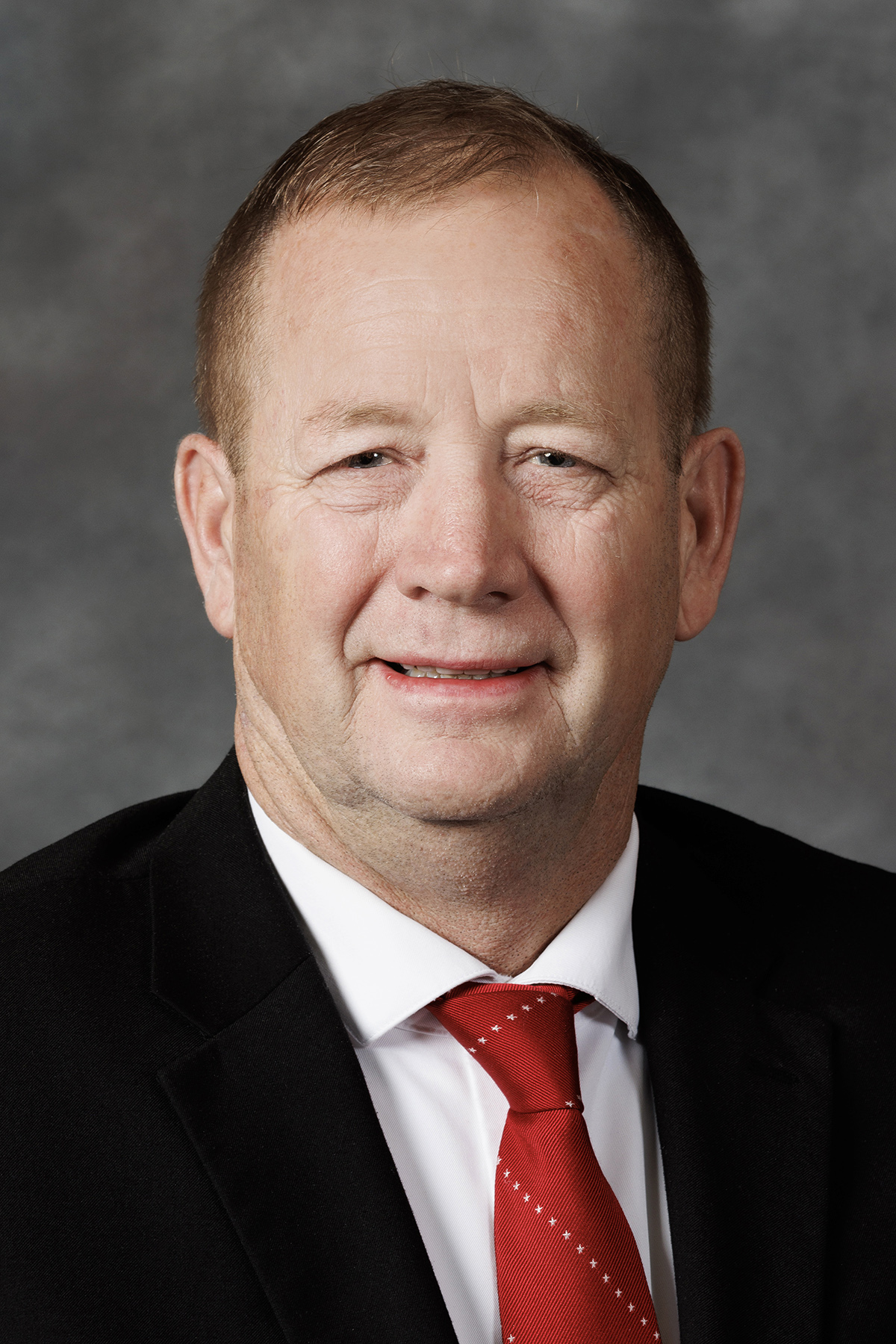
Rep. Barry DeKay
Sponsored bills
Maddy summaryThis bill appropriates $4,750 from the Nebraska Power Review Fund for each of the fiscal years 2026-27 and 2027-28 to support the Nebraska Power Review Board. The funds are designated to help carry out provisions from Legislative Bill 1261, which establishes the board's operations. The appropriation specifically excludes spending on permanent or temporary employee salaries and per diems. This measure provides financial resources for the board's program activities without expanding personnel costs.
Maddy summaryThis bill proposes a constitutional amendment to explicitly require that only U.S. citizens may serve as electors (voters) in Nebraska. It would amend Article VI, Section 1 of Nebraska's Constitution to state: "Only a United States citizen who has attained the age of eighteen years... shall be an elector." The amendment would be submitted to Nebraska voters in the November 2026 general election for approval or rejection. If approved, it would clarify and reinforce the existing citizenship requirement for voting eligibility under state law.
Maddy summaryThis bill amends Nebraska's Pharmacy Practice Act (section 38-2850) to clarify and update exemptions from pharmacy licensing requirements. It specifically adds 11 detailed exemptions, including allowing nurse practitioners, physician assistants, and certified nurse midwives to dispense certain medications without a pharmacy license under defined conditions (e.g., for samples provided by manufacturers at no charge). The bill also clarifies that veterinarians, optometrists, hospital nurses, and medical gas providers may operate within their existing scopes without pharmacy licensure. These changes directly affect healthcare providers, pharmacies, and patients by defining who may legally dispense medications under specific circumstances. The amendment replaces the previous section, streamlining the legal framework for pharmacy practice.
Maddy summaryNebraska's LB 1032 amends adoption laws to recognize and enforce tribal customary adoptions under the Nebraska Indian Child Welfare Act. The bill directly affects Native American children, tribes, and families involved in tribal adoption processes by ensuring these adoptions are legally valid in Nebraska courts. Key provisions harmonize state adoption statutes (including those governing consent, parental rights termination, and foster care) with tribal practices, requiring courts to honor tribal adoption orders. The bill defines terms like "tribal customary adoption" and removes barriers that previously prevented tribal adoptions from being recognized under state law. This change aligns Nebraska's adoption system with tribal sovereignty and the federal Indian Child Welfare Act.
Maddy summaryLB 769 creates a new specialty license plate for the University of Nebraska State Museum. The bill amends Nebraska's license plate statute to authorize the Department of Motor Vehicles to design and issue these plates, with fees collected funding a dedicated University of Nebraska State Museum Fund. The plates must reflect the museum's mission, and the fund will support the museum's operations and programs. This is a procedural bill adding a new specialty plate option similar to existing designs like Arbor Day or Cornhusker Spirit plates.
Maddy summaryLB 770 authorizes county treasurers to collect a 2% fee for collecting taxes and assessments from reclamation districts (water management districts) and county agricultural societies. It also revises how revenue from Nebraska's renewable energy "nameplate capacity tax" is distributed: 5% goes to community colleges near renewable energy facilities, while the rest is allocated to local governments that previously received tax revenue from those facilities. The bill modifies existing tax collection rules in Section 33-114 and updates the revenue distribution formula in Section 77-6204. These changes directly affect county treasurers, reclamation districts, agricultural societies, and local taxing entities receiving renewable energy tax funds.
Maddy summaryLB 895 amends Nebraska's Grain Warehouse Act to update license requirements and annual fees for grain warehouses. It creates a streamlined process for warehouses already licensed under the U.S. Warehouse Act, reducing their application and oversight needs. The bill also changes fee structures to align with 2025/2026 USDA Agricultural Marketing Service rates, establishing specific fees based on warehouse capacity (e.g., $45 for facilities holding 0-10,000 bushels). These changes directly affect Nebraska grain warehouse operators who must pay updated annual fees based on their storage capacity.
Maddy summaryLB 894 updates Nebraska's Grain Dealer Act by changing annual licensing fees and security requirements for grain dealers. It sets an annual license fee at $100 (capped at $1,500 per license) and requires grain dealers to provide security of $35,000 to $1,000,000, calculated based on their direct grain purchases. The bill redefines "grain dealer" to clarify who is covered (excluding certain warehouse licensees) and "grain" to include specific agricultural commodities like organic products. These changes directly affect businesses buying grain from producers for resale or acting as marketing agents, aiming to modernize oversight while protecting producers' interests.
Maddy summaryLB 1081 requires all Nebraska state agencies and local governments (including cities, counties, school districts, and public power districts) to purchase only U.S.-made flags for public use starting January 1, 2027. The bill mandates that flags of the U.S. or Nebraska must be 100% manufactured in the United States, with an exception for small hand-held flags under 8 inches wide by 6 inches tall. It amends existing statutes to enforce this requirement and repeals prior sections that did not include this provision. This policy directly affects how local and state entities procure flags for official use, aiming to prioritize domestically produced goods.