Issue · Criminal Justice

Criminal Justice

Every criminal justice bill, vote, and legislator stance in Montana, automatically classified by Maddy, our AI policy reader.

Total bills
269
2025 Regular Session
Top supporter
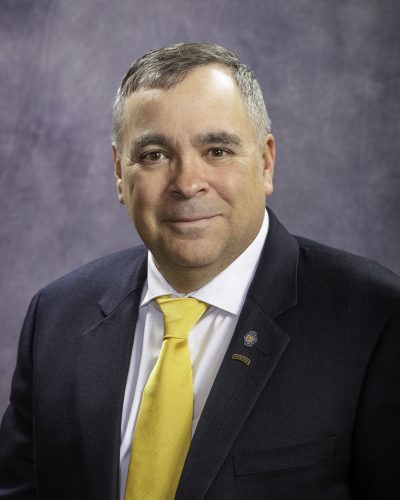
Scott Rosenzweig
73% support rate
Top opponent
Shannon Maness
30% support rate
Ranked legislators
10
5 support · 5 oppose
Key legislators

Who's moving criminal justice in Montana

Legislators moving criminal justice in Montana
Legislator Party Stance Support rate Votes
Scott Rosenzweig
Scott Rosenzweig House · District 57
D
Support
73% 330
Marilyn Marler
Marilyn Marler House · District 94
D
Support
73% 314
Tyson Running Wolf
Tyson Running Wolf House · District 16
D
Support
73% 311
Kelly Kortum
Kelly Kortum House · District 64
D
Support
73% 322
Jamie Isaly
Jamie Isaly House · District 58
D
Support
72% 323
Shannon Maness
Shannon Maness House · District 70
R
Oppose
30% 325
Braxton Mitchell
Braxton Mitchell House · District 5
R
Oppose
31% 413
Kerri Seekins-Crowe
Kerri Seekins-Crowe House · District 39
R
Oppose
33% 316
Greg Overstreet
Greg Overstreet House · District 88
R
Oppose
33% 415
Ed Byrne
Ed Byrne House · District 11
R
Oppose
34% 322
Showing 211–220 of 269 bills

All criminal justice bills

signed · Montana · Senate May 13, 2025

SB 296: Enhance penalty for crime against vulnerable person

SB 296, known as "Alan's Law," establishes an enhanced penalty for individuals who commit offenses against vulnerable persons while employed or volunteering in a caregiving facility. If found guilty of a misdemeanor or felony offense, offenders face an additional prison sentence of 1 to 10 years. This additional sentence runs consecutively to the original punishment and generally cannot be deferred or suspended. The bill defines "caregiving facilities" broadly to include various health, youth, and educational settings, and "vulnerable persons" as children, vulnerable adults, or incapacitated individuals.
Sub-Topics Corrections
signed · Montana · Senate May 5, 2025

SB 487: Revising laws related to the Montana end of watch trust

SB 487 revises the laws governing the Montana End of Watch Trust, which provides support to eligible law enforcement officers and their immediate families in cases of death or catastrophic injury in the line of duty. The bill requires applications for catastrophic injury payments to include a workers' compensation determination of permanent and total disability. It also allows legal children of an officer to receive payments from the trust after turning 18 under certain circumstances. Additionally, the Department of Justice is granted rulemaking authority to administer the trust, including processes for payment distribution, application approval, and appeals.
Sub-Topics Law Enforcement
vetoed · Montana · Senate Jun 27, 2025

SB 40: Revise supreme court public records laws by opening deliberations and files to the public

SB 40 would require Montana's Supreme Court to publicly disclose its deliberations by mandating recordings of closed meetings and making those records available after a case is final. It amends Montana law (sections 2-3-203, 2-3-212, and 2-6-1002, MCA) to ensure closed judicial discussions - currently private - are recorded and accessible to the public once all appeals are exhausted. The bill directly affects the Montana Supreme Court's internal proceedings and expands public access to judicial decision-making. Key provisions include requiring electronic recordings of closed meetings, redacting only confidential information as defined by law, and specifying that cases become final after all review periods expire.
Sub-Topics Courts Judges
died · Montana · Senate May 23, 2025

SB 491: Generally revise laws related to sexual assault kits

SB 491 creates a new Sexual Assault Medical Forensic Examination Fund to cover costs for sexual assault evidence collection. It shifts responsibility from local law enforcement agencies to this state fund, requiring the fund to provide free evidence kits to medical facilities, reimburse providers up to $800 per exam, and support a secure electronic system for claims. The fund will be primarily financed by redirecting $800,000 annually from the marijuana fund (starting July 2025) to cover these expenses. The bill also amends related laws to clarify payment responsibilities and establish the fund, though it died in committee on May 23, 2025, and is not currently law.
signed · Montana · Senate May 8, 2025

SB 508: Generally revise driving under the influence laws for THC levels in drivers under 21

SB 508 revises Montana's driving under the influence (DUI) laws concerning tetrahydrocannabinol (THC) for younger drivers. This bill establishes that for individuals under 21 years of age, having any detectable amount of THC in their system constitutes a DUI offense. This means there is no specific THC concentration threshold for drivers under 21, unlike the 5 ng/ml limit for adult drivers. The change applies to any amount of THC, excluding inactive metabolites, found in a driver under 21.
signed · Montana · Senate May 13, 2025

SB 19: Revise sentencing laws related to theft

SB 19 revises sentencing laws for several offenses, including theft, failure to return rented or leased personal property, issuing bad checks, deceptive practices, forgery, and identity theft. The bill directly affects individuals charged with these crimes by modifying the legal framework for their penalties. A key provision of the bill is raising the monetary thresholds that determine the severity of penalties for these offenses. It also revises the definition of "common scheme" within the state's legal code.
Sub-Topics Sentencing
signed · Montana · Senate May 16, 2025

SB 69: Revise county attorney reporting requirements for child sexual abuse

Senate Bill 69 revises reporting requirements for county attorneys and the Attorney General concerning child sexual abuse cases. It changes the frequency of county attorneys' reports to the Attorney General from semi-annual to annual, due by June 1 each year. These reports must include specific details such as case identifiers, dates of charges or prosecution declinations, and conviction outcomes. The Attorney General will then compile this aggregated data and report annually to the law and justice interim committee by August 15, enhancing tracking and oversight of these cases.
signed · Montana · Senate May 16, 2025

SB 393: Provide funding for enforcement of PL 280

SB 393 appropriates $6 million from the state's general fund for the biennium starting July 1, 2025, to reimburse expenditures related to felony criminal jurisdiction on the Flathead Indian Reservation. The funding is distributed to Lake County and the Confederated Salish and Kootenai Tribes. Initial funds are contingent upon Lake County rescinding its resolution to withdraw from Public Law 280. Further distributions require an agreement between the state, Lake County, and the Tribes addressing cost-sharing for Public Law 280 implementation within Lake County, and Lake County's ability to withdraw consent for jurisdiction is restricted until at least June 2027.
Sub-Topics State Budget Tags Tribal Nations
signed · Montana · Senate May 16, 2025

SB 348: Revise laws on sexual assault

SB 348 revises laws related to sexual assault, primarily by increasing penalties for offenders. The bill raises the maximum fines and imprisonment terms for first, second, and third or subsequent convictions of sexual assault. A key provision mandates that individuals convicted of a second sexual assault offense must register as a sexual offender. These changes directly affect individuals convicted of sexual assault by strengthening legal consequences for the crime.
Sub-Topics Violent Crime
signed · Montana · Senate May 16, 2025

SB 413: Criminalize disclosure of certain explicit AI-generated media

Senate Bill 413 creates the crime of "disclosing explicit synthetic media," also known as deepfakes, directly affecting individuals who create or share AI-generated content and protecting those falsely depicted. The bill makes it an offense to knowingly share synthetic media portraying an identifiable person engaged in sexual conduct or depicting intimate body parts without their consent, if it would cause substantial emotional distress. It also criminalizes disclosing such media with intent to harass or threaten, or possessing and threatening to disclose it for extortion. Penalties include fines and jail time, with increased penalties for repeat offenses or if the depicted person is under 18, though exceptions exist for reporting crimes, research, or legal proceedings.
Showing 211 to 220 of 269 bills
Previous 1 21 22 23 27 Next