

Maddy summarySF 1870 modifies Minnesota's human services licensure application timeline requirements. It requires the commissioner to approve or deny a complete application within 90 calendar days of receipt, and automatically approves the application if no decision is made within that timeframe. This bill directly affects individuals, organizations, and government entities applying for human services licenses in Minnesota. The key change is the new 90-day deadline for the commissioner's decision, replacing the previous timeline rules. The bill does not alter other application requirements like drug policies, grievance procedures, or the 30-mile border office rule for out-of-state applicants.
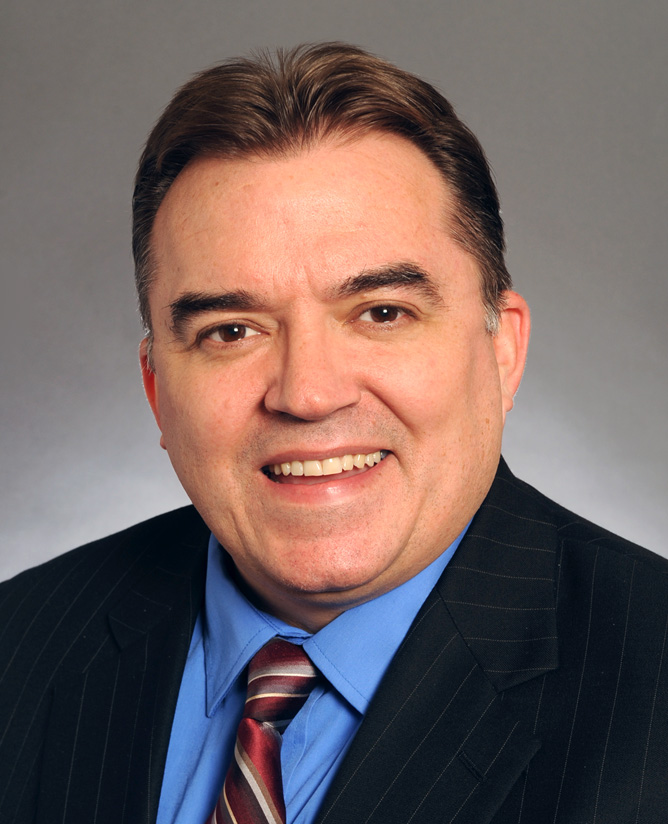
Sen. John Hoffman
Sponsored bills
Maddy summarySF 1882 modifies an existing 2023 appropriation of $68.75 million for highway improvements along Anoka County's Trunk Highway 65. The bill specifically reallocates funds to cover planning, land acquisition, design, and construction for intersection upgrades at 99th Avenue Northeast, 105th Avenue Northeast, Anoka County State-Aid Highway 12, 109th Avenue Northeast, 117th Avenue Northeast, and Anoka County State-Aid Highway 116. This change adjusts the scope of previously authorized projects without creating new funding or policy. The bill amends Laws 2023, chapter 68, section 2, subdivision 4, as previously updated by 2024 legislation.
Maddy summaryThis bill appropriates $12 million from state bond proceeds to fund a new water tower in Brooklyn Park's biotech innovation district. The funds will cover predesign, design, construction, and equipment for the tower to provide water storage, service, and fire suppression. The state will issue bonds up to $12 million to finance this project, as authorized under Minnesota's bond laws. The project directly affects residents and businesses in Brooklyn Park's biotech district by improving local water infrastructure.
Maddy summarySF 1887 requires that any real estate purchase using state funds must be approved by both the Minnesota legislature during a regular session and the county board of commissioners where the property is located. If the property spans multiple counties, all affected county boards must approve the purchase. County boards may instead refer the decision to a public vote via ballot question. This bill directly affects state agencies and local governments that use state money to acquire land, ensuring major property purchases have legislative and local oversight.
Maddy summarySF 1924, the "A+ Energy Act," amends Minnesota energy statutes to clarify definitions and require reporting from electric utilities. It defines "carbon-free" energy as electricity without carbon dioxide emissions and specifies eligible renewable sources like solar, wind, small-scale hydro, hydrogen, biomass, and nuclear. The bill mandates that electric utilities (including public, cooperative, and municipal providers) submit annual reports to the state commission detailing the financial impact of compliance efforts on rates, including how they reduce emissions while maintaining service reliability. These reports must cover wholesale and retail rate impacts and be updated as part of utility planning documents through 2040.
Maddy summaryThis bill establishes a three-year pilot program to certify direct support professionals who assist older adults or individuals with disabilities in daily living activities. It requires a 80-hour training curriculum (based on national standards) for participants in Anoka and Dakota Counties, with scholarships including a $20/hour work stipend. Certified professionals in covered programs (like community-based services) would qualify for an enhanced pay rate of 118.75% of standard medical assistance rates, pending federal approval. The pilot includes an evaluation to assess workforce impact, economic benefits, and potential for statewide expansion.
Maddy summarySF 1878 amends Minnesota Statutes 2024, section 115A.93, subdivision 3, to eliminate a provision that allowed waste collectors to charge residents more for recycling organics (like food scraps and compostable materials) compared to residents who do not recycle these materials. This change removes the financial incentive for residents to avoid organics recycling by making it impossible for waste collectors to impose higher fees on those who recycle. The bill directly affects residential waste collection services across Minnesota, requiring uniform pricing for organics recycling regardless of participation. It shifts the pricing model to prevent differential charges based on recycling behavior for organics.
Maddy summaryThis bill appropriates $155.35 million from Minnesota's Clean Water Fund for fiscal years 2026-2027 to support water quality and park/trail programs. It directs funding primarily to the Department of Agriculture for specific activities, including $3.5 million annually to implement a statewide agricultural water quality certification program, $3.1 million for nitrate trend monitoring and nutrient management practices, and $370,000 for pesticide monitoring. The bill also requires grant recipients to improve disability access and promote diversity in environmental careers. These funds are one-time allocations, available for specific, constitutionally authorized projects under the Clean Water Fund.
Maddy summaryThis bill temporarily allows licensed graduate social workers to provide clinical services without supervision when delivering crisis response services under Minnesota Statutes section 256B.0624. It also permits them to provide treatment supervision to other crisis team members. The exemption applies only to crisis-related work and expires on August 1, 2027. This change affects licensed graduate social workers employed in crisis response roles within designated mental health provider entities.
Maddy summaryThis bill appropriates $1.995 million for fiscal year 2026 and $2.071 million for fiscal year 2027 from the general fund to the Minnesota Board on Aging. It adds four specific staff positions: one for federal compliance and technical assistance to area agencies on aging, one for Older Americans Act policy development, two for Senior LinkAge Line service demands, and 18 additional contact center staff for area agencies. These funds directly support the Board on Aging, seven area agencies on aging, and the Senior LinkAge Line program. The appropriation increases staffing capacity to meet growing service needs and ensure compliance with federal requirements.