

Maddy summarySF 3756 appropriates $50,000 for fiscal year 2026 and $50,000 for fiscal year 2027 from the arts and cultural heritage fund to the Minnesota Governor's Council on Developmental Disabilities. The funding will support the Council's work to preserve and raise public awareness about the history of Minnesotans with developmental disabilities. This bill directly affects the Council by providing dedicated financial resources for its ongoing historical preservation and awareness efforts. The bill is procedural, focusing solely on funding allocation without changing existing laws or policies.
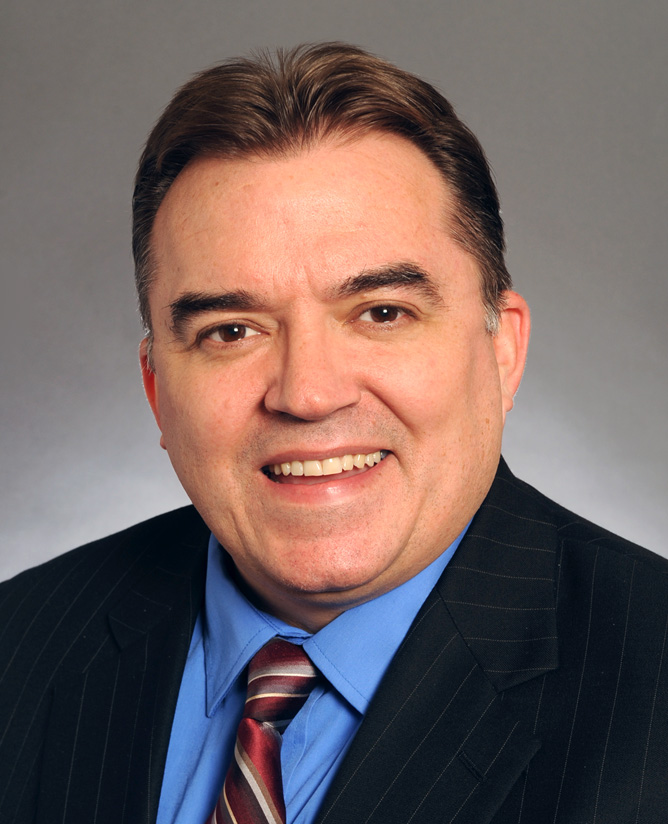
Sen. John Hoffman
Sponsored bills
Maddy summaryThis bill (SF 3758) repeals the expiration date for a special funding rate that supports facilities providing customized living services for people with disabilities. It specifically removes the sunset clause (set to expire May 31, 2028) from Minnesota Statutes section 256S.205, subdivision 7. By doing so, it ensures these facilities will continue to receive the established disproportionate share facility rate floor without interruption. The bill directly affects providers of disability support services in Minnesota who rely on this funding mechanism.
Maddy summarySF 3730 requires Minnesota's Commissioner of Labor and Industry to adopt rules for unvented attics and enclosed rafter roof systems in residential buildings. The bill mandates that these systems must use air-impermeable insulation with an R-30 rating (or equivalent U-Factor of 0.038) to meet energy code standards, but only if heating, cooling, and ductwork equipment is located inside the attic. This directly affects residential builders, inspectors, and property owners subject to Minnesota's State Building Code. The rulemaking will clarify specific insulation and air-sealing requirements for these roof systems, ensuring compliance with energy efficiency standards.
Maddy summarySF 3757 limits annual budget reductions for Minnesota's Reimagine Phase II waiver program recipients to no more than 10% unless their documented care needs decrease. It requires a cost-of-living adjustment to be included in all budget calculations to account for inflation. The bill specifies that budget changes must be based on the recipient's most recent approved budget and assessed care needs at program implementation. This protects individuals receiving home and community-based services (typically those needing nursing home-level care) from sudden, large budget cuts without a corresponding reduction in their care requirements.
Maddy summaryThis bill modifies MinnesotaCare and medical assistance coverage for chiropractic services by removing the previous age restriction (which limited coverage to those under 21). It now covers chiropractic services for all eligible individuals, including adults, with a limit of 24 visits per year unless prior authorization is obtained for more. Coverage specifically includes spinal pain treatment, manual therapy, and spinal manipulation, while x-rays are restricted to full-spine exams necessary for diagnosing subluxation. The changes take effect January 1, 2027, or after federal approval.
Maddy summaryThis bill modifies licensing requirements for crisis nurseries in Minnesota, which provide short-term care for children when caregivers face emergencies. It specifically allows current crisis nurseries licensed under Chapter 245A (as children's residential facilities) to continue operating even if exempt from standard Chapter 142B licensing. The bill requires the commissioner of children, youth, and families to develop a new licensing framework for crisis nurseries by January 2027, including background checks and training standards, and submit a report to the legislature. This exemption expires on July 1, 2027.
Maddy summarySF 3612 establishes Minnesota's Patient-Centered Care program to directly pay healthcare providers for services to medical assistance and MinnesotaCare enrollees, replacing current managed care contracts. The bill requires the state to pay providers directly on a fee-for-service basis, ends contracts with existing managed care plans, and authorizes counties to use their own purchasing systems as administrative services organizations (ASOs). Key provisions include funding care coordination services like chronic disease management, behavioral health integration, and transportation assistance through community-based teams, while ensuring providers aren't shifted financial risk. This affects over 500,000 medical assistance and MinnesotaCare enrollees, healthcare providers, and county health systems.
Maddy summaryThis bill authorizes Minnesota cities and counties to adopt ranked choice voting (RCV) for local elections, such as mayoral or city council races. It establishes procedures for local jurisdictions to implement RCV, including rules for how voters rank candidates and how votes transfer if no candidate receives a majority. The bill also permits local governments to use electronic voting systems with reallocation features and creates new definitions and voting procedures under Chapter 204E of Minnesota law. It does not require RCV adoption but provides the legal framework for jurisdictions that choose to implement it.
Maddy summaryThis bill authorizes the state to issue up to $10.5 million in bonds to fund capital improvements at Wright Technical Center in Buffalo. The funds will support predesign, construction, renovation, and equipment for critical infrastructure upgrades, including mechanical, electrical, security systems, utility infrastructure, and site renovations. The appropriation directly affects Wright Technical Center and its affiliated facilities by enabling essential facility maintenance and modernization. The bond proceeds will be managed by the commissioner of education for these specific capital projects.
Maddy summaryThis bill increases property tax relief for Minnesota veterans with service-connected disabilities. It raises the market value exclusion from $150,000 to $250,000 for veterans with a 70%+ disability rating, and from $300,000 to $500,000 for those with a 100% permanent disability. The exclusion applies to the veteran's homestead property (primary residence), and surviving spouses who qualify may also retain the benefit. To qualify, veterans must have an honorable discharge and a VA-certified disability rating, and must apply to their county assessor by December 31 each year. This change directly affects eligible veterans, their primary family caregivers, and surviving spouses who meet the criteria.