

Maddy summarySF 704, the Human Trafficking and Child Exploitation Prevention Act, requires manufacturers and sellers of internet-enabled devices (like smartphones and computers) to include default filters that block websites known to facilitate human trafficking, prostitution, or display harmful content to minors. The law defines "obscene" material to include sites promoting trafficking, escort services, or depicting sadomasochistic abuse or revenge pornography without consent. It directly affects device manufacturers, retailers, and consumers by mandating these default blocking capabilities for personal devices sold in Minnesota. The bill also requires reports on implementation and establishes new rules under Minnesota Statutes chapter 609, focusing on preventing online exploitation without broadly restricting internet access.
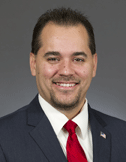
Sen. Eric Lucero
Sponsored bills
Maddy summaryThis bill prohibits the use of Minnesota state funds in state-sponsored health programs (such as Medicaid) for abortion services, except when necessary to maintain federal funding for those programs. It specifically applies to health programs administered by the commissioner of human services and defines "abortion" per existing Minnesota law. The law includes a severability clause to ensure other provisions remain valid if part is challenged in court. The bill does not change federal abortion funding rules but restricts state funding for abortions in these programs.
Maddy summarySF 716 would reclassify drag performances as "adult entertainment" under Minnesota law. This bill defines a "drag performance" as one where performers use clothing/makeup to exaggerate gender identity for entertainment, intended to appeal to prurient interest. The law would subject venues hosting such performances to the same location restrictions as adult entertainment establishments, including prohibitions on operating near schools (2,800 feet), churches (2,800 feet), residential properties (500 feet), or within 1,500 feet of another adult entertainment venue. These changes directly affect businesses hosting drag performances by imposing new zoning and location requirements.
Maddy summaryMinnesota Senate File 709 prohibits employers in Minnesota from requiring or incentivizing employees (including independent contractors, interns, and volunteers) to publicly display medical information, such as vaccination status. The bill directly affects all Minnesota employers - covering businesses, government agencies, and organizations - and bans coercive practices related to revealing health histories. Key mechanisms include imposing civil penalties of $10,000 per violation (plus attorney fees) and classifying violations as misdemeanors. The law takes effect the day after enactment, with no exemptions for public health emergencies or workplace safety.
Maddy summarySF 600 requires county auditors and municipal clerks to publish temporary polling location details online. Specifically, they must post the address, dates, and hours of any temporary polling place on their website within five business days of designating it. The secretary of state must also post this information on their website within five business days of receiving notice. This applies to all temporary locations established under the law, including those requested by federally recognized tribes or postsecondary institutions with on-campus housing for 100+ students. The bill directly affects local election officials and ensures voters can access location information promptly.
Maddy summarySF 713 allows school staff with valid firearm permits to carry weapons on school property after completing mandatory annual training. The bill creates a free, annual active shooter response training program for teachers and school employees through the Bureau of Criminal Apprehension, requiring participants to have a current permit under Minnesota Statutes section 624.714. It amends state law to exempt these trained staff members from misdemeanor penalties for carrying firearms on school grounds, while maintaining existing prohibitions for others. The policy directly affects public school teachers, charter school staff, and postsecondary institution employees who complete the required training and hold a valid permit. This changes the legal status for permitted school staff carrying firearms on school property, making it a non-criminal act under specific conditions.
Maddy summarySF 708 prohibits Minnesotans convicted of crimes related to protests, demonstrations, rallies, civil unrest, or marches from receiving state assistance. The bill makes such individuals ineligible for state loans, grants, or aid programs including college financial aid, housing assistance, food benefits (SNAP), unemployment benefits, business grants, and medical assistance. It applies to crimes committed on or after the effective date (the day after final enactment) and covers all state assistance programs listed in the bill. The law directly affects people convicted of offenses during these events, not protesters generally. This is a policy change to deny state aid based on specific criminal convictions related to public assemblies.
Maddy summarySF 714 creates a new crime in Minnesota for intentionally altering a digital photo or recording of another person without their consent, with the intent to deceive others into believing the subject authorized or sent it (e.g., via email, text, or social media). This law targets cases where the alteration is meant to harm, defraud, or maliciously misrepresent the person, an event they attended, or their property. Violating this law is classified as a gross misdemeanor. The bill directly affects individuals who create or share manipulated digital media with deceptive intent, not general photo editing. It becomes effective August 1, 2025.
Maddy summarySF 710 requires Minnesota public postsecondary institutions to protect student privacy by prohibiting the public sharing of certain personal contact information (like email, physical address, phone number, or ID photos) as "directory information." It also mandates that institutions obtain explicit student consent before collecting location data via technology providers, and forbids tying consent to enrollment, financial aid, or basic campus services like Wi-Fi. Institutions must annually notify students in plain language about location data collection practices and publish all relevant technology provider contracts online. This bill directly affects public colleges and universities in Minnesota and their students by strengthening privacy controls over sensitive personal data.
Maddy summarySF 698 prohibits Minnesota local governments (cities, counties, and their agencies) from enforcing any federal vaccine passport, pass, or credential requirement. It prevents local officials from denying services or access based on vaccine status tied to federal mandates. The bill creates a legal right for individuals to sue if denied services for this reason, with courts allowed to award attorney fees to the winning party. This directly affects local government enforcement practices and individuals seeking services in Minnesota.