

Maddy summarySF 878 exempts the retail delivery of liquid fuels (such as gasoline or diesel) from Minnesota's retail delivery fee. This bill directly affects fuel retailers who deliver liquid fuels to customers, removing a fee they previously paid on these transactions. The key provision amends Minnesota Statutes § 168E.05, subdivision 1, by adding "a retail delivery of fuel products" as a specific exemption (item 3). This change clarifies that fuel delivery services are now explicitly excluded from the fee, aligning with the definition of "fuel products" added in § 168E.01. The bill makes a concrete policy change to the fee structure without altering tax obligations.
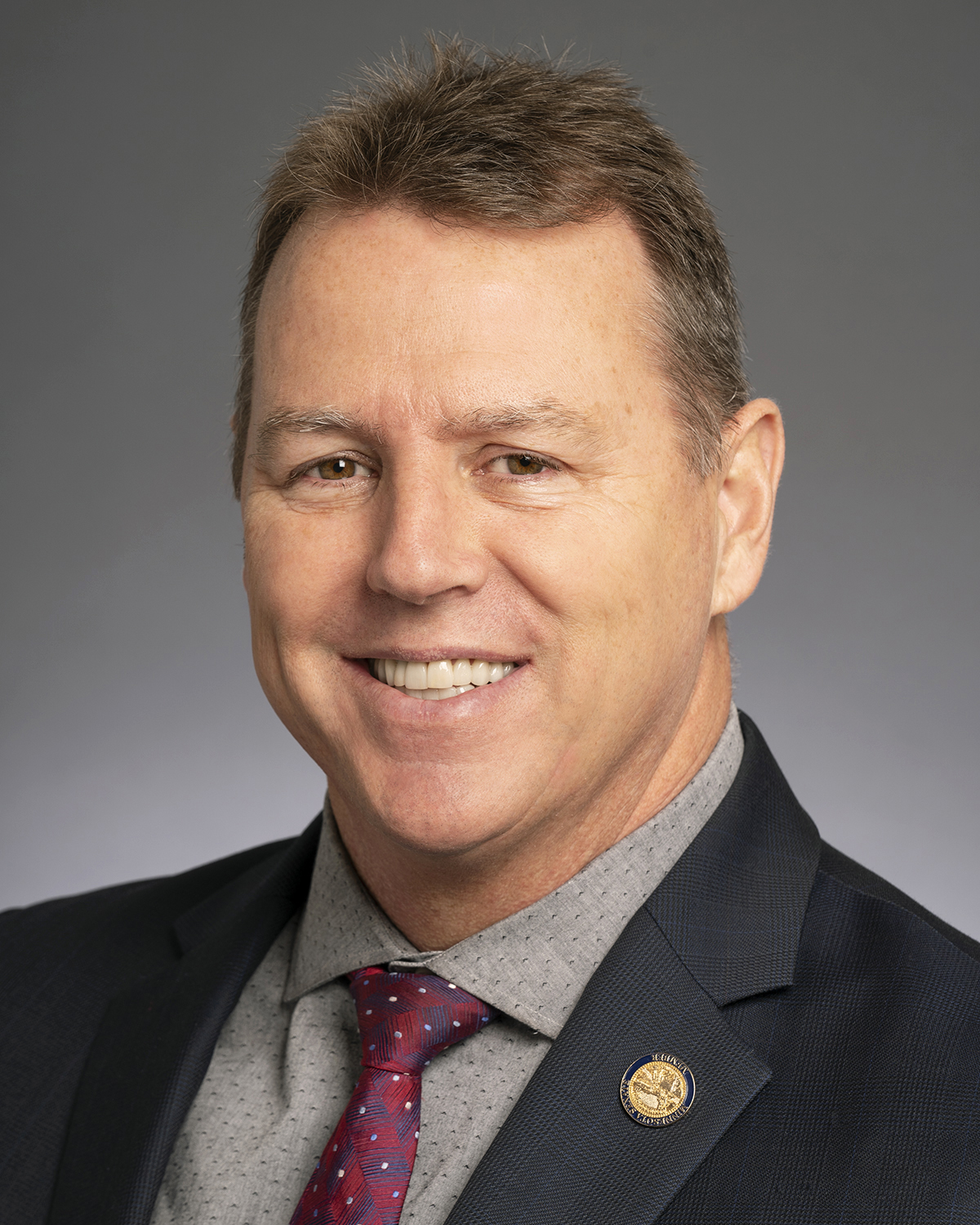
Sen. Nick Frentz
Sponsored bills
Maddy summarySF 872 amends Minnesota Statutes to establish clear rules for auto dealers' participation in auto shows. The bill specifically authorizes dealers to participate in certain auto shows and defines which events they may attend, removing ambiguity about permitted venues. It adds a new provision to sections 80E.12 and 168.27 of the statutes, directly affecting auto dealers by clarifying their eligibility to showcase vehicles at designated events. This change provides administrative clarity for dealers and event organizers without altering broader dealer-manufacturer relationship rules. The bill does not impose new financial requirements or restrict dealer operations beyond auto show participation.
Maddy summaryThis bill modifies Minnesota's water infrastructure funding programs to increase support for communities. It raises the maximum grant amount for water projects from $5 million to $10 million per project (or $20,000 per connection), adjusts affordability thresholds for wastewater and drinking water systems based on household income, and establishes a new "emerging contaminants grant program" to address new water pollution threats. These changes apply to governmental units (like cities and counties) seeking funding for wastewater treatment, drinking water systems, and projects meeting federal or state water quality standards. The bill also authorizes bond issuance to fund these programs, with specific provisions for areas with challenging geology or strict discharge limits.
Maddy summarySF 861 appropriates $500,000 for fiscal year 2026 and $500,000 for fiscal year 2027 from the arts and cultural heritage fund to provide equal grants of approximately $5,263 to each of Minnesota's 95 county agricultural societies. The funds must be used for projects enhancing arts access, education, and the preservation of Minnesota's agricultural, historical, and cultural heritage through county fairs. This appropriation is in addition to existing funding under Minnesota Statutes, section 38.02, and the commissioner of agriculture must develop grant criteria with input from interested parties. The bill directly affects all 95 county fairs by providing supplemental funding for heritage-related programming.
Maddy summaryThis bill authorizes $5.143 million in state bonds to fund specific capital improvements at Marshall's MERIT Center (Minnesota Emergency Response and Industrial Training Center). The funds will cover designing, constructing, and equipping a 50-yard and 300-yard firearms range, firearms support buildings, and a live burn training structure. The appropriation comes from the state bond proceeds fund, with bonds issued under existing Minnesota statutes. The city of Marshall directly benefits as the recipient of the grant for these facility upgrades.
Maddy summaryThis bill modifies the state appropriation for the City of Marshall's MERIT (Minnesota Emergency Response and Industrial Training) Center. It specifies a $2,250,000 grant for the city to design, construct, and equip a 50-yard and 300-yard firearms range, support buildings, and a live-burn structure at the center. The funding is tied to Phase 3 of the center's Master Development Plan. The bill directly affects the City of Marshall by providing state funds for specific infrastructure improvements at the MERIT Training Center.
Maddy summaryThis bill appropriates $4,021,000 in state bond funds to the city of New Ulm for specific infrastructure improvements. It directly affects New Ulm residents by funding the design, construction, and equipment for a gravity sewer flow system, replacement of a water main, removal of a lift station, and replacement of surface amenities. The funds will come from state bonds sold under Minnesota law, with the money provided as a grant to the city through the Public Facilities Authority. The project aims to upgrade the city's water and sewer infrastructure systems.
Maddy summarySF 848 appropriates $1,893,000 from state bonds to fund water treatment plant improvements in the city of Lafayette. The funds will finance a reverse osmosis system and associated upgrades at Lafayette's existing water treatment plant to address high chloride levels in wastewater and prevent future violations of drinking water standards. This directly affects Lafayette residents by improving their drinking water safety through concrete infrastructure upgrades. The bill authorizes the state to sell bonds to cover the cost, with the money delivered to the city via the Public Facilities Authority. (SF 848, Section 1)
Maddy summaryThis bill appropriates $1.8 million from state bond proceeds to fund specific improvements at Mankato's Riverfront Park. It directly affects the city of Mankato by authorizing grants for designing, constructing, and equipping the Vetter Stone Amphitheater and replacing the park's boat launch. The state would sell bonds up to $1.8 million under standard bonding procedures to cover these costs. The funds are restricted to these two physical projects within the park, with no broader policy changes beyond the park enhancements. The bill requires no additional local funding or voter approval.
Maddy summaryThis bill appropriates $5.6 million in state bonds from the transportation fund and $2.4 million from the trunk highway fund to improve intersections along U.S. Highway 14 in Byron. It funds environmental analysis, design, and construction of grade-separated interchanges (replacing at-grade crossings with overpasses or underpasses) at key intersections, including those with Olmsted County State-Aid Highways 3 and 5. The funds cover the city of Byron and Olmsted County's share for these infrastructure upgrades. The project directly affects local drivers, residents, and businesses in Byron by enhancing traffic flow and safety at these intersections.