

Maddy summaryThis bill allows Minnesota credit unions to obtain insurance for member accounts from approved credit union share guaranty corporations in addition to the existing National Credit Union Administration program. It requires credit unions to maintain insurance coverage for share and deposit accounts, mandating that they either dissolve or merge if they fail to secure such protection. The legislation also establishes oversight powers for the commissioner of commerce, including the authority to examine guaranty corporations and assess reasonable examination costs, while prohibiting credit unions from voluntarily switching their insurance coverage without regulatory approval. Additionally, the bill expands the circumstances under which a credit union can be placed under receivership by allowing an approved share insurance provider to serve as receiver alongside the National Credit Union Administration Board.
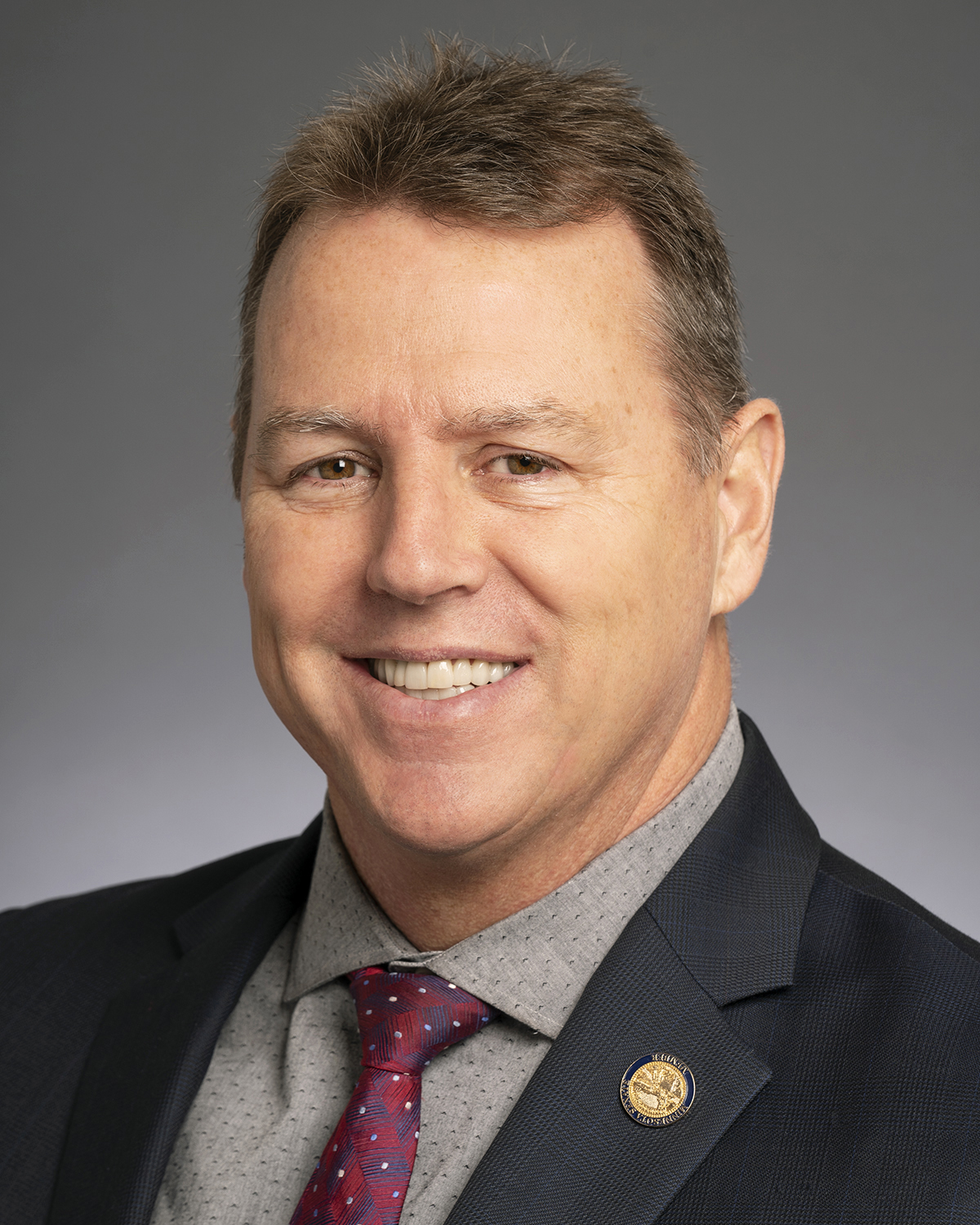
Sen. Nick Frentz
Sponsored bills
Maddy summaryThis bill requires Minnesota's real estate appraiser commissioner to use the Appraisal Foundation's Voluntary Disciplinary Sanction Matrix as the standard when imposing discipline on appraisers. It directly affects licensed real estate appraisers in Minnesota and the commissioner who enforces disciplinary actions. The key provision mandates that the commissioner follow this matrix by default, but allows case-by-case deviations only when specific mitigating circumstances are present. The bill establishes a standardized framework for disciplinary decisions without altering existing penalties or creating new requirements for appraisers.
Maddy summaryThis bill makes administrative updates to Minnesota State Retirement System statutes, primarily clarifying how correctional employees and state workers covered by the general plan are handled when they work for labor organizations. It ensures correctional employees remain in their specific retirement plan while serving labor unions, and allows them to elect coverage for their union work under the same plan. The legislation also modifies enrollment procedures, sets contribution limits based on the governor's salary, and updates application processes for retirement benefits. These changes affect state employees, labor organizations, and the retirement system's administration without altering core benefit structures.
Maddy summaryThis bill makes administrative updates to Minnesota State Retirement System retirement plan statutes, primarily affecting state employees and labor organization representatives. It clarifies that correctional employees remain in their specific retirement plan while working for labor organizations and allows deputy fire marshals to elect coverage under the state fire marshals subplan. The legislation also streamlines enrollment and application procedures, including a 90-day window for employees to elect retirement coverage when serving with labor organizations, and establishes salary limits for calculating retirement contributions for those employees. Additionally, it exempts the correctional plan membership committee from certain open meeting and appointment requirements.
Maddy summarySF 962 clarifies the scope of practice for licensed athletic trainers in Minnesota. It defines "athletic training" to include specific actions like injury prevention, emergency care, assessment, rehabilitation, and wellness promotion, performed within the trainer's expertise. The bill requires athletic trainers to work under a primary physician's direction, establish annual treatment protocols with the physician, and limits initial independent treatment of athletes to 30 days (or less as specified by the physician). It also clarifies that athletic trainers cannot practice medicine, physical therapy, or other licensed health professions without the appropriate additional license. This directly affects licensed athletic trainers, primary physicians, and healthcare facilities employing them.
Maddy summaryThis bill designates thermal energy networks as public improvements and waterworks, allowing Minnesota municipalities to build, maintain, and operate these systems as part of their infrastructure responsibilities. The legislation amends state statutes to explicitly include thermal energy networks in the list of authorized municipal improvements, placing them alongside existing utilities like waterworks and district heating systems. Municipalities will gain the authority to acquire, construct, and maintain these networks, enabling them to develop district heating infrastructure for residential and commercial areas. The bill also updates legal definitions to formally recognize thermal energy networks within the state's waterworks classification.
Maddy summaryThis bill clarifies how the Minnesota Climate Innovation Finance Authority can use funds received through gifts or grants related to its activities. It directs that any money given to the state for the authority's purposes must be deposited into the specific account established under subdivision 11 of the relevant statute. The legislation also updates the authority's general powers to include accepting gifts, grants, or property interests on behalf of the state for climate-related initiatives. This change ensures proper accounting and management of external funding sources supporting Minnesota's climate innovation efforts.
Maddy summaryThis bill (SF 1122) increases annual cost-of-living adjustments for retired public employees in Minnesota. It modifies the Public Employees Police and Fire Retirement Plan and State Patrol Retirement Plan to provide higher postretirement adjustments: for the police/fire plan, adjustments will now be 50% of the federal Social Security COLA (capped at 1.5%) instead of a flat 1%, and for the State Patrol plan, the base adjustment rises from 1% to 1.5% annually. The bill also shortens the waiting period before full adjustments apply - from 36 months to 12 months for most retirees. These changes affect retired police officers, firefighters, and State Patrol members receiving benefits under these specific plans, effective January 1, 2026.
Maddy summarySF 5101 establishes a new state program to provide financial reimbursement for specific high-profile sports and events held in Minnesota. The bill creates a dedicated account funded by state revenue to support local organizing committees that successfully attract major competitions, such as the Super Bowl, NCAA championships, and Olympic trials. To qualify for funding, an event must be selected from a predefined list of major tournaments, and the site must be chosen after considering venues outside the state. The legislation also requires the commissioner of revenue to submit reports on the program's activities and expenditures.
Maddy summaryHF 3802 amends Minnesota's energy certificate of need exemptions, removing the requirement for certain energy projects to seek state approval. The bill specifically exempts projects like wind/solar facilities (including repowering projects that don't exceed capacity limits), transmission line upgrades (e.g., converting to natural gas or increasing efficiency by ≤10%), and energy storage systems from the standard review process. It also clarifies exemptions for small transmission lines (≤1 mile) and upgrades using existing rights-of-way. These changes directly affect energy developers and utilities building or modifying infrastructure, streamlining approval for projects that align with existing state energy policies. The bill focuses on updating technical definitions and scope rather than creating new regulatory requirements.