

Maddy summarySF 2299 amends Minnesota law to include children's advocacy centers as eligible recipient programs for 70% of fines collected from certain crimes, specifically violations of statutes related to assault, sexual offenses, and similar crimes (e.g., 609.221-609.345). This change directly affects children's advocacy centers across Minnesota, directing funds they receive to provide direct services to child victims of these crimes. The bill modifies existing fine distribution rules so courts must send 70% of the mandated minimum fine to local victim assistance programs, now explicitly including children's advocacy centers alongside existing programs like crisis centers and sexual assault programs. The remaining 30% of the fine goes to the state general fund, and courts may choose among eligible programs in a county based on crime type and program needs.
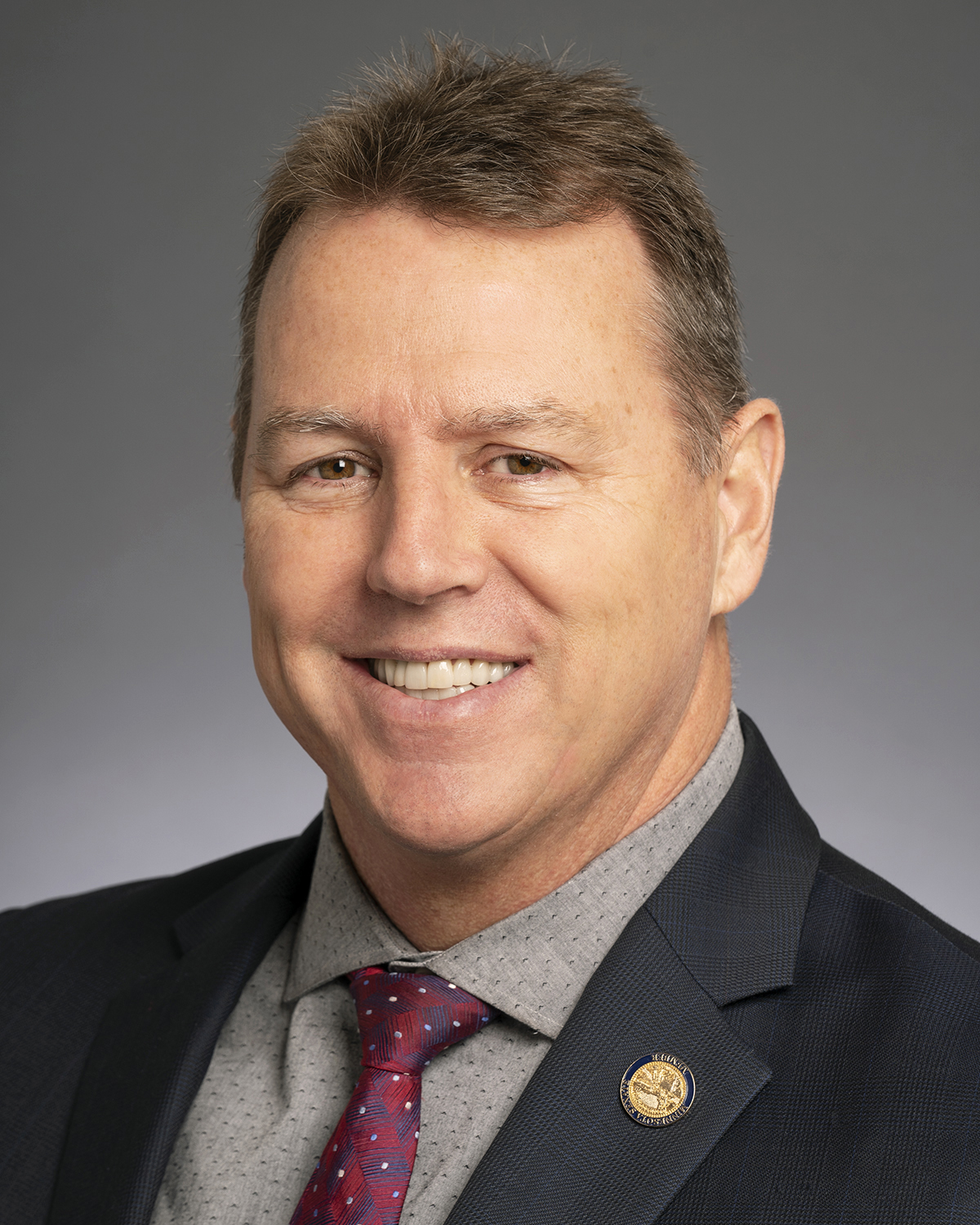
Sen. Nick Frentz
Sponsored bills
Maddy summaryThis bill appropriates $68,684,000 from state bonds to build a new Bureau of Criminal Apprehension (BCA) regional office and laboratory facility in Mankato, Minnesota. The funds will cover construction, furnishing, and equipping the building, which will serve law enforcement agencies across southern Minnesota. The bill authorizes the state to sell bonds to finance this capital project, with the facility expected to support criminal investigations and forensic services in the region.
Maddy summaryThis bill authorizes Minnesota to issue up to $30 million in state appropriation bonds to fund security improvements at U.S. Bank Stadium in Minneapolis, home of the Minnesota Vikings. The "secured perimeter" includes physical barriers like fencing, gates, bollards, surveillance systems, and metal detectors. Proceeds from the bonds would be repaid using state appropriations and payments from the stadium authority, with debt service covered by the general fund. The measure directly affects state taxpayers through bond financing and the stadium's operational funding, while enhancing security infrastructure at the venue. It does not alter stadium ownership or operations, only funding security upgrades.
Maddy summaryThis bill establishes a supplemental monthly payment rate of up to $750 for long-term residential facilities in Blue Earth County that serve 20 beds specifically for chemically dependent women requiring 24-hour supervision and support services. It amends Minnesota Statutes by adding a new subdivision to Section 256I.05, creating this separate payment rate effective July 1, 2026. The rate applies only to facilities meeting these precise criteria within Blue Earth County and excludes standard housing support rates. It directly affects providers operating such facilities by providing additional funding for this targeted population.
Maddy summaryThis bill requires Minnesota's commissioner of commerce to reimburse health plan companies for increased costs when state-mandated health benefits raise per-member monthly expenses. It applies specifically to companies offering coverage in individual, small group, and large group markets. The commissioner must pay affected companies within 60 days of receiving their cost statements, using funds from a designated state account. The law takes effect January 1, 2026, for all new mandated health benefit proposals enacted after that date.
Maddy summarySF 2237 authorizes the state to issue up to $4 million in bonds to fund housing infrastructure projects in Greater Minnesota (areas outside the Twin Cities metro). The bill appropriates $4 million from the bond proceeds fund to the housing development fund, then transfers it to the Minnesota Housing Finance Agency for its Greater Minnesota Housing Infrastructure grant program. This program provides funding for housing infrastructure improvements in communities across rural and suburban Minnesota. The funds will be used to support local housing development projects under existing state law, with the bond sale process following standard state procedures.
Maddy summarySF 2252 appropriates $5 million for county grants and $40 million for state agency IT upgrades in human services. It provides one-time funding to Minnesota counties to offset costs for implementing new service delivery systems and modernizing information technology infrastructure that connects with state agencies like the Department of Human Services and Department of Children, Youth, and Families. Counties will receive grants based on population served, while the $40 million targets specific system improvements for the Children, Youth, and Families Department. The bill focuses on enabling counties to interface with legacy state systems and supports collaborative IT projects between larger and smaller counties. All funding is designated for fiscal year 2026 with the state agency funds available until June 2027.
Maddy summaryThis bill appropriates $3,450,000 from state bond proceeds to fund a recycling, reuse, and waste recovery facility in Blue Earth County. The funds will be used to design, construct, or improve a dedicated customer service facility at the county's landfill for waste services. The state will issue bonds under Minnesota law to cover this cost, with the money going directly to Blue Earth County through a state grant. The project aims to enhance local recycling and waste management operations for county residents.
Maddy summaryThis bill appropriates $10 million from the general fund for one-time grants in fiscal year 2026 to support Minnesota-based businesses developing PFAS-free alternatives. It directly affects Minnesota companies that can demonstrate capacity to create agricultural products using rural Minnesota waste streams (like crop byproducts) without competing with food production or increasing transportation emissions. Grants range from $2 million to $5 million per recipient, funding projects that expand manufacturing of PFAS-free alternatives using local agricultural resources. The program requires a 30-day application window and prioritizes applicants with expertise in material science and waste utilization techniques.
Maddy summaryThis bill appropriates $12.5 million from the state general fund for the Children's Museum of Southern Minnesota, a nonprofit organization in Mankato. The funds are specifically for capital improvements including a new building expansion, renovation of existing exhibits, and an outdoor nature play space. The one-time appropriation is available until the project is completed or abandoned, covering predesign, construction, and equipment costs for fiscal year 2026. The museum directly receives the grant to advance these physical upgrades.