

Maddy summarySF 3736 allows school districts, school bus companies, and service cooperatives to conduct third-party road tests for school bus drivers. The bill adds "third-party testing of school bus drivers" as a new service that service cooperatives can offer under Minnesota law. It establishes that designated school districts or companies can enter agreements to administer tests for other entities, with approval from the commissioner. Additionally, the commissioner may designate service cooperatives to test drivers for member school districts that own or operate school buses.
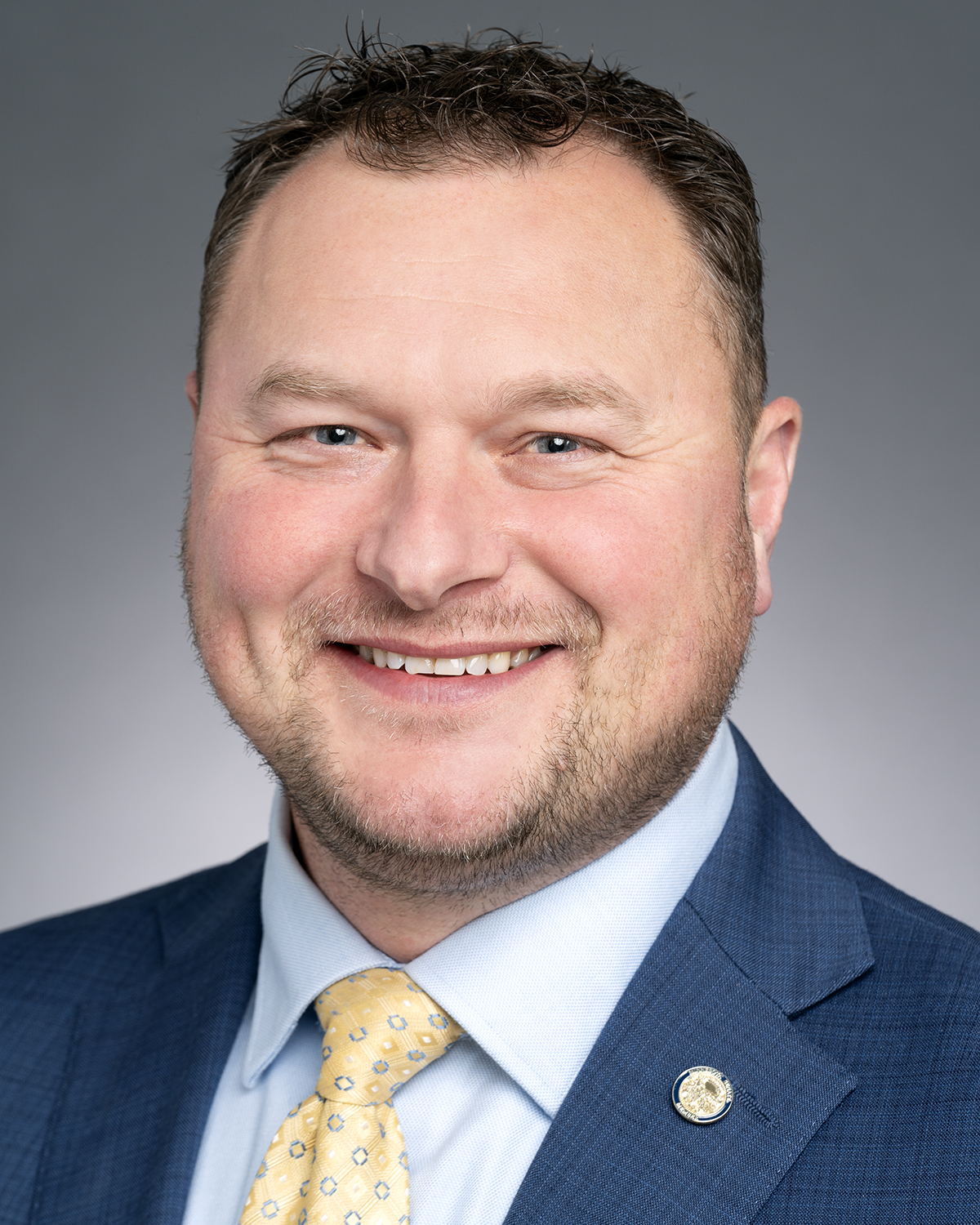
Sen. Andrew Lang
Sponsored bills
Maddy summaryThis bill amends Minnesota law to allow personal watercraft use to begin at 8:00 AM instead of 9:30 AM. It directly affects owners and operators of personal watercraft (like Jet Skis) on Minnesota lakes and waterways. The key change modifies the existing restriction that previously prohibited operation between sunset and 9:30 AM, shifting the start time to 8:00 AM. Other requirements, such as wearing Coast Guard-approved life jackets, speed limits near shorelines, and needing a decal, remain unchanged. The bill focuses solely on adjusting the daily operating hours for personal watercraft.
Maddy summarySF 3938 appropriates $125,000 from the general fund for fiscal year 2027 to the Office of Justice Programs, which will issue a grant to Citizens Against Sex Trafficking. The funds will expand the Power Over Predators prevention program to provide youth trafficking and sexual exploitation prevention services to youth, parents, and communities in the Twin Cities metropolitan area. This one-time appropriation supports trauma-informed education, awareness, and victim-centered support through partnerships with youth groups, recovery centers, domestic violence organizations, and Ramsey County correctional facilities. The bill directly affects youth and families in the Twin Cities region by funding targeted prevention efforts.
Maddy summaryMinnesota's SF 3939 appropriates one-time funding from the general fund for fiscal year 2027 to create a statewide driver education campaign about the "Move Over" law. The campaign will educate drivers on state law requiring them to slow down and change lanes when passing stopped emergency vehicles or other designated vehicles. This bill directly affects all drivers in Minnesota who operate vehicles on public roads, aiming to increase awareness of existing safety requirements under Minnesota Statutes § 169.18, subdivisions 11 and 11a.
Maddy summarySF 3727 repeals a Minnesota law that automatically confirmed certain state appointments if the legislature didn't act within 60 days. This bill directly affects state appointments requiring legislative confirmation (like many executive branch positions), ending the current rule where inaction by the Senate or House automatically approved appointments. The key change removes the "automatic confirmation" provision in Minnesota Statutes § 15.066, requiring active legislative rejection instead of passive approval. This shifts the process so appointments no longer become effective without explicit legislative action.
Maddy summaryThis bill amends Minnesota Statutes to remove employee identification numbers from the list of public personnel data that government entities must disclose. It directly affects current and former employees, volunteers, and contractors working for Minnesota government entities, including state agencies, local governments, school districts, and public safety organizations. The key change specifies that employee IDs - distinct from Social Security numbers - are no longer required to be publicly accessible under the state's data practices law. This adjustment aligns with broader privacy protections by limiting the public availability of specific employee identifiers.
Maddy summarySF 3798 clarifies which children's museums can receive competitive grants from Minnesota's arts and cultural heritage fund. It requires that only museums meeting the IRS's A52 classification (or its successor) for tax-exempt organizations can apply. This bill directly affects children's museums seeking these specific state grants by setting a new eligibility standard. The key provision amends state law to mandate this IRS classification requirement for grant recipients. The bill is currently in the early stages of the legislative process.
Maddy summarySF 1438 requires Minnesota state agencies to conduct a cost-benefit analysis before adopting new administrative rules, demonstrating that projected benefits exceed costs. Agencies must publish preliminary and final analyses - including all data, methods, and assumptions - in the State Register and on a public website, explaining any changes from the preliminary version based on public feedback. The analysis must cover all stakeholders (like local governments, small businesses, and consumers) over a five-year period and follow standardized, transparent methods. Certain rules, such as those adopted under "good cause" or expedited procedures, are exempt from this requirement. This bill directly affects how state agencies develop regulations, aiming to increase transparency and cost-effectiveness in rulemaking.
Maddy summaryThis bill allows courts and municipalities in Minnesota to refer drivers to online or remote driver improvement clinics when local in-person clinics aren't available. It requires the Public Safety Commissioner to create rules for third-party online providers to meet the same standards as traditional clinics and maintain a list of approved courses. The bill also permits these third-party providers to charge fees exceeding the current $50 limit for participants. It directly affects drivers needing improvement classes, courts/municipalities making referrals, and third-party course providers seeking certification. The changes aim to expand access to driver improvement programs through digital options while ensuring regulatory oversight.
Maddy summaryThis bill appropriates $1.27 million for fiscal year 2026 and $2.05 million for fiscal year 2027 from the general fund to the Commissioner of Public Safety. The funds will be used to purchase weather radar data to fill critical gaps in Minnesota's low-level weather observations - five gaps in the first year and eight in subsequent years. This data will directly support public safety planning, preparation, and response across the state, while also being shared with the Departments of Agriculture, Transportation, and Pollution Control. The appropriation is designed to enhance weather forecasting capabilities for state agencies and emergency management.