

Maddy summarySF 3799 modifies Minnesota's Greater Minnesota Regional Parks and Trails Commission rules to update its operations and extend specific grant deadlines. It changes how the commission elects a chair (from annually to biennially), requires that park and trail projects receiving funds must be part of a commission-approved master plan, and updates annual reports to show recommendations by regional district. The bill extends the deadline for five specific projects to use allocated parks and trails funds until June 30, 2027 (for four projects) or 2028 (for one project), including the Mesabi Trail in St. Louis and Lake Counties and Oxbow Park in Olmsted County. These changes affect the commission, the six regional districts outside the seven-county metro area, and the counties/cities named in the extensions.
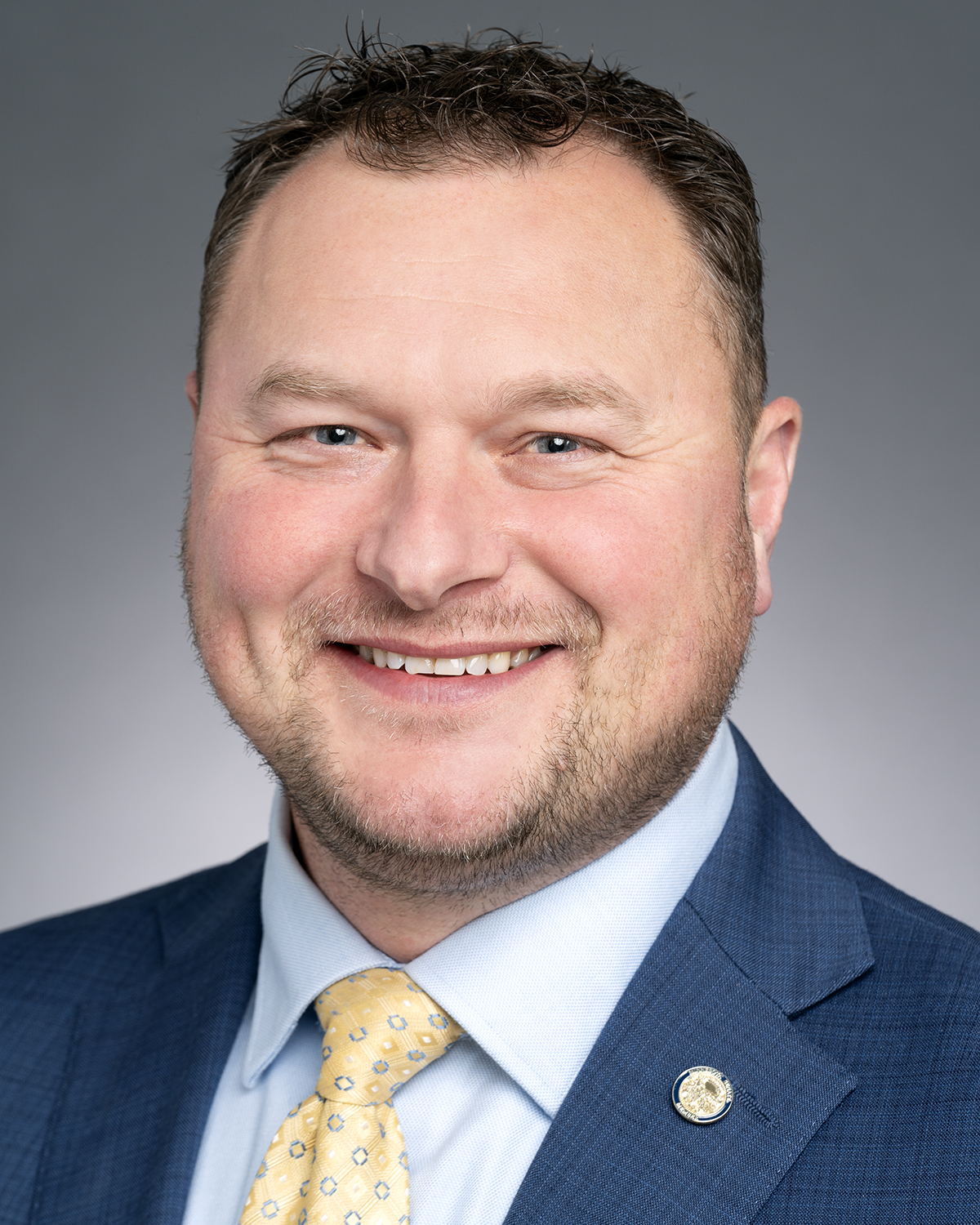
Sen. Andrew Lang
Sponsored bills
Maddy summarySF 3030 amends Minnesota Statutes section 299A.41 to expand line-of-duty death benefits to include part-time, paid on-call, and volunteer firefighters. The bill specifically adds these firefighter categories to the definition of "public safety officer" under existing law, covering those working for governmental fire departments or independent nonprofit firefighting corporations. It clarifies that qualifying duties include nonroutine physical firefighting, training, emergency vehicle operation, fire investigations, emergency medical services, and hazardous material response. This policy change directly extends existing death benefit coverage to these firefighters, who were previously excluded under the statute's definition.
Maddy summaryThis bill exempts Beltrami County from paying its usual 25% cost-share for state disaster assistance related to a specific storm event. It requires the state to reimburse the county for 100% of eligible costs incurred due to the storm covered under Emergency Executive Order 25-06. The exemption applies retroactively to costs dating from June 21, 2025. This directly affects Beltrami County by eliminating its financial responsibility for recovery expenses under the state's disaster relief program.
Maddy summarySF 3933 modifies Minnesota's rules for spending from the "emerging issues account," which funds unexpected environmental projects aligning with the commission's strategic plan. The bill requires that any expenditure from this account must now receive approval from both the governor and the chairs/ranking members of the legislative committees overseeing environment and natural resources finance, in addition to the commission's recommendation. Previously, the commission only needed a 15-member affirmative vote to recommend such spending. This change adds a layer of legislative oversight before funds can be used for unforeseen environmental needs. The bill directly affects the environmental commission when accessing these emergency funds.
Maddy summarySF 3686 establishes a rotational grazing pilot program in Minnesota, providing grants to farmers for implementing or improving rotational grazing systems. The program awards up to $25,000 per farmer (requiring a 50% match from the farmer) to establish perennial forages or purchase infrastructure like fencing and watering systems, with funds reimbursed after implementation. It aims to enhance prairie/woodland use and protect water sources by controlling livestock density and rotation. The program is funded with $2 million from the environment trust fund for fiscal year 2027, requiring a 2028 report on grant distribution and results.
Maddy summaryThis bill clarifies milk offering requirements for Minnesota schools participating in the federal National School Lunch Program. It requires schools to provide various fluid milk options (including flavored/unflavored whole, reduced-fat, low-fat, and fat-free milk, plus nutritionally equivalent nondairy beverages) and mandates that schools must offer lactose-reduced milk or lactase-fortified milk for students with documented lactose intolerance upon parental request. The bill also permits schools to serve these products directly from large containers during meal service. These provisions apply to all public and nonpublic schools receiving school lunch aid or participating in the breakfast program.
Maddy summarySF 3997 modifies Minnesota's rules for delivering nonoxygenated gasoline in bulk. It adds a new requirement that such deliveries (500 gallons or less) must go directly into either (1) the attached fuel tank of a vehicle exempt under another law, or (2) a bulk tank on the premises. The bill maintains existing limits: nonoxygenated gasoline can only be sold for exempt vehicles, and only one storage tank per location may be used. This affects businesses delivering nonoxygenated gasoline to qualified vehicles or facilities, ensuring deliveries align with specific exemption criteria.
Maddy summarySF 3866 exempts certain non-fuel products from Minnesota's retail delivery fee for fuel transactions. It adds definitions to clarify that diesel exhaust fluid (a urea-water mixture for emissions systems) and fuel lubricants (like motor oil and transmission fluid) are not considered "fuel" under state law. This means retailers selling these specific products won't be charged the standard delivery fee applied to actual fuel sales. The bill directly affects businesses that sell these items as part of vehicle maintenance, not fuel retailers. The change is purely definitional, reclassifying these products to remove them from the fee structure.
Maddy summarySF 3935 establishes an 8-year term limit for public members of Minnesota's Lessard-Sams Outdoor Heritage Council, effective July 1, 2026. This bill directly affects the 8 public members (appointed by the governor, Senate Subcommittee, and House Speaker) who currently serve four-year terms without term restrictions. The key provision prohibits public members from serving more than eight years total, with a possible six-month extension only to fill a vacancy. Existing service before July 2026 counts toward this limit. The bill does not change the council's composition, appointment process, or requirements for public members' expertise in habitat conservation.
Maddy summaryThis bill requires inmates to pay all court-ordered restitution before becoming eligible for "supervision abatement status," which is a reduced supervision level after serving time. It directly affects individuals on supervised release who have restitution obligations, as they cannot transition to this lower supervision tier until payments are fully completed. The bill amends Minnesota Statutes 244.46 to add this requirement, overriding previous eligibility rules that considered time served and public safety factors. This change applies to all supervised release terms, including conditional release for life sentences. The policy does not alter existing public safety risk assessments or time-served calculations.