

Maddy summaryThis bill removes lawn care services, including fertilizing, mowing, spraying, and garden maintenance, from Minnesota's sales tax base. It directly affects homeowners and businesses that currently pay sales tax on these services, as well as lawn care companies that provide them. The change is implemented by amending state tax statutes to exclude these specific outdoor maintenance tasks from taxable services while keeping other services like laundry, car washing, and pest control taxable. The legislation does not change how other landscaping activities, such as tree removal or construction-related planting, are taxed.
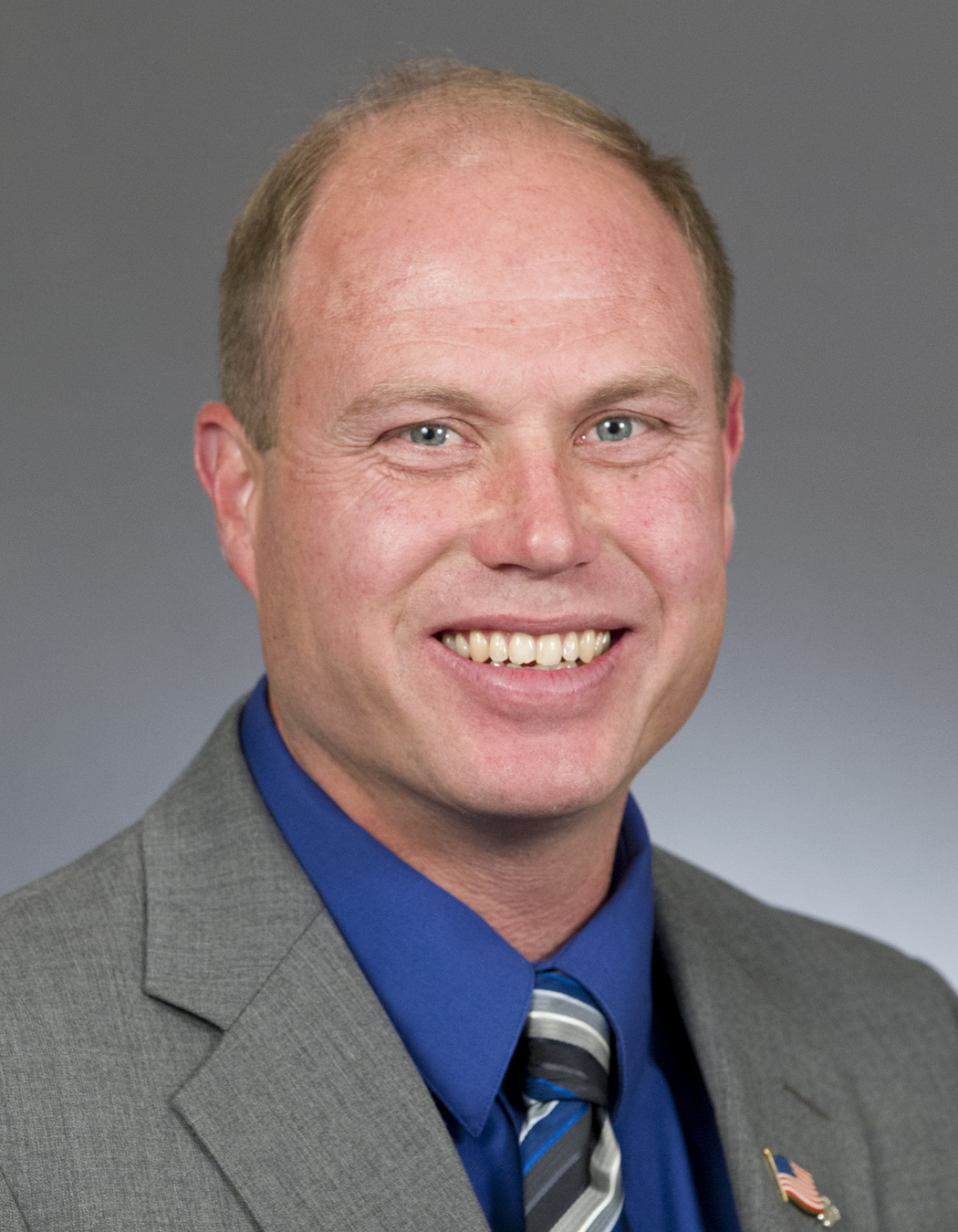
Sen. Jason Rarick
Sponsored bills
Maddy summaryThis bill establishes a mandatory waiting period before new K-12 education funding mandates take effect, ensuring school districts and charter schools have adequate preparation time. Under the law, any substantive changes to education funding programs that impact most schools enacted after March 1 must wait until July 1 of the following year to become effective. The legislation also requires that bills significantly affecting school district duties include a completed local impact note from the Legislative Budget Office before they can take effect. This measure applies to all substantive education funding changes and becomes effective on July 1, 2027.
Maddy summaryThis bill extends the availability of funding for a grant program designed to expand Minnesota's wild elk population and range. It directly affects the Fond du Lac Band of Lake Superior Chippewa, which will receive $2.3 million to support elk reintroduction efforts in Carlton and southern St. Louis Counties. The legislation requires thorough planning with the Department of Natural Resources to develop capture and handling protocols, including disease management strategies, and mandates the creation of postrelease state and Tribal elk comanagement plans. The appropriation is a one-time allocation available until June 30, 2029, and includes $300,000 specifically designated for the Department of Natural Resources to assist with these activities.
Maddy summaryThis bill allows Independent School District No. 403 in Ivanhoe to move up to $68,000 from its early childhood family education reserve to its general fund balance by June 30, 2026. The provision overrides existing state finance rules that typically restrict such transfers. Once enacted, the school district can use the transferred funds for general purposes rather than being limited to early childhood education programs. The change takes effect immediately after the bill is passed.
Maddy summaryThis bill expands the authority of Minnesota hospital districts to financially support a wider range of licensed health care providers and facilities beyond traditional hospital and nursing home operations. The legislation allows hospital districts to enter into agreements with primary care clinics, behavioral health providers, dental clinics, home health agencies, urgent care centers, and community-based health service organizations to provide financial or in-kind support. Key provisions require that any funds distributed be used only for specific programs benefiting district residents, mandate regular financial reporting from recipient organizations, and prohibit the use of funds for executive compensation, shareholder dividends, or profit distribution. The bill does not grant hospital districts additional taxing authority and maintains existing requirements for voter approval when creating or reorganizing hospital districts.
Maddy summaryThis bill requires certain intended parents in Minnesota to legally adopt the child they intend to have through surrogacy or other assisted reproduction methods. It specifically affects intended parents who are not biologically related to the child and do not give birth to the child, stating they are not considered legal parents until they complete an adoption process. The law would take effect on August 1, 2026, and would apply to children born on or after that date. This change would mean these individuals must go through the standard adoption procedures outlined in Minnesota law to establish legal parentage.
Maddy summaryThis bill authorizes the issuance of up to $60.7 million in state bonds to fund improvements at the Rush City Correctional Facility in Minnesota. The funds will be used to design and construct a new building addition, renovate existing spaces, and provide services for incarcerated individuals, with potential use for hazardous materials removal. The commissioner of corrections will oversee the project, while the commissioner of management and budget will handle the bond sale process according to existing state laws. The legislation takes effect immediately upon final enactment.
Maddy summarySF 2540 creates the Minnesota Young Readers Club program to provide monthly book deliveries to pre-K through 5th grade students reading below grade level. Eligible students include those identified through universal screening, scoring below proficiency on state assessments, or recommended by educators. The program requires the Department of Education to partner with an organization to distribute culturally relevant, age-appropriate books monthly to students' homes or schools, along with family support materials offering home literacy strategies in accessible formats. It also mandates a report on program implementation and outcomes, aligning with Minnesota's Read Well by Third Grade initiative.
Maddy summaryThis bill authorizes the Cloquet Area Fire District in Minnesota to collect a local sales tax to fund a new fire and ambulance station. The district must hold a separate voter approval election in the cities of Cloquet and Scanlon before implementing the tax, which would be limited to a maximum of 0.5% and apply only in areas where voters approve it. If approved, the tax revenue would be used to cover administrative costs and finance up to $31 million in bonds for constructing the new facility, with the tax set to expire after 20 years or once the project is fully funded.
Maddy summaryThis bill increases funding for the Minnesota Department of Agriculture and modifies how certain agricultural programs are financed. It directly affects farmers, ranchers, county agricultural inspectors, and the state agency that manages these programs. The legislation raises the total appropriation for agriculture from $58,957,000 to $59,306,000 for 2026 and 2027, with specific increases for soil health assistance, livestock and wildlife damage compensation, laboratory equipment, meat inspection services, and county inspector grants. Key provisions include allowing the commissioner to use a percentage of funds for administrative costs, extending grant availability dates, and adjusting compensation amounts for livestock destroyed by wolves and elk.