

Maddy summaryThis bill modifies Minnesota law to clarify how taxes are collected on undivided interests in real property, such as those held by mortgage lenders or lessees. It allows these parties to pay taxes on their specific share of the property and receive official receipts for those payments. Once taxes are paid on an undivided interest, that specific share becomes protected from tax enforcement actions against other unpaid shares. The changes take effect immediately upon the bill's final passage.
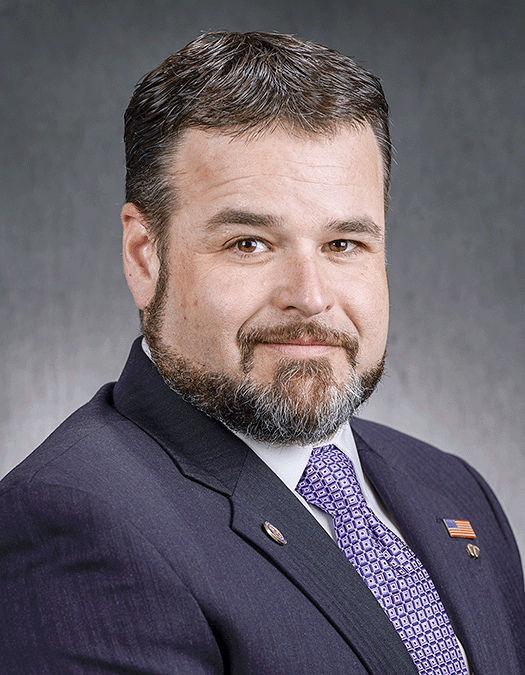
Rep. Josh Heintzeman
Sponsored bills
Maddy summaryThis bill strengthens fraud prevention measures for registrations, licenses, passes, and permits issued by the Minnesota Commissioner of Natural Resources. It directly affects individuals and dealers who apply for or use these documents by making specific fraudulent actions illegal, such as using temporary permits without intent to complete sales, providing false information on applications, or possessing fake registrations. The legislation establishes criminal penalties, including misdemeanor charges for individuals and gross misdemeanor charges for dealers who violate these rules, while also voiding any permits or passes obtained through fraud. Additionally, the bill extends these protections to snowmobile state trail passes and other registration types by adding new unlawful acts and penalties to existing state statutes.
Maddy summaryThis bill modifies Minnesota's soil and water conservation laws to update how conservation districts are created and managed. It requires the state board to consider specific factors like voter referendum results, local landowner attitudes, and economic conditions when deciding whether to establish new districts or continue existing ones. The legislation also clarifies that demonstration projects can be conducted on state lands with agency cooperation and on private lands with owner consent. These changes aim to ensure conservation efforts align with current policy goals while maintaining administrative feasibility for district operations.
Maddy summaryThis bill requires the Minnesota commissioner of natural resources to grant a permanent 33-foot-wide easement across specific state-owned land in Crow Wing County. The easement would allow access and utility services for adjacent private property, with precise boundaries defined by legal land survey descriptions. The state land subject to the easement is located in Sections 8 and 9 of Township 46, Range 29, while the benefiting property is Lot 3 and part of Section 9 in the same township. This legislation creates a permanent right-of-way that the state must provide to the neighboring landowner.
Maddy summaryHF 1434 requires commercial websites sharing material harmful to minors (defined as content with sexual depictions lacking artistic value for minors) to verify users are 18+ if 25% or more of the site’s pages contain such material. It mandates age verification using approved methods like commercial databases, prohibits retaining user identifying information, and creates a private right of action for parents to sue violators. The Minnesota Attorney General can enforce the law through civil actions, and commercial entities face $25,000 penalties per violation. This bill directly affects websites meeting the 25% harmful content threshold and targets operators of commercial platforms accessible to Minnesota residents.
Maddy summaryThis bill modifies Minnesota's agritourism immunity laws to explicitly include off-road vehicle trails as a recognized agritourism activity. It clarifies that farms and ranches offering public access to off-road trails are protected from liability for inherent risks, such as natural hazards and equipment dangers, under the same conditions as other agritourism activities. The changes apply to incidents occurring on or after August 1, 2026, and affect both farm operators and visitors participating in these recreational activities.
Maddy summaryThis bill allocates $7.5 million from the renewable development account to Brainerd Public Utilities for energy efficiency projects in fiscal year 2027. The funds can be used for upgrading existing turbine generators, replacing them with new units, or improving structures to accommodate new generators. The money is provided as a grant to the commissioner of commerce and remains available until spent. This legislation directly affects Brainerd Public Utilities and supports infrastructure improvements at the local utility level.
Maddy summaryThis bill establishes a special "outdoor recreation endorsement" for Minnesota license plates, requiring vehicles to have this endorsement (either as a sticker or special plate) to access state parks and recreation areas over 50 acres. The endorsement fee funds park maintenance and operations through a dedicated account in the natural resources fund. It exempts veterans with service-connected disabilities from paying the endorsement fee, as they are already exempt from similar registration fees under existing law. The policy takes effect January 1, 2027, for new endorsements.
Maddy summaryHF 957 allows Minnesota school districts and charter schools to transfer unassigned funds between operating accounts during fiscal years 2025-2029 without increasing state aid or property tax authority, requiring written resolutions and public posting. It also permits school boards to formally opt out of complying with specific new state education laws or rules enacted between July 2023 and 2024 (including provisions from 2023-2024 legislative sessions), for the 2025-2026 through 2028-2029 school years. School boards must document and publicly post each opt-out decision and notify the education commissioner. This bill directly affects school districts and charter schools by providing temporary flexibility in fund management and compliance with certain state mandates. The provisions expire after the 2028-2029 school year.
Maddy summaryThis bill authorizes the issuance of up to $15 million in state bonds to fund the Local Road Wetland Replacement Program in Minnesota. The funds will be used by the Board of Water and Soil Resources to purchase land or permanent easements for restoring, creating, or enhancing wetlands that were drained or filled during public road repairs and replacements. The bill allows the board to prioritize certain projects and enter into agreements with various entities, including federal agencies and private organizations, to acquire wetland replacement credits. This legislation directly affects state infrastructure projects and environmental conservation efforts by providing financial resources to offset wetland losses caused by road maintenance.