

Maddy summaryThis bill establishes the SAVE Minnesota Act, which requires voters to present a specific photo identification card to register to vote and to cast their ballots. To obtain this new voter identification card, applicants must provide proof of their U.S. citizenship and may receive certain vital records, such as birth certificates, without a fee. The legislation also creates a new voter identification card program, modifies existing driver's license requirements, and sets up a process for handling provisional ballots. Additionally, the bill includes funding provisions to support the administration of these new election procedures and establishes a children's trust fund.
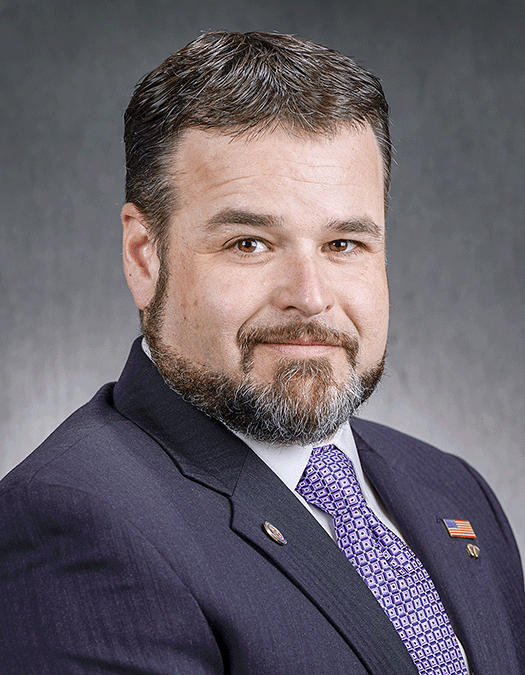
Rep. Josh Heintzeman
Sponsored bills
Maddy summaryThis bill creates a new 100% tax on money obtained through fraud by individuals or organizations, regardless of whether they have already paid fines or restitution. It applies to those convicted by a court, those identified by the state revenue commissioner as having committed fraud, and anyone paid to help facilitate such fraudulent activities. The revenue collected from this tax must be used exclusively to provide relief for state income or property taxes. The law takes effect retroactively for fraud cases determined after December 31, 2019.
Maddy summaryThis bill amends Minnesota's tax preparer conduct rules to prohibit accountants and tax professionals from automatically marking a tax return to donate money to the state elections campaign account. The change requires tax preparers to obtain explicit instruction from the taxpayer before making such a contribution designation on behalf of the client. This provision adds a specific restriction to the existing list of prohibited actions, ensuring that taxpayers retain full control over their election contributions. The legislation applies to all individuals and entities providing tax preparation services in Minnesota.
Maddy summaryThis bill authorizes the state to issue up to $7.5 million in bonds to fund energy efficiency upgrades for Brainerd Public Utilities. The appropriated funds are designated for capital improvements such as upgrading or replacing turbine generators and modifying existing structures to support new equipment. The commissioner of commerce will distribute these funds as grants directly to the utility company, and the legislation takes effect immediately upon final passage.
Maddy summaryHF 5017 authorizes the construction of a new paved segment of the Cuyuna Lakes State Trail in Brainerd, extending the path from the Northern Pacific Center to 28th Street Southeast. To fund this project, the bill appropriates $2 million from the bond proceeds fund and authorizes the state to issue up to $2 million in bonds. The designated funds will be used by the commissioner of natural resources to design and build the trail, which aims to connect existing networks and improve accessibility for trail users.
Maddy summaryHF 1531 permanently removes the June 30, 2025, expiration date from Minnesota's law allowing crossbow hunting and fishing during regular archery seasons. This change affects hunters targeting deer, bear, turkey, common carp, or native rough fish using crossbows during designated seasons. The bill amends Minnesota Statutes section 97B.037 by deleting the sunset provision, making the crossbow allowance permanent. Hunters must still meet standard requirements, including valid licenses and crossbow specifications under section 97B.106.
Maddy summaryThis bill modifies how Minnesota calculates registration taxes for passenger cars and hearses by lowering the tax rate based on the vehicle's manufacturer's suggested retail price. It changes the tax calculation for new vehicles registered on or after November 16, 2020, and reduces the percentage of the vehicle's value taxed for each subsequent year of ownership. The legislation also establishes a process to transfer money from the state's general fund to the highway user tax distribution fund to cover any revenue shortfall caused by these tax reductions.
Maddy summaryThis bill updates Minnesota's definition of an all-terrain vehicle by increasing the maximum weight limit from 2,000 to 3,500 pounds. It also raises the annual fee for nonresidents to operate an all-terrain vehicle on state trails from $30 to $50. The collected fees will continue to fund grants for local governments to build and maintain all-terrain vehicle trails. These changes affect vehicle owners, operators, and the state's natural resources management system.
Maddy summaryThis bill establishes a one-time property tax refund program for Minnesota property owners who paid eligible taxes in 2026, affecting residential, agricultural, and commercial property classifications. The program allocates $4 billion from the state general fund to provide refunds based on a percentage calculated by the Department of Revenue, with applications accepted between July 15 and September 15, 2026. Any unclaimed refund amounts will automatically be converted into property tax credits for 2027 on the properties where no refund was requested. The legislation defines specific property categories eligible for the refund and sets clear deadlines for application processing and payment distribution.
Maddy summaryHF 1669 increases the annual funding limit for Minnesota's tax credit supporting sustainable aviation fuel producers. It raises the allocation cap from $2.1 million to $10 million per year for fiscal years 2026 through 2029. This change directly affects businesses producing or using sustainable aviation fuel within Minnesota by expanding the available tax credit. The bill amends Minnesota Statutes section 41A.30 to adjust these funding limits, allowing more financial support for this clean energy initiative. The credit remains available until fiscal year 2030, with unallocated funds expiring after that date.