

Maddy summaryHF 1627 modifies Minnesota's PFAS regulations by exempting certain commercial and industrial products from restrictions, delaying bans on lead-containing products, and postponing prohibitions on PFAS-containing firefighting foam at airport hangars. The bill also adjusts reporting requirements for PFAS use, allowing more flexibility for manufacturers of items like automotive maintenance products, cleaning supplies, and textile furnishings. These changes directly affect businesses producing or using PFAS in specific products, including manufacturers of commercial cleaning supplies and airport operators. The provisions are designed to provide temporary relief from existing restrictions while maintaining the framework for future regulatory action.
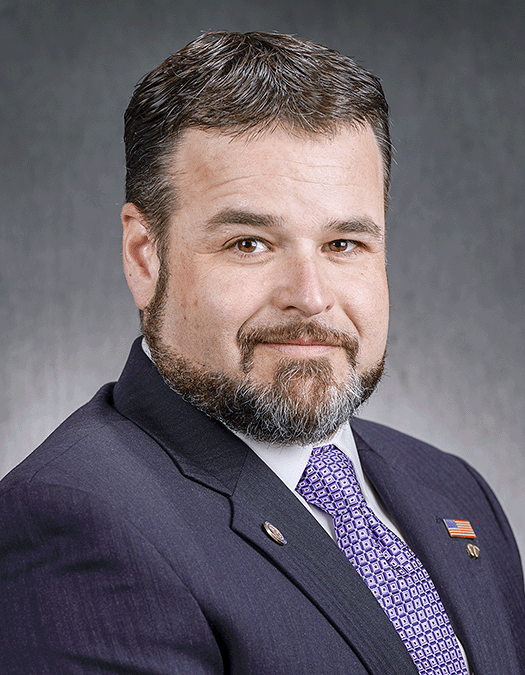
Rep. Josh Heintzeman
Sponsored bills
Maddy summaryHF 276 reduces the annual fishing license fee for Minnesota residents aged 65 and older from $25 to $15, directly affecting seniors who purchase fishing licenses. The bill requires the commissioner of natural resources to report annual license sales data for this age group to the commissioner of management and budget. Based on this data, the general fund must transfer money to the game and fish fund each year to cover the lost revenue from the reduced fee. This ensures the state fully offsets the cost of the fee reduction without impacting existing conservation funding. The change takes effect July 1, 2025.
Maddy summaryHF 1871 delays the prohibition on lead solder in products containing internal circuit boards until January 1, 2028, instead of the original 2026 deadline. This specifically affects manufacturers of products like electronics with circuit boards (e.g., key fobs), requiring them to submit biannual reports to the Pollution Control Agency detailing compliance barriers, progress, and updated timelines. The bill amends Minnesota Statutes 325E.3892 to extend the delay period while maintaining the existing limits on lead (0.009% by weight) and cadmium (0.0075%) in covered products. The delay applies only to products with internal circuit boards, not other lead-containing items. The change is effective upon enactment.
Maddy summaryHF 2005 requires the Minnesota State Building Code commissioner to adopt specific rules for straw bale construction and hempcrete construction. This procedural bill mandates rulemaking to establish standards for these alternative building methods but does not set the rules themselves. The bill directly affects builders, developers, and inspectors who may use these materials in construction projects. It focuses on creating a regulatory framework for these sustainable building techniques within Minnesota's building code.
Maddy summaryHF 1870 exempts pens containing lead from Minnesota's prohibition on manufacturing or selling lead-containing products, effective until January 1, 2028. This specifically affects pen manufacturers who use lead in their products, allowing them to continue production during the exemption period. The bill requires these manufacturers to submit biannual reports to the Pollution Control Agency detailing compliance barriers, progress toward meeting future standards, and updated timelines for full compliance. It amends Minnesota Statutes § 325E.3892, which otherwise bans products with lead exceeding 0.009% (90 ppm) by weight. The exemption is temporary, with the requirement to transition to lead-free alternatives by 2028.
Maddy summaryHF 1868 amends Minnesota law to exempt electronic and internal components (like circuit boards in devices) from certain PFAS chemical prohibitions until January 1, 2032. This directly affects manufacturers and sellers of products containing these components, as they are no longer required to comply with PFAS restrictions for these specific parts. The bill modifies Minnesota Statutes section 116.943, subdivision 8, adding this temporary exemption to existing rules. The change is effective immediately upon enactment but only applies to electronic/internal components, not entire products.
Maddy summaryHF 1869 delays the prohibition on PFAS-containing firefighting foam at Minnesota airport hangars until January 1, 2028. This bill directly affects airport operators, requiring them to submit annual reports to the state fire marshal on their transition to PFAS-free foam and disposal plans until the state makes a determination that federal guidance, a qualified foam product database, and commercial availability exist. The law also allows airport operators to request one-year extensions with approval from the Pollution Control Agency and state fire marshal, provided environmental and public safety protections are maintained. This amendment modifies Minnesota Statutes section 325F.072 to extend the existing exemption for airport hangars.
Maddy summaryHF 654 amends Minnesota's PFAS ban to exempt safety-related items (like helmets, boots, and eye protection) used by juveniles operating all-terrain vehicles or dirt bikes. It allows PFAS in these specific safety products, which are otherwise prohibited under Minnesota Statutes § 116.943, but requires manufacturers to display a permanent warning label stating: "This product contains intentionally added PFAS..." The exemption applies only to safety accessories designed for juvenile operators and does not affect the general ban on PFAS in other juvenile products. This bill directly affects manufacturers and sellers of juvenile ATV/dirt bike safety gear.
Maddy summaryHF 1906 modifies Minnesota's environmental regulations by delaying specific bans on harmful chemicals. It exempts electronic and internal components from PFAS prohibitions until January 1, 2032, delays restrictions on lead-containing products (like circuit boards and pens) until 2028 with mandatory six-month compliance reports from manufacturers, and postpones PFAS firefighting foam bans at airport hangars until 2028. Airport operators must submit annual reports on conversion progress and may request one-year extensions if safety and environmental protections are maintained. These changes apply directly to manufacturers of electronics, consumer products, and airport facilities using specific firefighting foam.
Maddy summaryHF 1882 creates a process for the Minnesota Pollution Control Agency to temporarily approve site-specific sulfate limits for waters identified as wild rice habitats during ongoing rulemaking. It directly affects businesses with permits (like mining or wastewater facilities) discharging sulfate into these waters, requiring them to submit detailed data including water maps, historical wild rice surveys, and sulfate monitoring. The bill mandates the agency must approve complete applications within 150 days and prohibits requiring costly sulfate treatment technology during this period. Instead, it allows temporary limits while ensuring permittees monitor discharges and implement minimization plans if limits are exceeded. This provides a streamlined pathway for compliance without forcing immediate infrastructure changes.