

Maddy summaryThis bill modifies Minnesota pesticide regulations to specifically protect wild-rice waters from harmful pesticide impacts. It directly affects agricultural operations, state agencies, and communities near designated wild-rice habitats by requiring the Department of Agriculture to include wild-rice waters in environmental impact assessments and pesticide management plans. Key provisions define wild-rice water as any body of water supporting wild rice, mandate that pesticide violations harming these waters be treated as serious rather than minor offenses, and require the state to use integrated pest management techniques on public lands to prevent pesticide runoff into wild-rice waters. The bill also expands pesticide education requirements to include training on wild-rice water protection and establishes a $100,000 annual funding limit for expert consultation on pesticide-related issues affecting these waters.
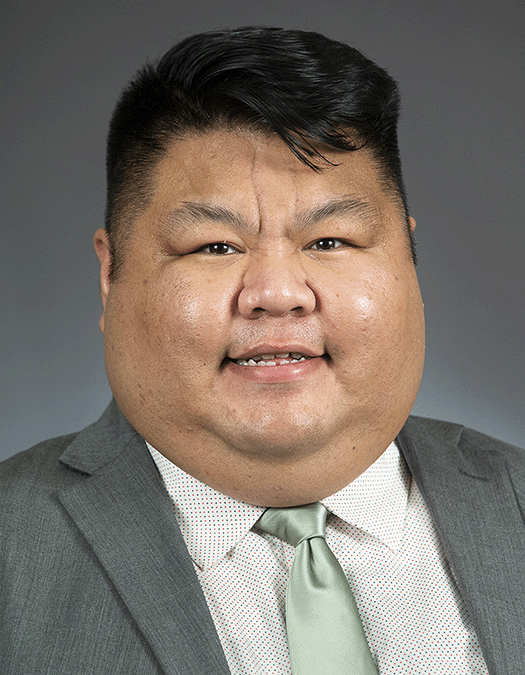
Rep. Jay Xiong
Sponsored bills
Maddy summaryThis bill requires state and local agencies to prepare a detailed risk assessment before approving any projects in Minnesota waters that support wild rice. The assessment must identify potential threats to wild rice, evaluate the likelihood and scale of damage, and explain why the public need for a project justifies the risk. Agencies must also allow at least 30 days for public comment, respond to substantive feedback, and consult with Tribal governments when requested. If 100 or more residents request a hearing, the agency must hold one near the affected water. The final risk justification must be published online and in the State Register before permits are issued.
Maddy summaryThis bill updates Minnesota's state grain designation to formally recognize wild rice, including its scientific names and both the English and Ojibwe terms for the plant. It amends state statutes to declare wild rice as the official state grain and establishes a policy recognizing the inherent right of uncultivated wild rice to exist and thrive in Minnesota. The legislation also allows a photograph of wild rice to be displayed in the Office of the Secretary of State. This change affects state government records and official symbols while honoring Indigenous language and cultural significance.
Maddy summaryThis bill prohibits operating motorized watercraft in uncultivated wild rice beds in Minnesota, directly affecting boaters and watercraft operators in affected waterways. The law requires that any watercraft entering these areas must be propelled by hand, such as a canoe or skiff, and bans operating at speeds greater than slow-no-wake within 150 feet of uncultivated wild rice beds. These restrictions aim to protect wild rice habitats from damage caused by boat motors and wake. The bill amends existing Minnesota statutes to add these specific protections for uncultivated wild rice beds.
Maddy summaryHF 2862 exempts certain electric generating facilities from requiring a certificate of need under Minnesota law. It specifically adds a new exemption for "new or modified electric generating facilities primarily intended to provide power to a data center," provided they comply with existing requirements in section 216B.1691, subdivision 2g. The bill also updates other existing exemptions, including for small renewable energy projects (wind/solar), efficiency upgrades (max 10% capacity increase), fuel conversions to natural gas, and transmission lines serving single customers. These changes directly affect energy developers building facilities like data centers, wind farms, and solar installations. The bill streamlines regulatory approval for these projects by removing a certificate of need requirement.
Maddy summaryHF 309 amends Minnesota Statutes §84.523 to tighten mining restrictions in the Boundary Waters Canoe Area Wilderness (BWCA) and Rainy River headwaters. The bill requires the commissioner of natural resources to determine that proposed mining (for taconite, sand, gravel, or granite) in the Rainy River headwaters would not harm the BWCA before any permits are issued. This modifies existing law by adding this specific assessment step, directly affecting mining operations seeking approval in these areas. The change maintains the general prohibition on mining without legislative approval but adds a new administrative requirement for the commissioner to evaluate environmental impacts. The bill focuses on protecting the BWCA's wilderness character through stricter permitting conditions.
Maddy summaryThis bill prohibits large food retail stores in Minnesota from using surveillance technology to set personalized prices for individual customers. It bans the use of electronic shelving labels and prevents stores from collecting data on shoppers under 17 years old or using protected class information like race or gender to determine pricing. The law applies to grocery stores over 10,000 square feet or larger stores with significant food sales, while excluding financial institutions and insurance companies from its requirements.
Maddy summaryThis bill allocates $1.5 million from the arts and cultural heritage fund to the City of Minneapolis to create a public memorial honoring Renée Good and Alex Pretti. The memorial will feature statues, educational exhibits, and a space for community reflection, focusing on their deaths and the broader issues of civil rights and immigration enforcement. The project requires a collaborative planning process involving local residents, civil rights groups, artists, and historians, with oversight provided by a partnership including city officials and state legislators. While the state provides the initial funding, the city is permitted to seek additional private donations and partnerships to cover design, programming, and long-term maintenance costs.
Maddy summaryThis bill authorizes the state of Minnesota to issue up to $75 million in bonds to fund the renovation of the Roy Wilkins Auditorium in St. Paul. The funds will be used by the city to upgrade the facility's infrastructure, including its heating and cooling systems, electrical and plumbing networks, and security features. Additionally, the project will expand and reconfigure interior and exterior event spaces while improving accessibility and storage areas for equipment. The legislation also includes upgrades to visitor amenities such as restrooms, seating, and sound systems to support ongoing operations.
Maddy summaryThis bill requires public utilities in Minnesota to create detailed plans for building thermal energy networks, which distribute heat through underground pipes to buildings. The legislation directly affects utility companies that want to construct these heating systems, mandating that they submit comprehensive service plans to the state commission. These plans must include project costs, construction schedules, customer transition strategies, and commitments to use local labor and prevailing wage standards. The bill also expands the legal definition of "public utility" to include operators of thermal energy networks, subjecting them to existing utility regulations.