

Maddy summaryThis bill appropriates $1.5 million from the state general fund for Minnesota's Lawns to Legumes program, which supports homeowners in replacing grass lawns with soil-enriching legume plants like clover. The funds, available until June 2029, are administered by the Board of Water and Soil Resources and can be used to partner with local governments and organizations. The program aims to improve soil health and reduce fertilizer use by incentivizing legume-based lawn alternatives. This is a one-time funding allocation for fiscal year 2026.
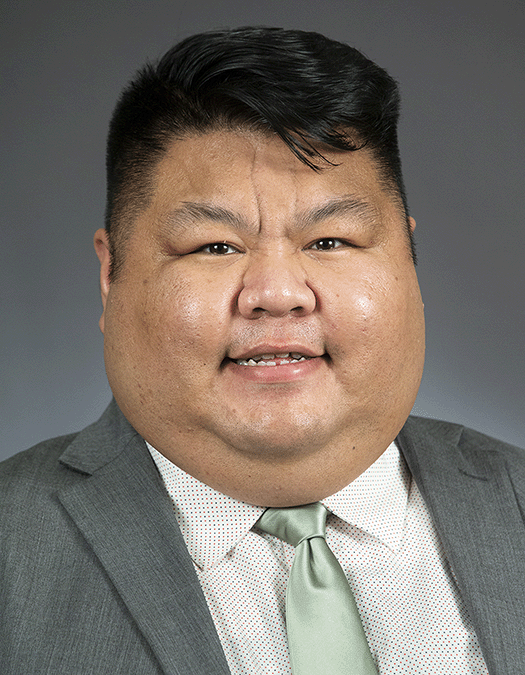
Rep. Jay Xiong
Sponsored bills
Maddy summaryHF 3012 appropriates $150,000 from Minnesota's arts and cultural heritage fund for youth boxing programs in fiscal year 2026. The funds will be granted to SIR Boxing through the Minnesota Humanities Center Board to preserve Minnesota's boxing culture. This bill directly supports youth participants in boxing programs by providing dedicated funding for their development. The legislation focuses solely on allocating existing state funds for this specific purpose.
Maddy summaryHF 2982 appropriates $500,000 for fiscal year 2026 and $500,000 for fiscal year 2027 from the general fund to create a grant for a nonprofit to establish a credit union. The credit union must specifically serve low-income individuals with limited access to traditional banking, offering deposit, loan, and investment services in a culturally appropriate way. It requires the credit union to operate at least one physical location and mandates a report on outcomes to legislative committees by February 15, 2028. This bill directly affects underserved Minnesotans by expanding access to banking services and the nonprofit implementing the credit union. The funding is a one-time appropriation with specific service requirements and reporting obligations.
Maddy summaryHF 1686 expands training requirements for licensed security officers in Minnesota. It mandates 40 hours of pre-employment training (up from 12 hours) within 21 days of hire, plus 24 hours of annual continuing education for all officers, with an additional 6 hours yearly for those armed with firearms or weapons. The bill requires new training content including mental health crisis response, de-escalation techniques, CPR/AED use, legal use of force standards, and building safety disruptions. These requirements apply to all licensed security officers, managers, and employees in Minnesota, effective January 1, 2026. The bill also ensures employees can obtain copies of their training certificates from employers at no cost.
Maddy summaryThis bill makes Minnesota's existing Nursing Home Workforce Standards Board rule (published October 2024) effective starting January 1, 2026, or after federal approval. The rule establishes minimum wage standards for nursing home workers and links these standards to medical assistance reimbursement rates paid to nursing homes. Nursing homes receiving state medical assistance funding will directly be affected, as their reimbursement rates will be adjusted based on compliance with these minimum wage requirements. The change focuses on aligning worker compensation with state payment systems for long-term care facilities.
Maddy summaryHF 3011 appropriates funds from the general fund to the Department of Employment and Economic Development for a one-time grant to the city of Maplewood. The money will support developing a community and cultural marketplace on the former Sears site at Maplewood Mall, in partnership with the new owner and HmongTown Connection. This grant is available until June 30, 2027, and is specifically for fiscal year 2026. The bill directly affects Maplewood city officials and the Hmong community organization involved in the project.
Maddy summaryHF 3001 establishes a pilot program providing direct cash grants of at least $500 monthly for 18 months to eligible low-income Minnesota residents. It directly affects individuals or families with household income at or below 300% of the federal poverty level or currently receiving public benefits. The bill requires grantees (local governments, tribes, or nonprofits) to administer the payments while ensuring the stipends do not count as income for other benefits like food assistance or housing support. Grantees must collect data on participants' economic, health, and housing outcomes and submit a final report to the legislature by January 2028.
Maddy summaryHF 264, the "Larry R. Hill Medical Reform Act," requires all licensed Minnesota correctional facilities (both public and private) to meet specific medical care standards. The bill amends state law to mandate facilities implement policies covering mental health screening, suicide prevention, medication verification, discharge planning with prescribed medications, telehealth use, and death reviews. These requirements directly affect incarcerated individuals by improving access to consistent medical and mental health care while holding facilities accountable through commissioner inspections. The law aims to standardize care practices without creating new programs, focusing on operational changes to enhance safety and treatment.
Maddy summaryMinnesota House File 2094 establishes the Minnesota Migration Act Account in the state treasury to fund a study and provide reparation grants for American descendants of chattel slavery residing in Minnesota. The bill creates a Minnesota Migration Act Advisory Council to administer the grants and requires a report on the program's implementation. It also mandates an official state apology for historical injustices, including Minnesota's role in holding Dred Scott in bondage, the 1920 Duluth lynching, the displacement of the Rondo neighborhood for highway construction, and systemic racism affecting Black communities. The legislation appropriates state funds for these purposes but does not specify grant amounts or eligibility criteria beyond the defined recipient group.
Maddy summaryHF 1005 adjusts payment rates for healthcare providers under Minnesota's medical assistance program. It increases reimbursement rates for certain residential services, sets a new statewide rate for behavioral health home services, and adjusts physician professional service rates. These changes directly affect hospitals, clinics, and care providers receiving state medical assistance payments for these specific services. The bill amends existing statutes to implement these rate adjustments while requiring budget neutrality for hospital payments. It does not create new programs but modifies existing payment structures for covered services.