

Maddy summaryHF 3294 is a non-binding resolution passed by the Minnesota House of Representatives. It urges the President and Congress to fully fund Medicaid and oppose federal funding cuts, directly affecting Minnesota's 1.2 million Medicaid beneficiaries - including children (41% covered), seniors, people with disabilities, and communities of color (covering 80-90% of Black and American Indian births). The resolution has no new funding mechanisms or state policy changes; it solely requests federal action. It does not impose new requirements or alter existing Medicaid programs.
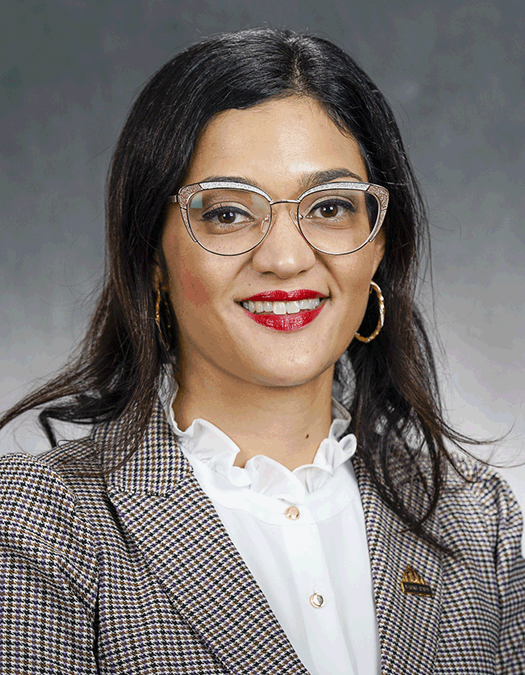
Rep. María Isa Pérez-Vega
Sponsored bills
Maddy summaryHF 1278 establishes a one-time $30 million reproductive health equity grant fund to support abortion care access in Minnesota. The bill provides funding to abortion providers, government agencies, and nonprofits whose primary work involves abortion care, with grants designed to increase access, cover uncompensated care for low-income patients, secure facility infrastructure, and fund staff training in trauma-informed care. Eligible organizations must apply through the commissioner of health, who will prioritize applications based on local need, health equity impact, and applicant need. The fund becomes effective July 1, 2025, with grants to begin by January 1, 2026, and includes strict privacy protections requiring confidentiality of patient information.
Maddy summaryHF 2289 requires Minnesota hospitals to maintain registered nurse staffing levels consistent with nationally accepted standards, ensuring adequate care for patients. Hospitals must create and implement staffing plans specifying maximum patient-to-nurse ratios for each unit, developed with input from direct-care registered nurses, and report these levels to the state. The bill prohibits retaliation against nurses who raise staffing concerns and imposes civil penalties for noncompliance. It directly affects all licensed Minnesota hospitals, their nursing staff, and patients by mandating safer staffing practices. The law appropriates funding to support implementation of these requirements.
Maddy summaryHF 1653 appropriates $1 million from state bonds to fund electric bus charging stations for school buses statewide. The bill directs the commissioner of commerce to provide grants to eligible school districts or public transit agencies under Minnesota Statutes §216C.374, specifically for installing Level 2 and Level 3 charging infrastructure. Funding comes from bonds sold by the state under established procedures, with grants awarded through the existing electric school bus deployment program. This measure directly affects school transportation systems seeking to transition to electric fleets, effective upon final enactment.
Maddy summaryHF 973 eliminates co-payments, coinsurance, and deductibles for mobile crisis intervention services in Minnesota's emergency mental health system. This directly affects individuals seeking immediate mental health crisis support, removing financial barriers to accessing these services. The bill amends Minnesota Statutes 2024, sections 245.469 and 256L.03, subdivision 5, to require that mobile crisis teams provide services without cost-sharing from clients. It also appropriates state funds to cover these eliminated costs, ensuring no out-of-pocket expenses for residents during mental health emergencies.
Maddy summaryHF 2196 updates Minnesota's mental health terminology in state law to use more current and person-centered language. It specifically revises definitions of terms like "mental illness" and "emotional disturbance" across multiple statutes to align with modern clinical standards. The bill requires health plans to cover prescribed antipsychotic drugs for these conditions without special deductibles or co-payments, and allows patients to continue essential medications for up to one year during health plan changes or formulary updates. These provisions directly affect health insurance companies and Minnesotans receiving mental health treatment covered by insurance.
Maddy summaryHF 2523 appropriates $9 million from the general fund for fiscal year 2026 to provide grants to community-based HIV/AIDS support services providers in Minnesota. This funding, available until June 30, 2027, directly supports organizations offering critical services to people living with HIV/AIDS. The bill establishes a base appropriation of $9 million for fiscal year 2028, ensuring ongoing funding for these services. It does not change eligibility or service requirements but provides dedicated state funding for existing community support programs.
Maddy summaryHF 1644 creates a grant program to fund family permanent supportive housing in Minnesota. It appropriates $1.5 million for fiscal year 2026 to provide $15,000 per family served to nonprofit organizations or Tribal governments operating housing for families facing barriers like homelessness, mental health challenges, or child protection referrals. The program requires grantees to offer specific services - including child-centered education, job training, counseling referrals, and 24/7 on-site staffing - to help families maintain stable housing and support children's well-being. Funding must serve 60% of families in the metro area, 40% outside it, and at least 10% from Minnesota Tribal Nations.
Maddy summaryHF 3197 appropriates $50,000 from Minnesota's arts and cultural heritage fund for the Minnesota Humanities Center to provide grants to the Legacy Coordination Network Education Fund. The funding supports programming for Minnesota African Diaspora Black History Month and educational outreach about African-heritage communities' historical and cultural contributions in Minnesota. It directly affects the Minnesota Humanities Center (which administers the funds) and the Legacy Coordination Network Education Fund (which distributes grants for specific programs). The bill creates no new requirements but allocates existing state funds for targeted educational activities focused on Black history and culture.
Maddy summaryHF 3148 allows cities of the first class (like Minneapolis and St. Paul) to issue "social district licenses" that permit public consumption of alcohol in designated outdoor areas contiguous to licensed venues, but not sales. It requires strict rules: alcohol must be in non-glass containers (max 16 oz) with specific labeling, districts must have clear signage showing hours/days, and licensees must follow container requirements. The city must maintain safety plans online, post boundaries, and report to the legislature within 24 months on community impact, challenges, and public safety. This directly affects cities, licensed businesses, and residents/businesses near designated social districts.