

Maddy summaryHF 1473 modifies a $26 million state appropriation for Hennepin County to build a new anaerobic digestion recycling facility in Brooklyn Park. The bill requires Hennepin County to submit a plan for closing the existing Hennepin Energy Recovery Center before funds can be used, and specifies that the project includes demolishing the County Sheriff's facility on the site. This funding covers predesign, construction, and equipment for the new recycling recovery facility. The bill directly affects Hennepin County and residents of Brooklyn Park through the facility's development and the transition from the old recovery center.
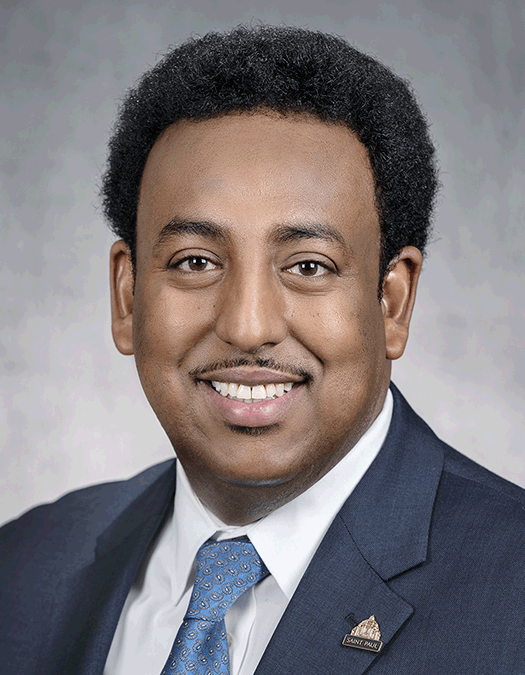
Rep. Samakab Hussein
Sponsored bills
Maddy summaryHF 1515 requires Minnesota public schools to include specific interventions in students' personal learning plans (PLPs) when a student in grade 9 or later fails core courses (language arts, math, science, or social studies). This amendment to Minnesota Statutes section 120B.125 mandates that PLPs for these students must outline targeted supports to help them progress toward graduation. The bill applies directly to high school students in Minnesota who receive failing grades in required academic subjects. Schools must integrate these interventions into existing PLP processes, which are already reviewed annually. The requirement takes effect July 1, 2025.
Maddy summaryHF 1512 appropriates funding from the general fund for competitive research grants focused on sudden unexplained death in childhood (SUDC). The bill directs Minnesota's commissioner of health to award these grants to eligible Minnesota-based research facilities, universities, and health systems studying SUDC causes, risk factors, and prevention strategies. It requires annual reports starting in 2026 detailing grant recipients, funding amounts, research purposes, and findings until 2030. This one-time appropriation allows up to 5% of funds for administrative costs and ensures unexpended balances remain available until June 2029.
Maddy summaryHF 1566 requires landlords in Minnesota to make reasonable safety modifications for tenants with children who have autism, specifically when hazards like lakes, rivers, or other water bodies are near rental properties. Tenants must request these accommodations, and landlords can ask for documentation unless the child's condition is obvious. Landlords cannot retaliate against tenants making such requests and must adjust policies or property features to protect the child, unless the change would fundamentally alter the property. This bill directly affects tenants with autistic children and their landlords in rental housing.
Maddy summaryHF 1559 appropriates $1.25 million for each of fiscal years 2026 and 2027 from Minnesota’s arts and cultural heritage fund to support community festivals. The Minnesota Humanities Center will distribute these grants to community organizations, cities, and counties for event programming, staffing, outreach, transportation, facilities, and signage. Up to $200,000 of the total can reimburse county sheriff departments for public safety costs at these events. The bill specifically prioritizes funding for named festivals including the Somali Museum Annual Celebration, Twin Cities Jazz Fest, Hmong Festival, and Rondo Days in St. Paul.
Maddy summaryHF 1551 appropriates $2.5 million from the state general fund for Lutheran Social Service of Minnesota to modernize its St. Paul facility at 709 University Avenue West. The funds will cover designing, constructing, and renovating the site - including accessibility upgrades, expanded transitional housing for youth and parenting youth, a therapeutic preschool, and improved office spaces for employment, housing, and health services. This one-time appropriation is specifically for capital improvements at the existing St. Paul location and expires upon project completion. The bill directly affects Lutheran Social Service’s operations and the youth, families, and individuals accessing its housing, childcare, and support services.
Maddy summaryHF 1586 appropriates $800,000 from Minnesota's arts and cultural heritage fund for a commemorative project honoring Gordon Parks. The bill directs the Minnesota Humanities Center, working with Soul Touch Productions, to create an art installation and related programming celebrating Parks' life and legacy. This funding specifically supports cultural programming focused on Parks' contributions as a photographer, filmmaker, and civil rights advocate. The bill does not create new policy but allocates existing state funds for a specific cultural initiative.
Maddy summaryHF 1601 allows counties, cities, and towns in Minnesota to ban or restrict dangerous weapons, ammunition, or explosives on their owned or leased buildings and land. Local governments must post specific signage (with mandated size and wording) to enforce these restrictions, with exceptions for licensed law enforcement officers on duty and those with explicit permission from the local chief law enforcement officer. Possessing weapons in prohibited areas would become a misdemeanor offense. The law takes effect August 1, 2025, and applies to violations occurring on or after that date. It directly affects local government property users and provides a clear legal mechanism for communities to set their own safety rules.
Maddy summaryHF 1602 appropriates $2 million for fiscal year 2026 and $2 million for fiscal year 2027 from Minnesota's workforce development fund to the Latino Economic Development Center (LEDC). The bill directly provides funding to LEDC to support microentrepreneurs and prospective business owners, particularly in Minnesota's Latino community. Key provisions include using the funds for business training, workshops, one-on-one consultations, and assistance with startup processes - covering areas like green jobs, technology, STEM careers, and manufacturing. The grant aims to build business capacity and connect entrepreneurs to key resources, with no new laws or regulations created.
Maddy summaryThis bill extends the deadline for businesses to apply for relocation grants under Minnesota's 2024 economic development program. It requires the commissioner of employment and economic development to reopen the application process and provide outreach and technical assistance to eligible businesses. The grant funding, originally available until a prior date, will now remain accessible until June 30, 2026. This directly affects businesses seeking financial support for relocating operations within Minnesota. The key change is simply extending the application window and mandating support services for applicants.