

Maddy summaryHF 3013 appropriates $250,000 for fiscal year 2026 and $250,000 for fiscal year 2027 from the general fund to fund a cybersecurity training program. The funds are directed to Milestone Community Development for its "Milestone Tech Cybersecurity Training Program," in partnership with Saint Mary University. This one-time appropriation creates a specific grant to support workforce development in cybersecurity training. The bill directly affects Milestone Community Development, Saint Mary University, and individuals participating in the training program.
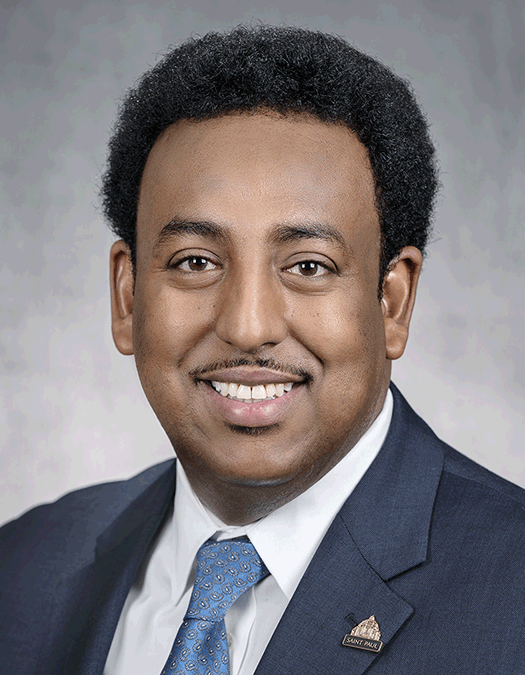
Rep. Samakab Hussein
Sponsored bills
Maddy summaryHF 2984 establishes the Rondo Restorative Development Authority to govern a land bridge project in St. Paul's Rondo neighborhood. The authority, managed by a 17-member board with specific community and city appointments, will handle property transfers, development, and operations of the land bridge within the designated area. This bill directly affects the Rondo community, addressing historical impacts from I-94's construction in the 1950s that displaced homes and businesses. The key mechanism creates a new public body to oversee the project's long-term development and community ownership. The authority will operate under Minnesota Statutes, Chapter 116J, with governance rules outlined in the bill.
Maddy summaryHF 2349 creates the Ramsey County Economic Development Authority (RCEA), a new entity with powers to support local economic growth. It also expands the existing Ramsey County Housing and Redevelopment Authority (RCHRA) to include all the RCEA's development powers, effectively merging their functions under a unified structure. The bill allows Ramsey County's board to appoint commissioners for both authorities, using existing county governance procedures. This directly affects Ramsey County residents and businesses by streamlining economic development efforts through a single coordinated authority. The key change is consolidating and expanding development powers previously held separately under county and housing authorities.
Maddy summaryHF 989 appropriates $400,000 for fiscal year 2025 and $400,000 for fiscal year 2026 from the general fund to the commissioner of employment and economic development. The funds are designated for a grant to 30,000 Feet, a nonprofit organization, to support specific programs targeting African American youth. These programs include youth apprenticeship jobs, wraparound support services, after-school activities, and summer learning loss prevention. The bill directly affects the nonprofit organization and the youth participants in these targeted initiatives.
Maddy summaryThis bill appropriates $1.8 million from Minnesota's arts and cultural heritage fund for fiscal year 2026 to support the Taste of Minnesota event. The funds will be provided to the Minneapolis Downtown Council to cover specific operational costs, including infrastructure setup, permits, waste management, staffing, security, equipment rentals, signage, and insurance. It directly affects the Minneapolis Downtown Council as the recipient of the grant and the Taste of Minnesota event as the beneficiary. The bill makes no policy changes beyond allocating existing state funds for this specific annual festival.
Maddy summaryThis bill appropriates $6.4 million for fiscal years 2026 and 2027 to fund Minnesota's Small Business Assistance Partnerships Program under Minnesota Statutes §116J.682. It directly supports small businesses by providing two-year grants through local partnerships, with funding administered by the Department of Employment and Economic Development. The bill specifies that all grants must be awarded in the first year of funding, and up to 5% of the appropriation may cover administrative costs. This is a one-time funding measure, not an ongoing program.
Maddy summaryHF 1215 modifies how Minnesota's Department of Human Services handles licensing violations for providers operating multiple home or community-based services under Chapter 245D. It requires correction orders and conditional licenses (temporary restrictions) to apply only to the specific service site or program where violations occurred, not all sites operated by the same provider. The bill also mandates annual reports to legislators detailing the number of such orders, locations, staffing, and efforts to improve compliance. These changes aim to make enforcement more precise while adding requirements for providers to access legal assistance and for the department to partner with culturally specific organizations.
Maddy summaryHF 2148 establishes a locally controlled housing fund within Minnesota's housing development fund to finance affordable housing projects. The fund provides loans to eligible recipients - including cities, counties, tribes, community land trusts, and housing authorities - to acquire, rehabilitate, or build housing where local entities maintain at least 75% ownership control. Projects must include 30% of units for households earning ≤50% of area median income (AMI) and 30% for households earning 50-100% of AMI, with all housing meeting accessibility standards and avoiding income-based segregation. Repayments to the fund are reinvested to support additional affordable housing production in the recipient’s jurisdiction.
Maddy summaryHF 2282 allocates $250,000 for fiscal year 2026 and $250,000 for fiscal year 2027 from the arts and cultural heritage fund to support the Minnesota Urban Debate League. The funding, administered through the Minnesota Humanities Center, will directly help the League provide improved professional development for staff and expand its youth services to additional geographic areas across Minnesota. This bill specifically provides concrete financial resources for existing programming rather than creating new rules or regulations. The appropriation is intended to enhance access to debate opportunities for young people in more communities.
Maddy summaryHF 1885 appropriates $100,000 from the general fund for fiscal year 2026 and $100,000 for fiscal year 2027 to the Minnesota Department of Health. The funds are specifically for the Beautywell Project to support public awareness and education activities addressing colorism, skin-lightening products, and associated chemical exposures. This one-time appropriation expires on June 30, 2027, and directly supports the state's public health efforts through the Health Commissioner's office.