

Maddy summaryHF 3434 bans the possession of semiautomatic military-style assault weapons (like AR-15s and AK-47s) and large-capacity ammunition magazines (holding more than 10 rounds) in Minnesota. It defines these weapons by specific models (e.g., Colt AR-15, Beretta AR-70) or features (folding stocks, pistol grips, threaded barrels). The bill creates criminal penalties for possessing these banned items and amends state law to clarify prohibited firearms and magazines. It directly affects individuals who own or possess these specific weapons or magazines. The law does not cover all semiautomatic firearms but targets models and features associated with military-style weapons.
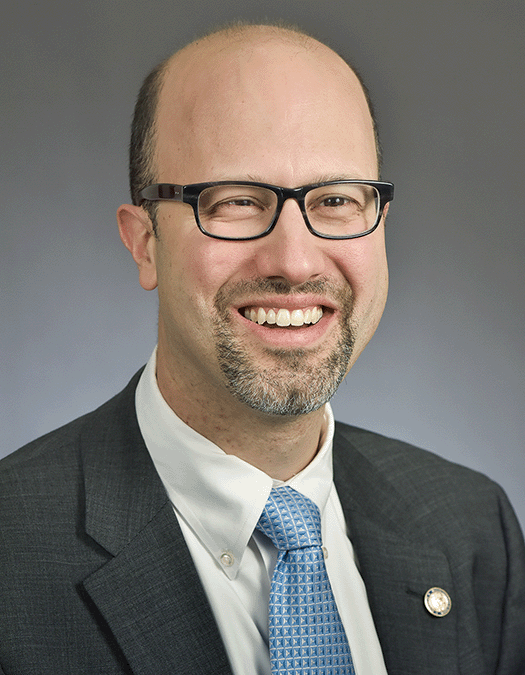
Rep. Dave Pinto
Sponsored bills
Maddy summaryHF 3406 makes specific firearm permit data public, including details about permit revocations, suspensions, or voidances, and information on permit holders who died by firearm suicide or police use of force. It extends retention requirements for certain records: sheriffs must keep data on denied or revoked permits, voided permits due to prohibited possession, and the specified deaths for six years instead of purging it annually. This applies to government entities like county sheriffs that collect firearm permit information in Minnesota. The bill changes public access to limited permit-related data while ensuring specific records are preserved longer.
Maddy summaryHF 129 requires the Director of the state's child sex trafficking prevention program to submit an annual evaluation report to the legislature every odd-numbered year. This directly affects the state's child trafficking prevention program and the legislature, which will receive these evaluations for review. The key provision mandates these regular reports to assess the program's effectiveness, with the first report due in 2027. The bill became law on April 30, 2025, and takes effect August 1, 2025.
Maddy summarySF 17 is a biennial budget bill that appropriates $200.4 million for fiscal year 2026 and $156.2 million for 2027 to Minnesota’s Department of Employment and Economic Development. It funds specific programs including $50.7 million for business and community development, $350,000 for the Energy Transition Office, and $500,000 for small business development centers. The bill also modifies existing funding for workforce programs, remediation, and grants to support entrepreneurs and small businesses. This legislation directly affects state agencies and local economic development initiatives by providing dedicated funding for their operations and services.
Maddy summaryHF 15 is a budget bill that allocates approximately $356 million over two years (2026-2027) to Minnesota state agencies focused on workforce development and economic growth. It provides funding for the Department of Employment and Economic Development (including $500,000 annually for small business development centers to match federal grants), the Department of Labor and Industry, the Bureau of Mediation Services, Explore Minnesota, and the Workers' Compensation Court of Appeals. The bill modifies economic development policies, adjusts agency fees, and requires new reporting requirements. It directly affects state agencies managing job training, business support, labor mediation, and tourism, with specific provisions for small business assistance and energy transition programs.
Maddy summaryThis is a procedural resolution (not a bill with policy changes), passed by the Minnesota House. It urges Congress to exercise its constitutional authority to oversee the Executive branch and defend the Constitution. The resolution specifically cites concerns about the Executive branch allegedly bypassing courts, impounding funds, and infringing on free speech, and asks Congress to "assert its constitutional oversight authority." It directs Minnesota's Secretary of State to send copies to Congress and Minnesota's federal representatives.
Maddy summaryThis bill requires Minnesota's local welfare agencies to assess or investigate child maltreatment reports that occurred in another state or country if either the alleged perpetrator or the child resides in Minnesota. It clarifies that such cases are treated as if they occurred within Minnesota for reporting and investigation purposes. The bill amends Minnesota Statutes sections 256.045 (judicial review procedures) and adds a new provision to 260.14 (local welfare agency responsibilities). This change directly affects Minnesota welfare agencies and families involved in cross-state maltreatment cases where Minnesota residents are connected to the incident.
Maddy summarySF 1832 is a budget bill that appropriates $181.8 million for Minnesota’s Department of Employment and Economic Development (DEED) and Explore Minnesota for fiscal years 2026-2027. It funds specific programs including $500,000 annually for small business development centers, $2.7 million for small business assistance partnerships, and $1.5 million for grants to communities expanding child care access (with 50% allocated to non-metro areas). The bill also provides $1.7 million yearly for contaminated site cleanup and $350,000 for the energy transition office. It directly affects state agencies, small businesses, rural communities, and child care providers through these targeted funding streams.
Maddy summaryThis is a symbolic resolution, not a law. Minnesota's legislature formally urges the President to respect and comply with federal court rulings, specifically referencing the Trump administration's refusal to follow a court order regarding an immigration case. The resolution directs Minnesota's Secretary of State to send copies to the President, Congress, and Minnesota's congressional delegation. It has no legal effect but serves as a formal statement supporting judicial independence.
Maddy summaryHF 2709 modifies access rules for census workers and political candidates in apartment buildings (multiple unit dwellings). It requires buildings to permit access between 10 a.m. and 8 p.m. daily for both groups, mandates 24-hour prior notice for entry, and encourages owners to notify residents when census workers or candidates plan visits. The bill amends Minnesota Statutes sections 2.92 (census access) and 211B.20 (candidate access), updating existing provisions without changing who may enter or the core access hours. It directly affects apartment building managers, census workers, and political candidates seeking voter contact. The changes focus on standardizing notice requirements and operating hours, not altering eligibility for entry.