

Maddy summaryHF 24 amends Minnesota Statutes section 145.423 to require that infants born alive during an abortion be immediately recognized as human persons under the law and receive medical care. The bill mandates that medical personnel take "all reasonable measures consistent with good medical practice" to preserve the life and health of such infants, including compiling appropriate medical records. It directly affects healthcare providers performing abortions in Minnesota by establishing specific medical care obligations for infants born alive. The proposed changes would have taken effect the day after enactment, though the bill was not passed.
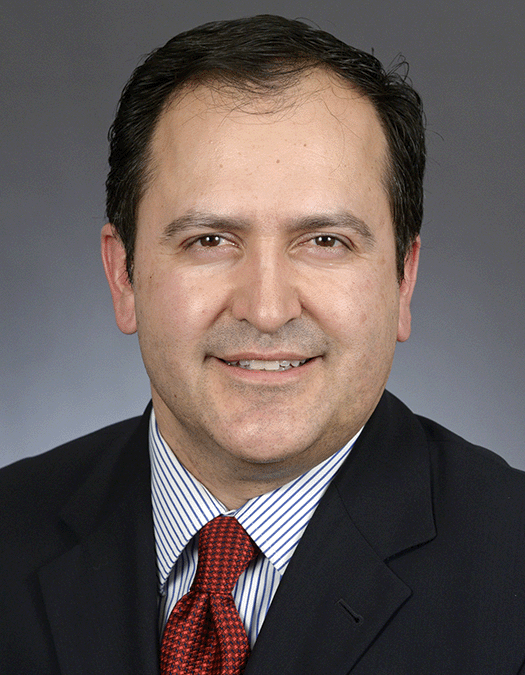
Rep. Jon Koznick
Sponsored bills
Maddy summaryHF 1693 makes technical updates to Minnesota's county state-aid highway funding rules. It clarifies that if a county fails to submit required data, the commissioner must estimate the county's lane-mileage and funding needs for apportionment, and may withhold payments until the information is provided (amending Minn. Stat. § 162.07, subd. 6). The bill also specifies how funds are allocated to counties containing cities with under 5,000 residents, requiring the commissioner to allocate a percentage based on the proportion of highway needs in those small cities relative to the county's total needs (amending Minn. Stat. § 162.08, subd. 1). These changes directly affect counties and small municipalities receiving transportation funding. The bill focuses on procedural clarity, not new policy.
Maddy summaryHF 1691 amends Minnesota Statutes section 168.002 to clarify the definition of "first year of life" for vehicles in transportation regulations. The change specifies that this term refers to a vehicle's model year, or its year of manufacture if no model year is listed. This technical adjustment directly affects how vehicle classification and related transportation rules are applied under existing law. The bill makes no new policy changes but ensures consistent interpretation of vehicle age definitions in statutory language.
Maddy summaryHF 2234 modifies how Minnesota's metropolitan counties (like Hennepin and Ramsey) must allocate state and regional transportation funds. It increases the required allocation for active transportation, safety studies, transit, and complete streets projects from 41.5% to 58.5%, while decreasing the share for road repairs to 41.5%. The bill also allows counties to use funds for specific mitigation projects and requires new allocations to "supplement, not supplant" existing funding sources. The changes take effect January 1, 2026, for funds received on or after that date.
Maddy summaryHF 2223 extends the deadline for using $42 million in existing funds allocated for reconstructing U.S. Highway 8 in Chisago County. The bill modifies the availability period for bond proceeds, allowing them to be used until December 31, 2029, instead of the standard expiration under Minnesota Statutes § 16A.642. This adjustment directly affects the ongoing highway project, which covers reconstruction from Chisago City to I-35, including pedestrian/bike trails and potential lane expansions. The bill does not create new funding or alter project scope - it only extends the timeframe for utilizing the existing appropriation.
Maddy summaryThis bill extends the deadline for using funds allocated to reconstruct U.S. Highway 8 in Chisago County, pushing the expiration date from the original term to December 31, 2029. It directly affects Chisago County, which received the grant for planning, designing, and constructing the highway project. The key mechanism redirects funds originally planned for routine resurfacing (per MnDOT's 2020-2029 plan) toward the reconstruction effort, supplementing existing appropriations. The project includes expanding segments to four lanes, adding frontage/backage roads, and creating pedestrian/bike trails along the highway corridor.
Maddy summaryHF 261 appropriates $250,000 for fiscal year 2026 and $250,000 for fiscal year 2027 to fund horse-assisted mental health therapy for eligible first responders in Minnesota. It directly affects active or retired peace officers, firefighters (full-time and volunteer), ambulance personnel, 911 telecommunicators, and correctional officers suffering from job-related trauma or PTSD. The funds will go to Abijah's on the Backside for therapy services, requiring two reports detailing program costs, participants, and outcomes by 2026 and 2028. This is a one-time appropriation to support existing mental health services for first responders, not a new statewide program.
Maddy summaryHF 11 delays the implementation of Minnesota's Paid Leave Law from 2026 to 2027, affecting employers, employees, and state agencies responsible for administering the program. The bill amends multiple statute sections to adjust key dates, including the start of employer premium payments (now January 1, 2027) and administrative requirements like public outreach and annual reporting. This one-year delay provides additional time for businesses to prepare for the new paid leave program without changing the law's core requirements. The law's substance - such as premium rates and fund management - remains unchanged, only the rollout timeline is extended.
Maddy summaryHF 1692 cancels $19,337 in uncommitted funds from a 2024 transportation appropriation designated for Minneapolis' Stone Arch Bridge. The bill redirects this specific amount to the state's general fund. It does not create new policy or affect any people or organizations directly; it only reallocates unused budgeted funds. The cancellation takes effect June 30, 2025. This is a procedural budget adjustment, not a substantive policy change.
Maddy summaryHF 3 requires Minnesota's legislative auditor to annually report to the legislature by February 1 on whether state agencies have implemented audit recommendations from the prior five years. The bill mandates that agencies' commissioners must also submit detailed reports by September 1 each year, specifically itemizing unaddressed recommendations and explaining why they weren't implemented. This directly affects all state agencies subject to legislative auditor reviews and their commissioners, who must now document progress on audit findings. The law creates a structured process for tracking accountability without altering agency funding or creating new programs.