

Maddy summaryHF 82 clarifies the scope of practice for licensed athletic trainers in Minnesota. The bill defines "athletic training" to include specific activities like injury prevention, emergency care, assessment, rehabilitation, and clinical decision-making within the trainer's expertise. It requires athletic trainers to work under a primary physician's direction, with documented protocols updated yearly, and limits initial treatment of undiagnosed injuries to 30 days (or less as specified by the physician). This directly affects athletic trainers, primary physicians, and healthcare facilities employing them, ensuring clear boundaries for their practice while preventing overlap with other licensed professions like physical therapy or medicine.
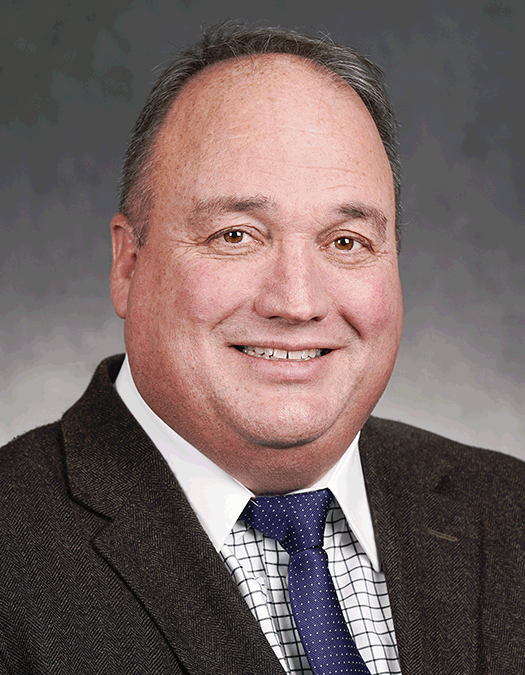
Rep. John Huot
Sponsored bills
Maddy summaryThis bill creates a new regulatory framework for short-term rental platforms in Minnesota, requiring companies like Airbnb to offer financial protection for property damage claims. It mandates that these platforms purchase insurance policies that cover their guarantee obligations if they fail to pay customers, while also requiring annual registration fees and staff training on handling claims. The legislation clarifies that these guarantees are not insurance contracts themselves but must be backed by actual insurance policies to ensure customer compensation. Platform operators must display clear disclosures stating that their guarantees are not insurance and must make their terms publicly available on their websites.
Maddy summaryHF 1270 updates Minnesota's licensing rules for acupuncture and herbal medicine practitioners. The bill adds specific definitions clarifying that acupuncture includes techniques like dry needling and herbal medicine involves using herbs as part of a patient's treatment plan. It also sets new standards for continuing education, requiring courses to directly relate to acupuncture practice, have qualified instructors, last at least one hour, and maintain attendance records for four years - while excluding practice management courses. Additionally, the bill establishes an advisory council for the licensing board with defined membership criteria, including licensed practitioners and public members.
Maddy summaryThis bill modifies how disability benefits are reduced for Minnesota police, firefighter, and paramedic members who started receiving disability payments before July 1, 2023, when they return to work. It changes the calculation method for reducing disability benefits when these members earn income from other employment, ensuring the reduction applies consistently to those who began disability before the specified date. The legislation updates existing rules to clarify how much disability benefits decrease based on reemployment earnings, using a dollar-for-dollar reduction ratio for certain service levels and a tiered approach for others. This change affects only current disability recipients who started their benefits prior to the July 1, 2023 cutoff, while members who began receiving benefits on or after that date remain subject to previously established reduction rules.
Maddy summaryThis bill modifies Hennepin County's local sales tax authority to allow the county to use its financial position for investment calculations and authorizes grants for ballpark improvements. It also establishes a funding mechanism to provide up to $24 million annually to a designated private, nonprofit Level I trauma hospital for uncompensated care, with specific rules on how that care is defined and calculated. Additionally, the bill permits the county to use remaining funds from this tax for upgrades to county-owned health facilities and related public infrastructure. The legislation directly affects Hennepin County government, the local ballpark authority, and a specific private hospital that meets certain trauma and service criteria.
Maddy summaryThis bill authorizes the state of Minnesota to issue up to $50 million in bonds to fund a new water treatment facility for the city of Rosemount. The funds will be used to cover the costs of designing, building, and equipping the facility through a grant provided by the Public Facilities Authority. Once enacted, the commissioner of management and budget will sell the bonds to generate the necessary capital for this project. The legislation directly impacts the city of Rosemount by providing financial support for its infrastructure needs while establishing the legal framework for state bond issuance.
Maddy summaryHF 2400 requires Minnesota's real estate appraiser commissioner to use the Appraisal Foundation's Voluntary Disciplinary Sanction Matrix as the standard when imposing disciplinary actions against appraisers. The bill directly affects licensed real estate appraisers in Minnesota by standardizing penalties for violations. The key provision mandates using this national matrix by default, though the commissioner may deviate for specific mitigating circumstances on a case-by-case basis. This creates a clearer, more consistent process for disciplinary decisions without changing substantive licensing requirements.
Maddy summaryThis bill repeals previous tax exemptions that allowed certain preferred seats and amenities at athletic events to be sold without sales tax. It also provides funding for safe harbor shelter and housing grants to support individuals experiencing homelessness. By removing the exemptions, the legislation ensures that these specific stadium seats and related amenities are now subject to standard sales tax like other retail items. The funding provision aims to allocate state money directly to organizations assisting with shelter and housing needs.
Maddy summaryThis bill establishes an interstate licensure compact for athletic trainers in Minnesota, allowing licensed professionals to practice in other member states without obtaining a separate license for each location. The legislation creates a shared data system to track licenses and disciplinary actions, ensuring that information about a trainer's qualifications and any adverse actions taken against them is accessible across all participating states. To qualify for this cross-state practice privilege, athletic trainers must hold a current, unrestricted license in their home state and meet specific requirements regarding criminal background checks and continuing education. The bill also defines key terms such as "compact privilege" and "adverse action" to standardize how licensing authorities handle issues like suspensions or monitoring programs when a trainer moves between states.
Maddy summaryThis bill prohibits local elected officials in Minnesota from signing nondisclosure agreements related to potential data center projects within their jurisdictions. The law defines "local elected officials" to include city council members, mayors, county commissioners, and similar roles, while specifying that "data center" refers to the definition provided in existing state statutes. Any agreement violating this rule would be automatically considered void and unenforceable, though the rest of the contract would remain valid, and officials who sign such prohibited contracts must publicly disclose them. The restrictions apply only to agreements entered into on or after August 1, 2026.