

Maddy summaryHF 1765 creates the Minnesota Epilepsy Program to support residents with epilepsy and related seizure disorders. The bill appropriates state funds for fiscal years 2026-2027 to provide statewide education and support services, develop training for healthcare workers and educators, and establish a data collection system on epilepsy diagnoses and outcomes. Community organizations will receive grants to deliver culturally specific support services and collaborate with the state health department. This program directly affects Minnesotans living with epilepsy, their caregivers, healthcare providers, and schools.
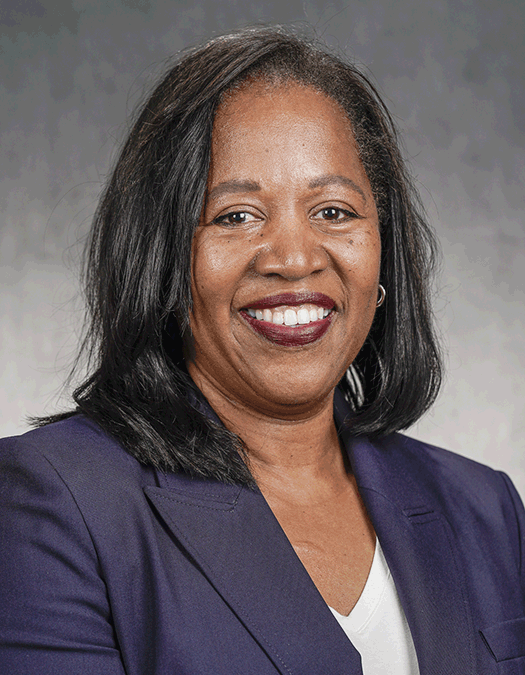
Rep. Mary Clardy
Sponsored bills
Maddy summaryHF 2144 appropriates unspecified funds from the general fund for the Family Homeless Prevention and Assistance Program under Minnesota Statutes § 462A.204, for fiscal years 2026 and 2027. The bill directly affects families in Minnesota at risk of homelessness by providing funding for prevention and assistance services. Key provisions include directing the Housing Finance Agency to administer the program using these allocated funds. This is a funding bill with no new policy requirements, solely authorizing budget resources for an existing state program.
Maddy summaryHF 984 requires Minnesota school districts to provide nonpublic school students (in private or religious schools) with the same elementary and secondary guidance and counseling services as public school students. It mandates districts to offer these services upon request, with funding based on the average per-pupil spending for similar services in public schools. The bill sets limits on district spending for these services, ensuring costs don’t exceed public school averages, and requires districts to provide transportation between schools if services are offered off-site. It applies to all nonpublic schools within a district and takes effect for state aid starting fiscal year 2026.
Maddy summaryHF 35 requires all health insurance plans in Minnesota to create a maternal mental health program by January 1, 2026. The program must ensure comprehensive care for pregnant and postpartum individuals by mandating screenings during the perinatal period, requiring fair reimbursement for providers who conduct screenings or provide treatment, and ensuring timely referrals to mental health specialists when needed. This directly affects health insurance plans covering these services and aims to improve access to mental health care for this population. The bill prohibits unreasonable delays in referrals for clinically indicated cases, such as positive mental health screenings or reports of suicidal thoughts.
Maddy summaryHF 1762 proposes adding a new constitutional amendment to Minnesota's state constitution. If approved by voters, it would guarantee all persons equal rights under state law and prohibit discrimination based on race, color, national origin, ancestry, disability, or sex - including protections for pregnancy decisions, gender identity, gender expression, and sexual orientation. The amendment would apply to all state actions and agencies, requiring any discriminatory state action to be the "least restrictive means" of achieving a "compelling governmental interest." The proposed amendment must be submitted to voters in the 2026 general election, with implementation starting January 1, 2027, if ratified.
Maddy summaryHF 1828 implements recommendations from the state auditor's fire relief association working group by requiring Minnesota firefighters' relief associations to prepare detailed annual financial statements. These statements must show all income, expenses, assets, and liabilities in a format set by the state auditor and be certified by an independent CPA with at least five years of public accounting experience (not affiliated with the association). The associations must submit these certified statements to the state auditor by June 30 each year, with the requirement effective January 1, 2026. The bill directly affects all firefighters' relief associations operating under Minnesota law.
Maddy summaryHF 1736 establishes requirements for kindergarten readiness assessments and creates early childhood literacy pilot programs in Minnesota. It mandates school districts to use approved tools to measure kindergarten readiness by 2026-2027, reporting results to the state. The bill also creates an expert panel to develop evidence-based literacy practices for pilot programs in diverse settings like public pre-K, Head Start, and childcare centers. These pilots will be evaluated by independent researchers to measure literacy outcomes, with annual public reviews of results. The bill directly affects schools, early learning providers, and young children entering kindergarten.
Maddy summaryHF 1812 establishes a state-run Minnesota Health Plan to guarantee comprehensive, affordable health care for every Minnesota resident. The plan covers all necessary medical, dental, vision, mental health, and long-term care services without co-pays, with premiums based on income. It creates new state entities including the Minnesota Health Board, Health Fund, Office of Health Quality and Planning, a patient advocacy ombudsman, and an auditor for the plan. The bill also requests a federal waiver under the Affordable Care Act to modify certain health insurance requirements and appropriates funding for implementation.
Maddy summaryHF 1640 appropriates $150,000 for fiscal year 2026 and $150,000 for fiscal year 2027 from Minnesota's arts and cultural heritage fund to preserve the oral histories of Hmong veterans who served in the U.S.-sponsored Secret War in Laos during the Vietnam War era. The funds are directed to Special Guerrilla Units Veterans and Families of USA, Inc. to collect, document, archive, and preserve these histories while creating public educational resources. This bill directly supports Hmong veterans and their families in Minnesota by safeguarding their wartime experiences and cultural heritage. The program aims to teach future generations about the Hmong community's history and contributions in Minnesota through documented oral histories and accessible programming.
Maddy summaryHF 106 appropriates $750,000 from the general fund for fiscal year 2026 and another $750,000 for fiscal year 2027 to provide a grant to Neighbors, Inc. The bill directs these funds specifically for Neighbors, Inc. to deliver social services outreach, trainings, capacity building, support services, programming, and administrative support. This funding directly affects Neighbors, Inc. as the recipient organization and the communities they serve through these expanded services. The legislation creates a concrete, two-year financial commitment for these specific program activities.