

Maddy summaryHF 2193 requires all health plans in Minnesota to cover annual brain aneurysm imaging services (like MRI, CT, or angiograms) at no cost for women aged 40 and older, classifying it as a preventive service. The bill mandates this coverage starting January 1, 2026, for new or renewed health plans, directly affecting women 40+ with health insurance. It also amends medical assistance programs to align with these coverage requirements and includes a two-year public awareness campaign (starting January 2026) to inform women about brain aneurysm risks and available coverage. This policy change ensures access to routine monitoring for unruptured brain aneurysms without out-of-pocket costs for the specified group.
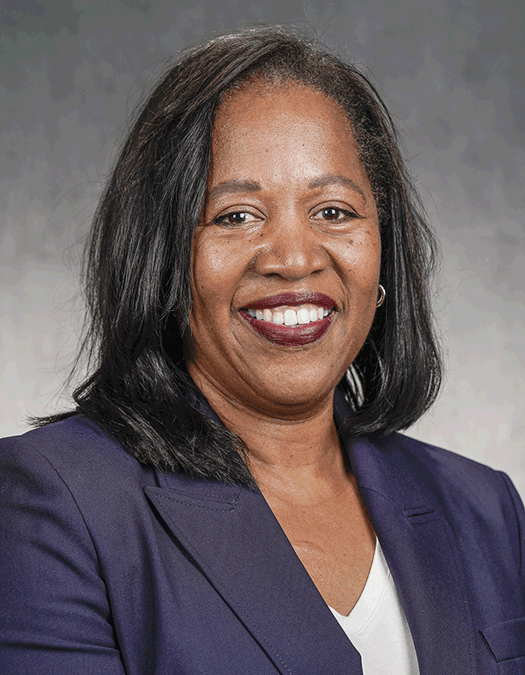
Rep. Mary Clardy
Sponsored bills
Maddy summaryHF 61 requires Minnesota school districts and charter schools to provide approved mental health instruction for students in grades 4-12 starting in the 2026-2027 school year. It also mandates youth sports programs (for which fees are charged) to train coaches and officials on recognizing mental illness warning signs and suicide prevention. The bill modifies emergency intervention rules for schools, updating requirements for physical holding or seclusion. These changes directly affect public schools, charter schools, and youth sports organizations across Minnesota.
Maddy summaryHF 982 creates a new education benefit in Minnesota for dependents of disabled veterans. It provides full tuition, mandatory fees, and book coverage (after subtracting other aid) for dependents of veterans with a 100% permanent disability, and 50% coverage for dependents of veterans with a 70%+ disability rating. The benefit applies to undergraduate programs at Minnesota state colleges, universities, or the University of Minnesota Board of Regents institutions. Eligible students must be enrolled at these institutions, and institutions apply for the benefit on their behalf through the Office of Higher Education.
Maddy summaryHF 1538 provides state funding from the workforce development fund for teacher apprenticeship programs in Minnesota for fiscal years 2026 and 2027. It requires school districts to develop programs meeting five specific standards: school district involvement, mentorship, approved training, wage increases tied to skill levels, and a pathway to a Tier 3 teaching license. School districts, higher education institutions, and charter schools can partner to create these programs and use the funds to reimburse costs. The bill also mandates a report to legislative committees on how the funds were used and recommendations for improving the program as a pathway to teacher licensure, effective July 1, 2025.
Maddy summaryHF 491 appropriates $250,000 for fiscal year 2026 and $250,000 for fiscal year 2027 from the general fund to provide grants to Hometown Hero Outdoors, a Stillwater-based nonprofit. The funding supports mental health services and outdoor recreational activities for current and former law enforcement officers, firefighters, and emergency medical services personnel. The bill directs these services to promote positive mental health, longevity, quality of life, and interactions with mental health professionals through organized outdoor programs. It does not create new policy but allocates specific funds to an existing nonprofit for targeted support of first responders.
Maddy summaryHF 1678 expands access to essential community supports for older Minnesotans and people with dementia by lowering the age threshold from 65 to 60 and removing asset limits for eligibility. The bill increases annual funding for caregiver respite services grants by $2 million each year (fiscal years 2026-2027) and maintains a $400 monthly service cap. It directly affects individuals needing community-based care who don’t qualify for nursing facilities, allowing access to services like adult day care, homemaker support, and respite care. The changes require no asset assessment and mandate annual reassessment for continued eligibility.
Maddy summaryHF 1247 requires Minnesota's Commissioner of Children, Youth, and Families to permanently amend child care licensing rules, allowing teacher's aides to supervise children in child care centers. This change makes permanent an exception that was temporarily permitted under a 2023 law. The commissioner must submit the proposed rule by June 1, 2025, using a specific rulemaking procedure. The bill directly affects child care centers and their staff by expanding the roles of teacher's aides in supervision without requiring a licensed teacher's presence.
Maddy summaryHF 2487 encourages Minnesota school districts and charter schools to integrate healthy aging and dementia education into existing curriculum for students in grades 6-12, aligned with local health standards. The bill requires the state education commissioner, by July 1, 2026, and every even-numbered year after, to provide age-appropriate resources on brain health, Alzheimer's disease, and caring for elders with cognitive impairments. This includes strategies to maintain brain health and information about dementia, developed with health officials and advocacy groups. The policy is effective July 1, 2025, and applies to all public and charter schools in Minnesota.
Maddy summaryHF 2195 proposes adding a new constitutional section to Minnesota's state constitution, specifically stating "Marriage is a fundamental right and shall not be restricted based on gender or race" (Sec. 18). If approved by voters, this amendment would prohibit legal restrictions on marriage based on gender or race. The amendment must be submitted to voters in the 2026 general election, with potential implementation starting January 1, 2027, if ratified. This bill directly affects marriage rights and legal protections for all Minnesotans, requiring voter approval rather than legislative passage alone.
Maddy summaryHF 2468 appropriates $500,000 for fiscal year 2026 and $500,000 for fiscal year 2027 from the general fund to support mental health initiatives in Minnesota's construction industry. The funds, available until June 30, 2027, are designated for outreach, education, stigma reduction programs, and worksite strategies to prevent suicide. They can be used for grants to industry groups and developing resources targeting construction workers. This bill directly affects construction industry workers by funding concrete mental health support services through state-administered programs.