

Maddy summaryHF 2105 amends Minnesota's lobbying laws to exempt certain confidential or privileged communications from disclosure requirements. The bill modifies the definition of "lobbyist" in Minnesota Statutes §10A.01, specifying that lobbyists are not required to disclose such communications. This directly affects registered lobbyists who engage in confidential discussions, such as those involving legal advice or sensitive client strategies. The change reduces transparency for these specific communications while maintaining existing registration thresholds for lobbyists.
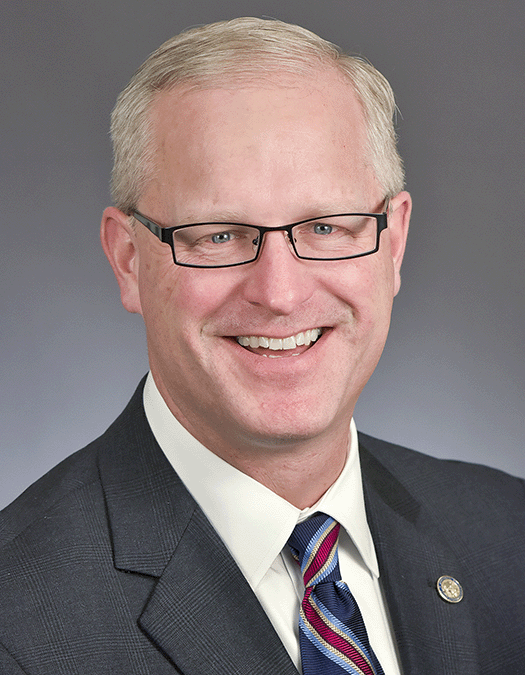
Rep. Jim Nash
Sponsored bills
Maddy summaryHF 11 delays the implementation of Minnesota's Paid Leave Law from 2026 to 2027, affecting employers, employees, and state agencies responsible for administering the program. The bill amends multiple statute sections to adjust key dates, including the start of employer premium payments (now January 1, 2027) and administrative requirements like public outreach and annual reporting. This one-year delay provides additional time for businesses to prepare for the new paid leave program without changing the law's core requirements. The law's substance - such as premium rates and fund management - remains unchanged, only the rollout timeline is extended.
Maddy summaryHF 276 reduces the annual fishing license fee for Minnesota residents aged 65 and older from $25 to $15, directly affecting seniors who purchase fishing licenses. The bill requires the commissioner of natural resources to report annual license sales data for this age group to the commissioner of management and budget. Based on this data, the general fund must transfer money to the game and fish fund each year to cover the lost revenue from the reduced fee. This ensures the state fully offsets the cost of the fee reduction without impacting existing conservation funding. The change takes effect July 1, 2025.
Maddy summaryHF 3 requires Minnesota's legislative auditor to annually report to the legislature by February 1 on whether state agencies have implemented audit recommendations from the prior five years. The bill mandates that agencies' commissioners must also submit detailed reports by September 1 each year, specifically itemizing unaddressed recommendations and explaining why they weren't implemented. This directly affects all state agencies subject to legislative auditor reviews and their commissioners, who must now document progress on audit findings. The law creates a structured process for tracking accountability without altering agency funding or creating new programs.
Maddy summaryHF 893 clarifies and strengthens Minnesota's self-defense laws by eliminating the requirement to retreat before using force when defending one's home or person. It expands the definition of "dwelling" to include occupied vehicles, porches, decks, and adjacent structures, and creates a legal presumption that someone entering a dwelling by stealth or force poses an imminent threat. The bill allows individuals to use deadly force without retreating in certain situations, such as when preventing a forcible felony or imminent harm to themselves or others. This directly affects Minnesotans using self-defense, particularly in home or vehicle defense scenarios.
Maddy summaryHF 1910 amends Minnesota Statutes to require the vice-chair of the Legislative Coordinating Commission to alternate between the Senate president and House speaker every two years. This procedural change modifies the existing leadership rotation rule (Minnesota Statutes 3.303, subdivision 3), which currently mandates the commission chair alternate between the Senate president and House speaker every odd-numbered year. The bill directly affects the leadership structure of the Legislative Coordinating Commission by establishing a similar two-year alternation cycle for the vice-chair position. It does not alter substantive policy but adjusts how legislative leadership roles rotate between chambers.
Maddy summaryThis bill requires Minnesota's Housing Finance Agency to proactively share clear information about landlords' and tenants' legal rights and obligations. It directly affects landlords and residential tenants across the state by making this information more accessible. The key provision mandates the agency to publish and prominently display this material on its website, building on existing requirements from section 504B.275. The bill does not change existing tenant or landlord laws but ensures the agency actively promotes this information.
Maddy summaryHF 1753 amends Minnesota law to permit licensed tobacco distributors with a valid distributor license for at least five consecutive years to sell *only* premium cigars from movable businesses (like kiosks or vehicles) under specific conditions. This exception applies solely to premium cigars, not other tobacco products, and requires distributors to pay all applicable taxes while conducting on-site demonstrations of cigar manufacturing and cultural education. The bill directly affects licensed tobacco distributors seeking flexibility in selling premium cigars outside permanent retail locations. It modifies Minnesota Statute 461.21 by creating a limited exception to the general ban on selling tobacco products from movable businesses.
Maddy summaryHF 1754 requires Minnesota state agencies to reduce their general and nongeneral fund budgets by the amount saved from unfilled positions that remain vacant for 12+ months after posting. This applies to positions posted in fiscal years 2025-2027, with the savings reflected in agency budgets for 2028-2029. The bill excludes positions requiring law enforcement training and mandates the budget commissioner to report annual savings to legislative finance committees. It directly affects state agencies managing unfilled roles, creating an automatic budget adjustment for vacancies exceeding one year.
Maddy summaryHF 924 amends Minnesota law to allow retired peace officers to possess firearms in the Capitol complex, directly affecting retired law enforcement personnel who previously may have faced restrictions. The bill updates Section 609.66 of Minnesota Statutes by adding retired peace officers to an existing exception (under federal law § 926C) for firearm possession in Capitol Area buildings, alongside active officers and others with specific permissions. This change applies to all state buildings within the Capitol Area described in Chapter 15B, excluding the National Guard Armory, and takes effect August 1, 2025. The policy modifies existing felony prohibitions without altering general firearm laws or creating new permit requirements.