

Maddy summaryHF 2598 appropriates $1,936,000 from the health care access fund to the Commissioner of Human Services for one-time grants to navigator organizations. These are organizations with active MNsure grant services contracts that helped enroll people in medical assistance or MinnesotaCare during Q2 2025. The grant amount for each organization is based on the number of successful enrollments they assisted during that period. Funds are available until June 30, 2027, and are specifically for organizations currently serving as MNsure navigators.
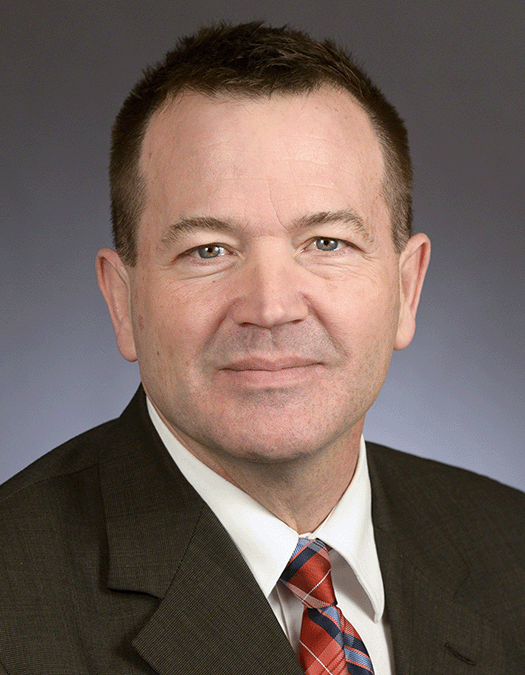
Rep. Leon Lillie
Sponsored bills
Maddy summaryHF 2455 allocates $6.5 million in state bond funding to Ramsey County for renovating Aldrich Arena into a regional and statewide event center. The bill authorizes the state to issue bonds up to this amount, with funds covering planning, design, and construction of facility improvements. The money will be distributed as a grant to Ramsey County through the commissioner of employment and economic development. This legislation directly affects Ramsey County residents and event users by upgrading a public venue.
Maddy summaryHF 701 appropriates funds from Minnesota's renewable development account to construct an anaerobic digestor energy system in Louisville Township. The bill specifically provides money for Recycling and Energy, in partnership with Dem-Con HZI Bioenergy, LLC, to build a facility that converts food and organic waste into renewable natural gas and biochar. This funding applies to fiscal years 2025 and 2026, with the system designed to process local organic waste streams. The bill directly affects Louisville Township residents and the designated companies by enabling this specific renewable energy project. The funding mechanism is a grant from the renewable development account to support the construction of the facility.
Maddy summaryHF 2359 establishes a Climate and Mental Health Advisory Task Force within Minnesota's Department of Health to study how climate change impacts mental health across the state. The 16-member task force includes legislative appointees and 12 community representatives specifically chosen to reflect vulnerable groups affected by climate change (such as Indigenous communities, farmers, people with disabilities, and those exposed to pollution). It will analyze mental health effects by demographics, identify communities most impacted now and in the future, and develop actionable recommendations for mitigation strategies. The bill appropriates a one-time sum for the task force in fiscal year 2026, available until June 2031, to support its work. This directly affects Minnesota residents, particularly those facing climate-related mental health challenges.
Maddy summaryHF 1120 establishes Minnesota's "Keep it Clean" program to prevent water pollution from garbage and human waste left on ice during winter activities on state waters. The bill directly affects local governments and nonprofit organizations by creating a grant program to fund projects like installing winter-ready waste stations, providing seasonal waste disposal services, increasing winter patrols, and running education campaigns. Key provisions include funding for infrastructure (e.g., dumping stations), enforcement support, and community outreach to promote responsible winter use. The bill appropriates state funds for the program's administration and grants, with at least a portion dedicated to local projects.
Maddy summaryThis bill appropriates $28.18 million from Minnesota's Environment and Natural Resources Trust Fund for grants to community organizations and local projects. The funds are specifically for the ENRTF Community Grant Program, which supports local environmental and natural resource initiatives. This one-time funding is available until June 30, 2028, for fiscal year 2026.
Maddy summaryHF 489 appropriates $25.8 million for 2026 and $26.9 million for 2027 from Minnesota's parks and trails fund to support state parks, recreation areas, and trails. It allocates $12.9 million annually for regional park and trail grants outside the Minneapolis metro area, requiring projects to align with the Greater Minnesota Regional Parks Strategic Plan. The bill also provides $652,000 annually for coordination between agencies and web-based park information, while extending project funding deadlines for specific initiatives like the Cannon Valley Trail and Spirit Mountain Recreation Area through 2027. This funding directly affects state park operations, regional park commissions, and local projects receiving grants under Minnesota Statutes § 85.535.
Maddy summaryHF 1361 appropriates $8 million from state bond proceeds to fund improvements at CHS Field in St. Paul. The city of St. Paul will receive the grant to cover predesign, construction, and equipment for upgrades meeting Major League Baseball standards, including a new locker room, enhanced visitor amenities, and environmental remediation of contaminated soil. The state will issue bonds up to $8 million to fund this appropriation, following Minnesota's bond sale procedures. This bill directly affects CHS Field's operations and the city's ability to modernize the stadium.
Maddy summaryHF 2386 makes administrative updates to Minnesota's public employee retirement rules managed by the Public Employees Retirement Association (PERA). It clarifies that employers must state the $425 monthly salary threshold for mandatory retirement coverage in advance, adds a 60-day deadline for public employees or officials to file membership election forms, and specifies timing for when coverage begins. The bill directly affects public employees and elected officials who choose to join PERA retirement plans, including those in local government, law enforcement, and correctional roles. Key changes streamline eligibility rules and filing procedures without altering benefit amounts or contribution rates.
Maddy summaryThis bill appropriates $100,000 from Minnesota's arts and cultural heritage fund for fiscal year 2026 to fund History Theatre in producing a play celebrating Hmong arts and culture. It directly affects History Theatre (a St. Paul-based theater company) and the Hmong cultural community in Minnesota by providing dedicated funding for this specific artistic project. The key provision is a specific grant from the designated arts fund to support this cultural performance. The bill does not alter existing laws but allocates existing state funds for this purpose.