

Maddy summaryHF 443 modifies Minnesota's property tax rules for airport facilities. It provides a 50% reduction in tax capacity for specific airport properties in cities with 50,000-150,000 residents (not operated by the Metropolitan Airports Commission) used as hangars for aircraft storage/repair or for passenger areas like check-in counters. This tax relief applies to property taxes payable from 2026 through 2037. The bill specifically targets smaller city airports, excluding those in Minneapolis/St. Paul and Metropolitan Airports Commission facilities.
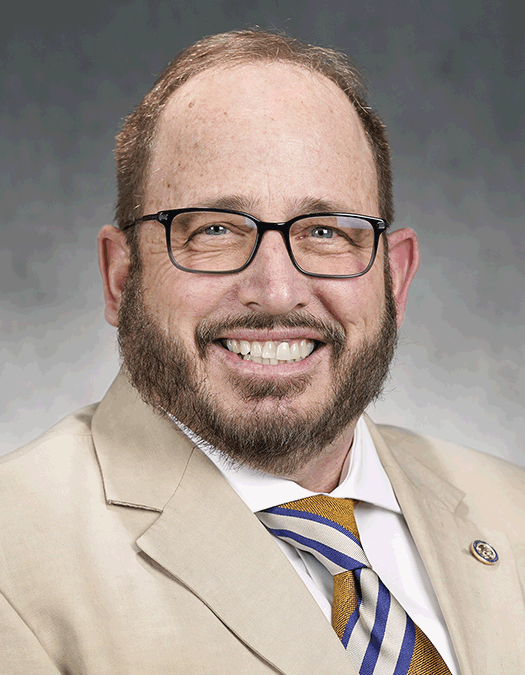
Rep. Roger Skraba
Sponsored bills
Maddy summaryHF 2810 appropriates $250,000 for fiscal year 2026 and $250,000 for fiscal year 2027 from the general fund to fund horse-assisted therapy for eligible first responders in Minnesota. It directs these funds to 7 Stars Ranch to provide mental health therapy to first responders suffering from job-related trauma or PTSD, including police officers, firefighters (full-time and volunteer), ambulance personnel, 911 dispatchers, and correctional officers. The bill requires 7 Stars Ranch to submit two reports detailing program costs, participants served, and benefits received - initially by January 2026 and finally by January 2028. This is a one-time funding appropriation with no ongoing program mandate beyond the specified reporting.
Maddy summaryHF 2827 appropriates $10 million from state bond proceeds to fund capital improvements for publicly owned transit systems in Greater Minnesota (rural and smaller communities outside major urban areas). The bill authorizes the state to issue up to $10 million in bonds, with the funds specifically designated for acquiring property, predesigning, constructing, furnishing, and equipping transit facilities under existing law. This directly supports local transit agencies in upgrading infrastructure like bus depots, maintenance facilities, and vehicle fleets. The funding mechanism relies on bond sales rather than general state revenue, with the money to be distributed by the state transportation commissioner. The bill takes effect upon final enactment.
Maddy summaryHF 1964 appropriates $9.6 million from state bonds to renovate paved state trails established under Minnesota law. The funds, sourced through bonds sold by the state, will be managed by the commissioner of natural resources for trail projects prioritized under existing statutes. This bill directly affects Minnesota's state trail system and the agencies responsible for maintaining it. The legislation creates a specific funding mechanism to support infrastructure improvements on designated paved trails.
Maddy summaryHF 2548 creates the Outdoor School for All grant program to fund immersive, multiday outdoor educational experiences for Minnesota students in grades 4-8. The program provides grants to accredited overnight outdoor schools and nonprofit learning centers meeting specific criteria, including research-based curricula, integration with school standards, skill development (like leadership and critical thinking), and accessibility for underserved students. It appropriates $2.5 million for fiscal years 2026 and 2027 from the general fund. The bill directly affects public school students and providers offering equitable outdoor education, aiming to address declining outdoor engagement and access disparities.
Maddy summaryThis bill appropriates $675,000 for fiscal year 2026 and $729,000 for fiscal year 2027 from Minnesota's arts and cultural heritage fund. The funds will support two outdoor education programs: Wilderness Inquiry's Canoemobile and Pyramid of Outdoor Engagement. These programs provide statewide, sequential outdoor educational experiences for youth and families, aligning with Minnesota graduation standards and connecting participants to the state's natural resources, outdoor traditions, and public lands. The funding directly supports these programs' operations to expand access to nature-based learning across Minnesota.
Maddy summaryMinnesota's HF 2824 amends Minnesota Statutes section 97C.395 to establish a year-round (continuous) open season for taking largemouth and smallmouth bass. This change directly affects recreational anglers who fish for these species in Minnesota waters, removing seasonal restrictions that previously applied. The bill adds largemouth and smallmouth bass to the list of fish species already covered under the continuous season provision, which currently includes species like sunfish, crappie, and perch. The amendment modifies the existing statute without altering other seasonal rules for different fish.
Maddy summaryHF 2520 allocates $9 million for each of fiscal years 2026 and 2027 from the state general fund to the University of Minnesota's Natural Resources Research Institute. The funding supports the "Minnesota Green Iron Initiative," which aims to advance industrial decarbonization through hydrogen technology, renewable energy resources, infrastructure development, and community engagement. This bill directly affects the University of Minnesota's research operations and the state's industrial decarbonization efforts. The appropriation is a concrete budget allocation with no additional policy changes beyond the funding mechanism.
Maddy summaryHF 2679 exempts small rural ambulance services meeting specific criteria from Minnesota's healthcare gross receipts tax. It defines "small rural ambulance services" as those operating outside major metropolitan areas and cities (like Duluth or St. Cloud) with annual revenues under $10 million. The exemption requires state approval of federal waivers to maintain eligibility for federal funding, and takes effect January 1, 2026, or after federal approval is secured. This directly affects qualifying ambulance providers in rural Minnesota communities.
Maddy summaryHF 573 appropriates $6 million from state bonds to fund a new integrated solid waste management campus in St. Louis County. The grant will help the county acquire land, design, and build the campus to manage waste from closed landfills and prevent hazardous chemicals like PFAS from contaminating Lake Superior. The bill authorizes the state to issue up to $6 million in bonds to cover these costs, following standard state bond procedures. This directly affects St. Louis County residents and the environmental protection of Lake Superior. The project aims to address waste management from existing landfills while safeguarding water quality.