

Maddy summaryHF 3158 proposes a constitutional amendment requiring a two-thirds vote in both the Minnesota House and Senate to authorize public funding for the design, construction, or renovation of a professional sports facility. Currently, a simple majority vote suffices for such funding. The amendment must be submitted to voters in the 2026 general election, where they will decide whether to adopt the two-thirds requirement. If approved by voters, this change would become part of the Minnesota Constitution, affecting future legislative decisions on sports facility funding.
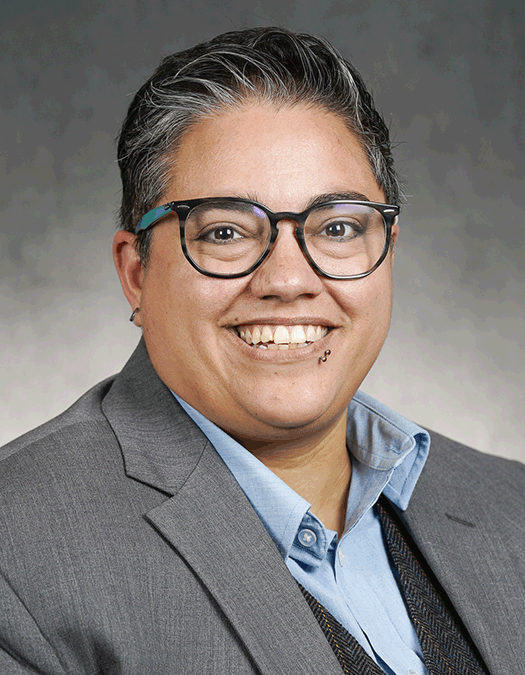
Rep. Brion Curran
Sponsored bills
Maddy summaryHF 2456 repeals automatic cost-of-living adjustments (COLAs) for child support and maintenance orders in Minnesota, ending the practice of increasing payments annually to match inflation. Instead, any adjustment to the payment amount would require a formal court request, which would only apply from the date the request is filed - not retroactively. The bill also amends related statutes (including Minnesota Statutes 518.68, 518A.34, 518A.40, and 518A.41) to remove references to these automatic adjustments. This change directly affects individuals under existing court-ordered child support or maintenance obligations.
Maddy summaryHF 1914 appropriates state funds for three key human services programs in Minnesota. It provides emergency services grants for immediate crisis support, county grants to address homelessness gaps (prioritizing Tribal Nation partnerships and interventions like 24/7 shelters), and funding for provider capacity-building collaboratives. The capacity-building program helps service providers access stable funding streams, including Medicaid waivers and housing support programs. These funds are allocated for fiscal years 2026 and 2027, with unspent first-year money rolling over to the second year. The bill directly affects counties, service providers, and people experiencing homelessness by expanding access to crisis support and housing-focused services.
Maddy summaryHF 2260 amends multiple Minnesota statutes to strengthen oversight of child care providers and human services programs. It clarifies administrative disqualification procedures for providers who commit intentional violations like false statements or kickbacks (e.g., exchanging child care assistance benefits for financial gain), with penalties including up to three years of disqualification for first offenses and permanent bans for repeat violations. The bill also adds electronic signature options for required documentation and updates appeal processes for providers facing disqualification. These changes directly affect child care providers receiving state assistance, Human Services staff administering programs, and workers in the appeals division. The bill focuses on fraud prevention and procedural clarity within existing human services frameworks.
Maddy summaryHF 2127 classifies real property records of Minnesota judicial officials (such as judges) as private data, limiting public access. Judicial officials must submit written notification to the relevant government entity to activate this protection, which expires after five years unless renewed. The bill specifically covers real property records defined under Minnesota law (e.g., deeds, ownership records), excluding other types like tax liens or commercial filings. It takes effect January 1, 2026, and does not apply to records already publicly available or those maintained for specific legal purposes. This change directly affects judicial officials by giving them control over their property record privacy.
Maddy summaryHF 1309 prohibits Minnesota local governments (cities and counties) from requiring minimum parking spaces for new residential, commercial, or industrial buildings. The bill directly affects developers and property owners by removing a common zoning requirement that previously mandated a set number of parking spots. Key provisions state that political subdivisions cannot impose these minimums, though they may still require ADA-compliant disability parking or make non-binding parking space recommendations. This change aims to increase flexibility for development projects, potentially allowing more housing or commercial space without dedicated parking.
Maddy summaryHF 3075 allows individuals to change, remove, or add the sex indicator on their birth records in Minnesota. It directly affects people whose birth records include a sex designation, including minors (with parental/guardian consent) and adults 18+ or emancipated minors. To request a change, applicants must provide acceptable documentation like a medical provider's statement, court order, or sworn statement confirming the request is in good faith and, for minors, in their best interest. If documentation meets requirements, the state must approve the change. After approval, the original birth record becomes confidential and can only be accessed with a court order.
Maddy summaryHF 101 prohibits Minnesota schools from listing parent contact information (like home addresses, phone numbers, or email addresses) as "publicly available directory information." This directly affects parents, as schools can no longer automatically share their personal contact details with the public without explicit consent. The bill amends Minnesota Statutes §13.32 by removing parent contact information from the definition of directory information, requiring schools to treat it as private data instead. Exceptions exist only for temporary sharing with school referendum committees during election periods (90 days prior to voting), with strict limits on use and destruction after elections.
Maddy summaryHF 3001 establishes a pilot program providing direct cash grants of at least $500 monthly for 18 months to eligible low-income Minnesota residents. It directly affects individuals or families with household income at or below 300% of the federal poverty level or currently receiving public benefits. The bill requires grantees (local governments, tribes, or nonprofits) to administer the payments while ensuring the stipends do not count as income for other benefits like food assistance or housing support. Grantees must collect data on participants' economic, health, and housing outcomes and submit a final report to the legislature by January 2028.
Maddy summaryHF 1861 requires state correctional facilities and certain human services programs to provide free communication services (like phone calls, video calls, and messaging) to people confined in those settings. It prohibits charging inmates or their contacts for these services and mandates that facilities maintain in-person visitation programs instead of replacing them with virtual options. The bill also requires detailed annual reporting on communication service contracts, spending of funds, and usage data. This directly affects incarcerated individuals in Minnesota correctional facilities and residents in state-operated human services programs.